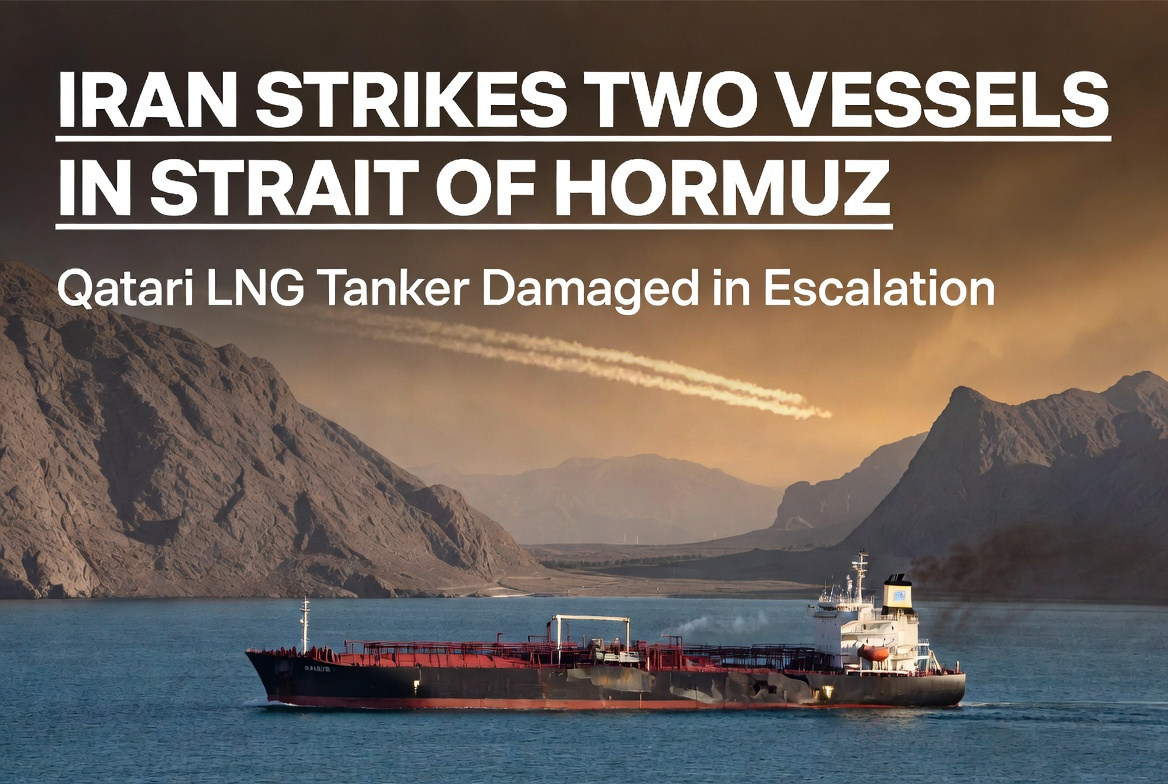
DUBAI/WASHINGTON July 6, 2026 — Iran’s Islamic Revolutionary Guard Corps (IRGC) launched missile strikes on two commercial vessels transiting the Strait of Hormuz early Tuesday morning (July 7, 2026), damaging a Qatari-owned LNG tanker and another ship in what marks a significant escalation in the fragile U.S.-Iran ceasefire.
According to a senior U.S. official and maritime reports, the attacks targeted vessels using the southern corridor near Omani waters — a route supported by international and U.S.-backed efforts to maintain shipping flow while avoiding Iranian-controlled passages.
One of the vessels was the Al Rekayyat, a liquefied natural gas (LNG) tanker owned and managed by Nakilat, Qatar’s state-linked shipping company. The ship was struck on the port side near the top of the engine room, causing a fire and heavy smoke. A radio message from the vessel reported: “Engine room fire and full of smoke. Unable to assess further damage. All crew are safe and mustered on the starboard side.”
The UK Maritime Trade Operations (UKMTO) confirmed a tanker was hit by an unidentified projectile about 8 nautical miles east of Limah, Oman, while traveling southbound, resulting in a port-side fire. No casualties or environmental damage were reported in either incident.
A second commercial vessel was also struck and sustained significant damage, though its identity has not been publicly confirmed in initial reports.
The strikes come amid a tense standoff over control of the Strait of Hormuz, the critical chokepoint through which roughly 20% of global oil and a large share of LNG trade passes.
Iran’s IRGC has repeatedly warned ships against using routes not approved by Tehran and has threatened the use of “missiles and drones.” Over the weekend, IRGC radio warnings reportedly stated: “Our missiles and drones are ready to fire at you.”
This incident follows a series of similar attacks in late June 2026, which prompted U.S. retaliatory strikes on Iranian military targets. Those earlier events occurred after an interim U.S.-Iran agreement in mid-June that established a 60-day negotiation period to end the broader conflict and stabilize shipping.
Iran maintains it has the right to regulate traffic through the strait and has pushed for tolls or prior authorization. International shipping companies and many governments have favored alternative routes closer to Oman to reduce risks.
The attacks risk undermining ongoing peace talks and could drive up global energy prices, shipping insurance premiums, and freight costs. The Strait has already been designated a “warlike operations area” by some maritime bodies following previous incidents, entitling crews to hazard pay.
No immediate U.S. military response has been reported, but officials are closely monitoring the situation. Iranian authorities have not yet issued an official statement on Tuesday’s strikes.
This development highlights the challenges in enforcing any ceasefire in the region, particularly with the IRGC often operating independently of Iran’s more moderate diplomatic channels.
Further updates are expected as investigations continue and more details emerge from the involved parties.
About The Author