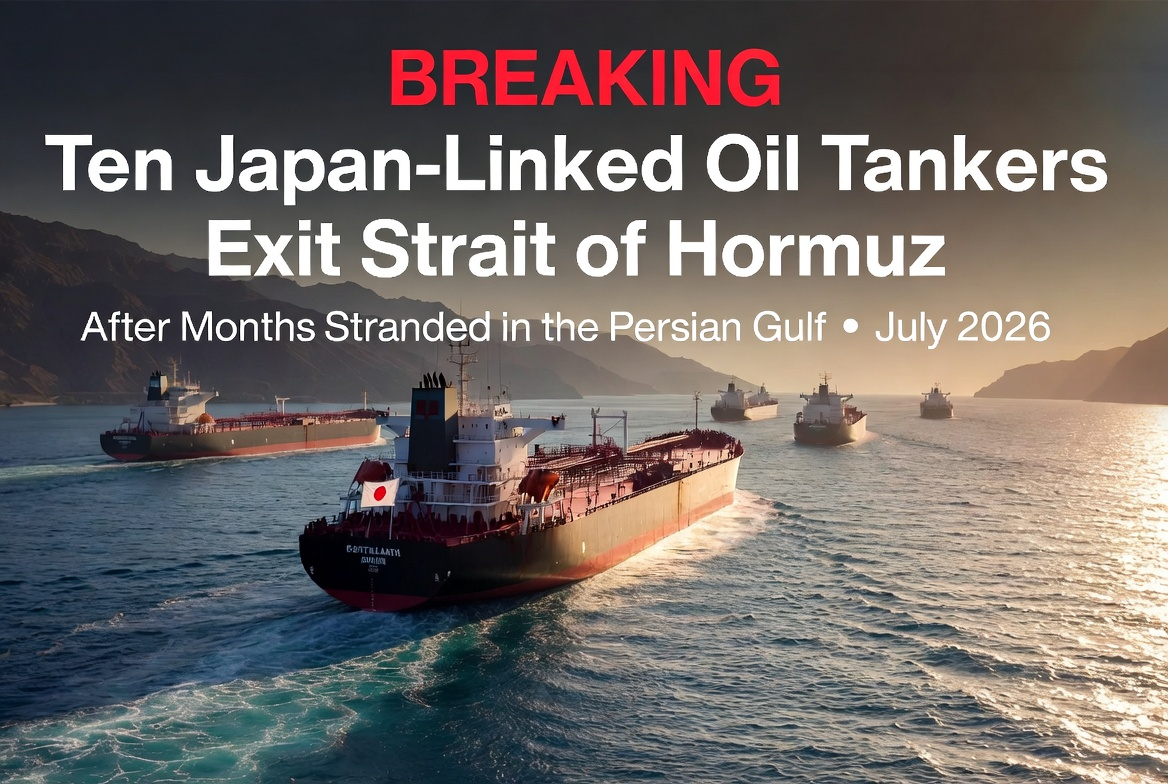
TEHRAN July 6, 2026 — In a major sign of easing tensions in the Persian Gulf, ten Japan-linked oil tankers have successfully transited the Strait of Hormuz and exited into the open sea after being trapped inside the Persian Gulf for several months.
The vessels — including multiple very large crude carriers (VLCCs) loaded with Saudi, UAE, and Qatari crude — had been waiting since late February or early March 2026, when Iran imposed restrictions on the strategic waterway following the outbreak of the U.S.-Israel-Iran conflict.
This is the largest single group of Japan-linked tankers to exit the strait since the war began in late February.
The Strait of Hormuz is one of the world’s most critical chokepoints, handling roughly 20% of global oil trade. Iran’s selective restrictions after the conflict disrupted shipping lanes, stranded dozens of tankers carrying millions of barrels, and contributed to elevated energy prices and supply-chain strain for importers worldwide — especially energy-dependent nations like Japan and India.
Japan sources more than 90% of its crude oil from the Middle East and has been particularly vulnerable to any disruption in the strait.
The tanker movements follow the mid-June 2026 Islamabad Memorandum of Understanding between the United States and Iran. Key provisions include:
- Iran allowing safe, fee-free transit of commercial vessels through the Strait of Hormuz for an initial 60-day period.
- The U.S. beginning to lift its naval blockade of Iranian ports.
- A 60-day extension of the ceasefire and framework for further talks on nuclear issues and sanctions relief.
The agreement has opened a narrow window for limited normalization of shipping traffic.
Shipping and energy analysts view today’s development as the most concrete sign yet of gradual de-escalation and the slow return of normal tanker traffic. Oil prices have already eased below $90 per barrel in recent sessions amid growing optimism about stabilized flows.
For Japan, the release of these ten tankers brings much-needed relief to its refineries and energy security. Global markets are also watching closely, as full resumption of pre-war traffic levels is still expected to take weeks while insurers, shipowners, and operators assess risks.
“This is a positive development, but caution remains,” one shipping executive noted. “Insurers will want to see sustained safe passage before fully normalizing premiums.”
The situation remains fluid. Further batches of stranded tankers are expected to follow in the coming days and weeks if the current window of relative calm holds.
About The Author