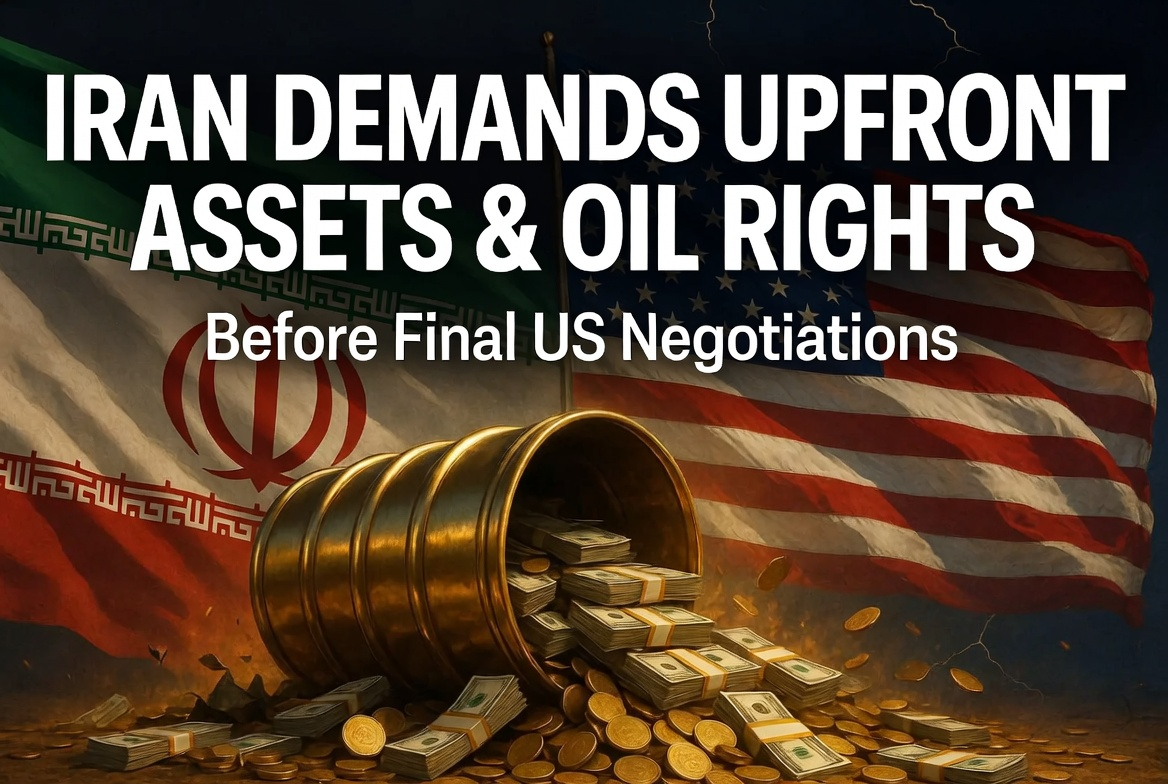
TEHRAN, June 22, 2026 — Iranian officials are insisting on immediate access to billions in frozen assets and unrestricted oil exports as preconditions before advancing to comprehensive talks with the United States, escalating tensions in the fragile interim framework reached earlier this month.
According to a post from BRICS News on X (formerly Twitter), Iran is demanding these economic concessions “before final agreement negotiations.” This stance comes amid ongoing diplomatic efforts following a Memorandum of Understanding (MoU) aimed at de-escalating hostilities, reopening the Strait of Hormuz, and laying groundwork for a 60-day negotiation window on Iran’s nuclear program, sanctions relief, and regional issues like Lebanon.
The US-Iran MoU, reportedly finalized in mid-June 2026 with mediation from Qatar and Pakistan, includes:
- Temporary waivers on oil sanctions, allowing Iran to export crude and petrochemicals.
- Phased or conditional access to frozen assets (estimates range from $6–25 billion, with initial tranches discussed in Qatar and other banks).
- Reopening of the Strait of Hormuz for commercial shipping.
- A ceasefire extension, including de-escalation in Lebanon, during which broader talks would occur.
Iranian negotiators view upfront relief as essential for economic stability, with reports citing demands for $12 billion immediately from Qatari-held funds as a “strict precondition” for the MoU phase. Tehran argues these are sovereign rights long overdue, not concessions.
US officials, however, have emphasized a “pay-for-performance” approach. Sanctions relief and full asset releases are tied to Iranian compliance on nuclear limits, IAEA monitoring, and regional de-escalation. Senior US sources have pushed back on claims of immediate multibillion-dollar transfers, stressing staged implementation.
Key Sticking Points
- Frozen Assets: Iran seeks rapid release of $12–24 billion globally. Some reports indicate partial access (e.g., $6 billion for humanitarian or non-sanctioned goods) has been discussed or partially enabled.
- Oil Exports: Waivers are reportedly in place or imminent, potentially unlocking significant revenue amid high global prices.
- Nuclear and Regional Issues: Core disputes over enrichment levels, stockpile management, and Lebanon remain for the 60-day window. Iran has reaffirmed it will not pursue nuclear weapons but seeks broader sanctions termination.
Recent high-level talks in Switzerland (including at Lake Lucerne/Bürgenstock) were described as “positive and constructive” by mediators, with progress on technical issues. However, Iranian Foreign Minister Abbas Araghchi highlighted the need for a “Lebanon deconfliction cell” as the first real test.
Oil markets have shown volatility on the news, with potential for increased Iranian supply. Bitcoin and risk assets briefly spiked on headlines of sanctions relief but remain sensitive to any breakdown.
Critics in the US Congress and among allies express concerns over front-loaded concessions without ironclad verification, while supporters see it as pragmatic de-escalation after military actions earlier in 2026.
Analysts note the bargaining reflects classic high-stakes diplomacy: Tehran leverages its remaining leverage for economic breathing room, while Washington aims to tie relief to verifiable steps preventing a nuclear breakout.
Further technical discussions are expected this week. A successful final deal could reshape Middle East dynamics, oil flows, and global sanctions architecture; failure risks renewed escalation.
About The Author