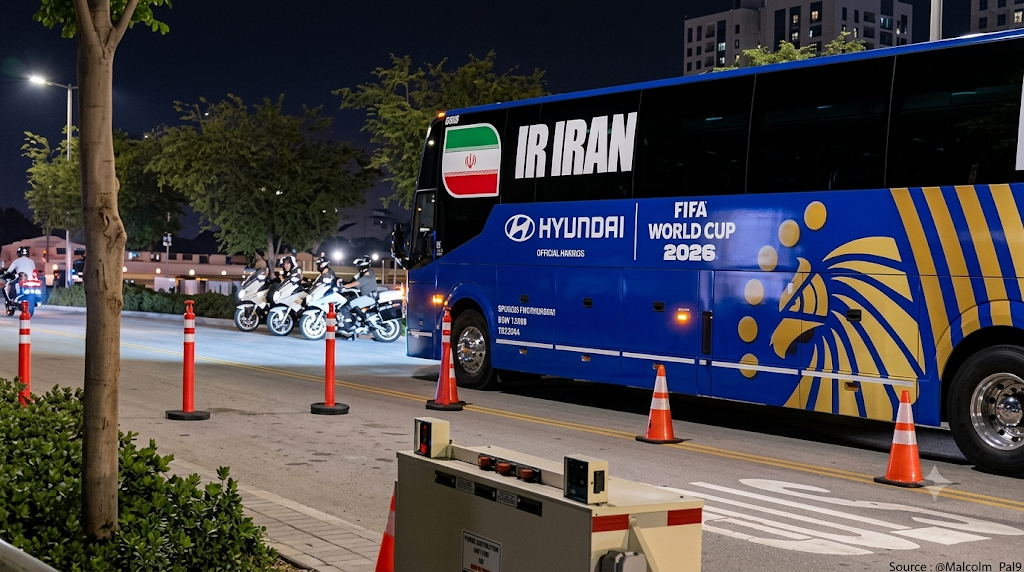
TIJUANA, MEXICO June 16, 2026 — Iran’s national football team (Team Melli) was required to leave U.S. soil and return to its base camp in Tijuana, Mexico, shortly after a hard-fought 2-2 draw with New Zealand in their 2026 FIFA World Cup Group G opener at SoFi Stadium on Monday night.
The match itself was an entertaining affair, with New Zealand taking the lead twice through Elijah Just (7′ and 54′). Iran responded each time: Ramin Rezaeian equalized in the 32nd minute, and Mohammad Mohebbi headed home the second equalizer in the 64th minute. The result earned both teams a point in what many viewed as a competitive, back-and-forth contest.
However, post-match headlines quickly shifted from the pitch to logistics and geopolitics. Coach Amir Ghalenoei described his squad as perhaps “the most oppressed team in the whole World Cup,” citing the immediate order to depart Los Angeles rather than stay overnight for recovery.
“After the game today, they said to us, ‘You have to leave immediately.’ It’s very important for us to have time for recovery, but we’ve been told to return to our camp in Tijuana, and we are really troubled by that,” Ghalenoei said.
Iran relocated its World Cup base camp from Tucson, Arizona, to Tijuana weeks before the tournament due to U.S. visa restrictions, security concerns, and diplomatic tensions. The team enters the U.S. only for matches and must return to Mexico afterward, often involving same-day travel.
A source indicated that forward Mehdi Torabi’s visa had expired, contributing to the strict enforcement. U.S. officials maintained the arrangement was communicated in advance as part of visa and security protocols.
Despite the challenges, the team received a warm send-off from supporters in Tijuana before the match, highlighting the contrast in reception on either side of the border.
Iran’s three group-stage matches are all on U.S. soil (including upcoming fixtures against Belgium and Egypt), placing additional strain on the squad’s preparation and recovery. Captain Mehdi Taremi has called the overall logistics a “disaster.”
The situation underscores ongoing U.S.-Iran tensions, even as reports of tentative peace efforts have circulated. FIFA has reportedly offered assistance with visas.
Fans and observers remain divided, with some praising the players’ resilience amid political pressures and others focusing on the broader diplomatic backdrop.
Iran will look to build on their opening point when they next face Belgium on June 21.
About The Author