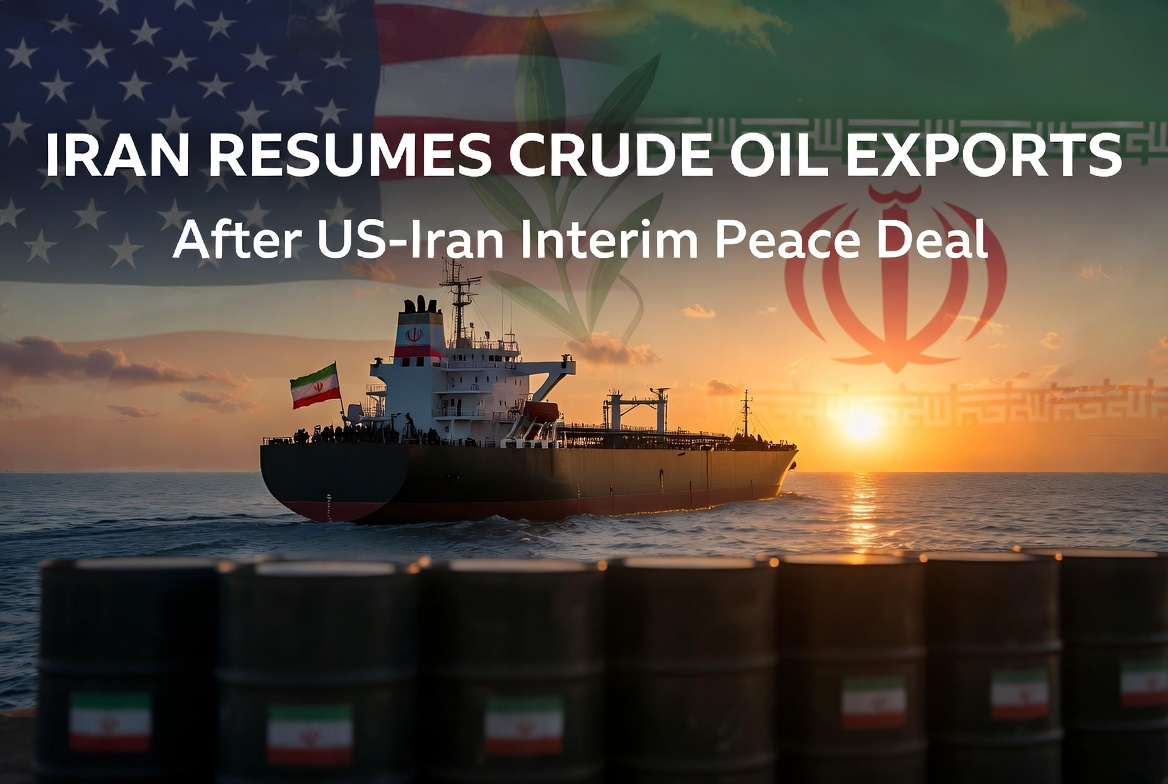
TEHRAN June 17, 2026 — Iran has successfully exported crude oil shipments for the first time in over two months, signaling the early impact of a new interim peace agreement with the United States that has lifted a naval blockade and begun reopening the Strait of Hormuz.
According to reports and social media monitoring by outlets like BRICS News, Iranian tankers have resumed flows, ending a near-total halt in seaborne exports that saw volumes plummet to six-year lows of roughly 200,000–300,000 barrels per day (bpd) in May. Prior to the escalation, Iran had been exporting around 2 million bpd.
The resumption comes days after the US and Iran announced a preliminary memorandum of understanding to end months of conflict. Key elements include the US lifting its naval blockade (imposed in mid-April), Iran clearing mines from the Strait of Hormuz, and both sides committing to a 60-day ceasefire framework with a formal signing expected soon in Geneva. In exchange, Iran has agreed to freeze certain nuclear activities and allow greater international oversight.
President Donald Trump highlighted the breakthrough with the statement “Let the oil flow!” as oil prices tumbled to three-month lows on expectations of renewed supply. Brent crude fell around 4% in recent sessions, trading near $84–$87 per barrel.
The disruption stemmed from a broader US-Israel-Iran conflict that began in late February 2026. Iran responded by effectively closing the Strait of Hormuz — a chokepoint carrying up to one-fifth of global oil — to most international shipping, while the US imposed a blockade on Iranian ports starting April 13. This led to stranded tankers, floating storage, and massive revenue losses for Tehran estimated at billions of dollars.
Experts caution that full normalization could take weeks or months. Shipping companies remain wary due to lingering risks, insurance issues, and the need to clear mines and rebuild confidence. Initial shipments are described as limited rather than a full return to pre-conflict volumes.
Market and Global Implications
- Lower prices ahead: Increased Iranian supply, combined with other Gulf producers potentially ramping up, is expected to ease tightness in global markets. However, full restoration may not occur until summer 2027 in some projections.
- Economic relief: The deal offers Iran access to frozen assets and phased sanctions relief, while promising lower fuel costs for consumers worldwide.
- Lingering risks: Analysts note that sustained peace depends on implementation, nuclear compliance, and regional stability, including Israeli concerns.
This development marks a tentative de-escalation in one of the most disruptive energy crises in recent years, with markets closely watching for confirmation of sustained flows through the Strait of Hormuz.
About The Author