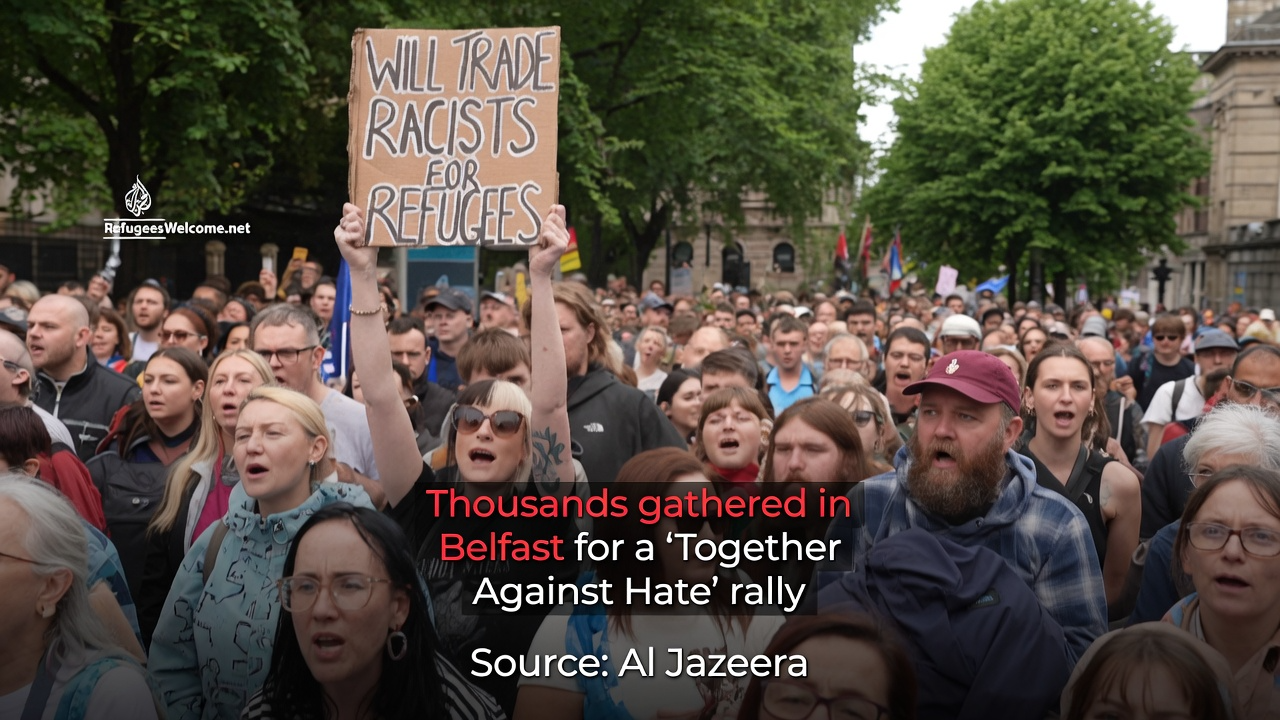
BELFAST, NOTHERN IRELAND June 13, 2026 – Large crowds gathered in Belfast and Glasgow on Saturday for major anti-racism demonstrations, aiming to counter days of anti-immigration violence that erupted after a stabbing incident in Northern Ireland. Organizers described the Belfast event as one of the largest of its kind in the city’s history.
The rallies follow unrest triggered by a knife attack on June 8 in north Belfast. A 30-year-old Sudanese man, Hadi Alodid, was charged with attempted murder after allegedly stabbing local resident Stephen Ogilvie, leaving him with serious injuries, including the loss of sight in one eye. The incident, captured on video and widely shared online, sparked protests that quickly turned violent.
Over several nights, masked groups in Belfast and surrounding areas targeted homes, businesses, and vehicles believed to house immigrants or ethnic minorities. Rioters set fires to cars, a bus, and properties, leading to clashes with police. Authorities reported injuries to officers and multiple arrests. Similar tensions spread to parts of Scotland.
On Saturday, thousands converged outside Belfast City Hall for a “Together Against Hate” or “United Against Racism” rally. Protesters carried signs reading “Hate is the only threat to our streets,” “Belfast stands against racism,” and “Riots don’t speak for Belfast.” Organizers and attendees, including representatives from Amnesty International, emphasized that the violence did not represent the broader community.
In Glasgow, an anti-racism march faced disruption from a smaller group of counter-protesters, with some reports of projectiles and Nazi-style salutes, though police described the overall event as passing without major incident.
The events highlight deep divisions in the UK over immigration, asylum policies, and integration. Supporters of the initial protests point to concerns about crime, housing pressures, and rapid demographic changes, while counter-demonstrators condemn the violence as racist thuggery that targets innocent people.
Northern Ireland’s political leaders, including First Minister Michelle O’Neill, and UK Prime Minister Keir Starmer have called for calm and condemned the disorder. Investigations into the riots continue alongside the stabbing case.
The victim’s family has also appealed for peaceful protest. As of Saturday, Ogilvie remained in hospital recovering from life-changing injuries.
This wave of unrest echoes previous tensions in the UK, underscoring ongoing debates about border control, community cohesion, and responses to high-profile crimes involving asylum seekers.
About The Author