By Professor Dato Dr Ahmad Ibrahim
Everyone is talking about sustainability. Governments sign accords, NGOs issue urgent reports, and businesses—once the villains of every environmental documentary—now compete to brand themselves green. We have ESG scorecards, circular economy roadmaps, net-zero pledges, and sustainable finance frameworks. But after three decades of these instruments, the planet’s major indicators keep heading in the wrong direction. So, we must ask an uncomfortable question: What is sustainability for, ultimately?
The obvious answer is “for the people.” We want clean air, stable climates, thriving communities, and prosperity for future generations. Yet here lies the rub: people are also the primary drivers of unsustainability. Our collective appetite for cheap flights, fast fashion, red meat, and single-use convenience fuels the very systems we claim to abhor. We blame corporations, but we are their shareholders, employees, and customers. So, sustainability becomes a paradox—trying to save people from the aggregate consequences of their own choices.
Now enter the business instruments: ESG (Environmental, Social, Governance) and the circular economy. On paper, they are elegant. ESG promises to redirect capital toward responsible firms. Circular economy promises to decouple growth from resource extraction. In practice, however, they have mostly become sophisticated reputation-management tools. ESG ratings are incoherent—one fund’s top scorer is another’s laggard. Companies game the system by dropping “dirty” assets into separate subsidiaries. Circular economy efforts often focus on recyclability while ignoring the prior sin of overproduction. These instruments do not challenge the growth imperative. They simply tidy up its edges.
So, will they lead to sustainability? Only if we redefine “sustainability” as incremental efficiency gains. But a truly sustainable planet—one that respects biophysical boundaries—requires more than better accounting. It requires a structural shift away from the logic that made ESG and circularity necessary in the first place: the logic of endless material throughput for shareholder returns.
What would a better model look like? Not another technocratic fix, but a return to first principles. Let us propose three pillars for a genuinely sustainable world:
First, sufficiency before efficiency. ESG and circularity focus on doing the same things “better.” But better is not enough if “the same things” are inherently excessive. A better model would normalize sufficiency: smaller living spaces, durable products, shared ownership, and shorter supply chains. This is not austerity; it is abundance redefined as time, health, and community rather than tonnage.
Two, regenerative economies, not just circular ones. Circularity keeps waste out of landfills. Regeneration restores ecosystems and social fabrics. Imagine a business model where every ton of carbon emitted must be paired with a ton of verified sequestration—not offset credits, but direct action. Or where urban development mandates net-positive biodiversity. That shifts the burden from “less bad” to “actively good.”
Third, accountability with teeth. ESG is voluntary and self-reported. A better model would replace it with binding, democratically determined thresholds: corporate charters revoked for repeated violations, personal liability for executives who greenwash, and legal rights for nature (as Ecuador and New Zealand have begun to explore). When the penalty for destroying a river is greater than the profit from doing so, behavior changes.
But none of these work without rethinking the “for the people” part. Yes, sustainability is for people. But people are also the problem—not in a misanthropic sense, but in a democratic one. We cannot shop our way to salvation. We need to accept that true sustainability will sometimes inconvenience us. It might mean higher upfront costs, fewer disposable conveniences, and limits on what we can consume. The question is whether we, the people, are mature enough to choose those limits before the planet chooses them for us.
In the end, instruments like ESG and circular economy are not evil—they are insufficient. They are rearview mirrors when we need steering wheels. A truly sustainable planet will not be built by better corporate scorecards. It will be built by citizens who stop asking “How can we make business as usual greener?” and start asking “What kind of life do we want to live, and what are we willing to give up to leave that option for our grandchildren?” That is the only model that ever had a chance. The rest is just green packaging on a sinking ship.
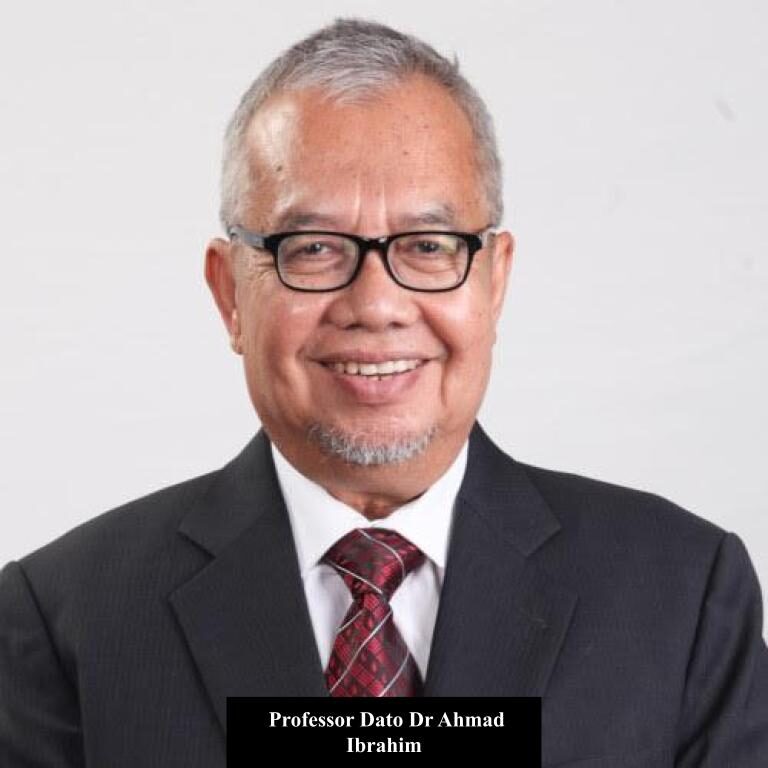
The author is affiliated with the Tan Sri Omar Centre for STI Policy Studies at UCSI University and is an Adjunct Professor at the Ungku Aziz Centre for Development Studies, Universiti Malaya.
About The Author