
By Professor Dato Dr Ahmad Ibrahim
Leadership was a one-man show. The “great man” at the top, barking orders and wielding authority. We worshipped charisma, hierarchy, and the illusion that one brilliant mind could steer the ship through any storm. A recent analysis has debunked that.
In the industrial era, efficiency mattered more than empathy. Leaders just directed. Transformational leadership emerged as a breath of fresh air in the late 20th century — vision, inspiration, and “raising people’s aspirations.” But even that model kept the leader at the center, a heroic figure dispensing motivation from on high.
Walk into any agile team today, and you’ll see what researchers Liden and colleagues highlighted: shared leadership, servant leadership, and relational dynamics. The pandemic didn’t create this shift, but it turbocharged it. Remote work flattened hierarchies overnight. Suddenly, leaders couldn’t manage by presence — they had to lead by trust.
The hottest trend is leading with humility. Admitting you don’t have all the answers. Empowering teams to self-organize. As the authors note, ethical and authentic leadership aren’t buzzwords; they’re survival tactics in a workforce that demands meaning, not just paychecks. Liden, Wang, and Wang push us to look ahead at three tectonic forces shaping leadership.
One AI as co-leader, not replacing, but augmenting decisions. The leader of 2030 will need digital literacy as much as emotional intelligence. Leading across time zones, cultures, and algorithms requires a new muscle: cognitive flexibility. Next, sustainability as a leadership mandate. Leaders will be judged on intergenerational impact, not just quarterly returns. Most organizations still reward individual heroism while preaching teamwork. Until promotion systems stop idolizing the loudest voice in the room, the evolution will remain more aspiration than reality. The past gave us commanders. The present gives us facilitators. The future demands something harder: leaders who are learners, listeners, and occasionally — followers. Because in a world changing this fast, the only person fit to lead is the one humble enough to know they can’t do it alone. That’s not soft leadership. That’s smart leadership.
Countries don’t accidentally produce true leaders. They breed them — or they crush them. And most of the world, right now, is doing the crushing. Walk into any top-ranked school system — Singapore, South Korea, parts of China — and you’ll see marvels of memorization. Math scores through the roof. Science rankings to envy. But ask a simple question: When did a student last make a real ethical decision? When did a team rotate leadership so the quiet kid got a turn? When was failure treated as a lesson, not a lawsuit?
Most national education systems are still industrial-era machines. They produce compliant test-takers. They do not produce people who can navigate moral ambiguity, recover from public mistakes, or share power gracefully. Finland and Estonia are the exceptions that prove the rule. They teach collaborative problem-solving. They normalize failure. And guess what? Their young people don’t just score well on tests — they show up to local councils, start community projects, and actually listen to each other. A country that punishes mistakes punishes leadership before it’s born. Full stop.
Look at nations with strongman politics, dynastic families, or ministries that control everything from school menus to street repairs. Do you see a flourishing of new leaders? No. You see waiting. Obedience. Resignation. True leaders emerge when people are forced to make real decisions with real consequences — starting young. Germany gives teenagers binding votes on municipal budgets. Japan has student boards that advise school principals on policy. Costa Rica — which abolished its army decades ago and poured that money into education and local governance — consistently ranks as one of the healthiest democracies in the Global South.
This is where Liden, Wang, and Wang’s research hits home. The past gave us heroic loners. The present demands humble facilitators. But our culture? Our culture still loves the loudest voice in the room. Think about your national media. Does it celebrate the minister who stepped aside for someone younger and wiser? Does it profile the nurse who led a ward quietly for thirty years? Does it praise the executive who admitted she was wrong? Of course not. We run headlines about fights, firings, and flameouts. We reward confidence over competence. And then we act surprised when narcissists rise to the top.
New Zealand showed a different path. When Jacinda Ardern stepped down as Prime Minister, citing she had “no more in the tank,” the national conversation wasn’t about failure. It was about wisdom. About modeling what responsible leadership actually looks like — knowing when to leave. That is not weakness. That is the hardest leadership of all. And it will never be bred in a culture that only celebrates the spotlight.
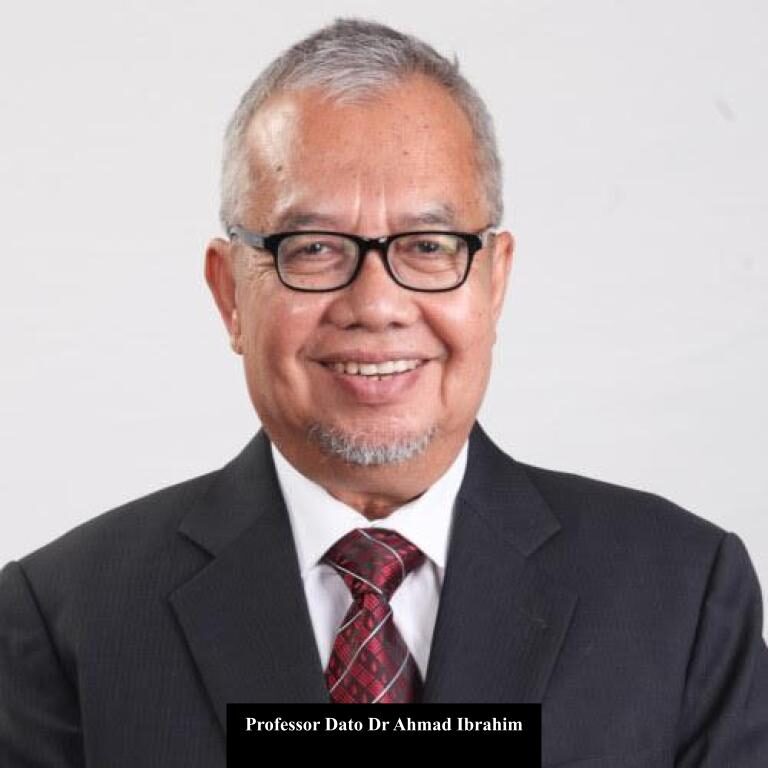
The author is affiliated with the Tan Sri Omar Centre for STI Policy Studies at UCSI University and is an Adjunct Professor at the Ungku Aziz Centre for Development Studies, Universiti Malaya.
About The Author