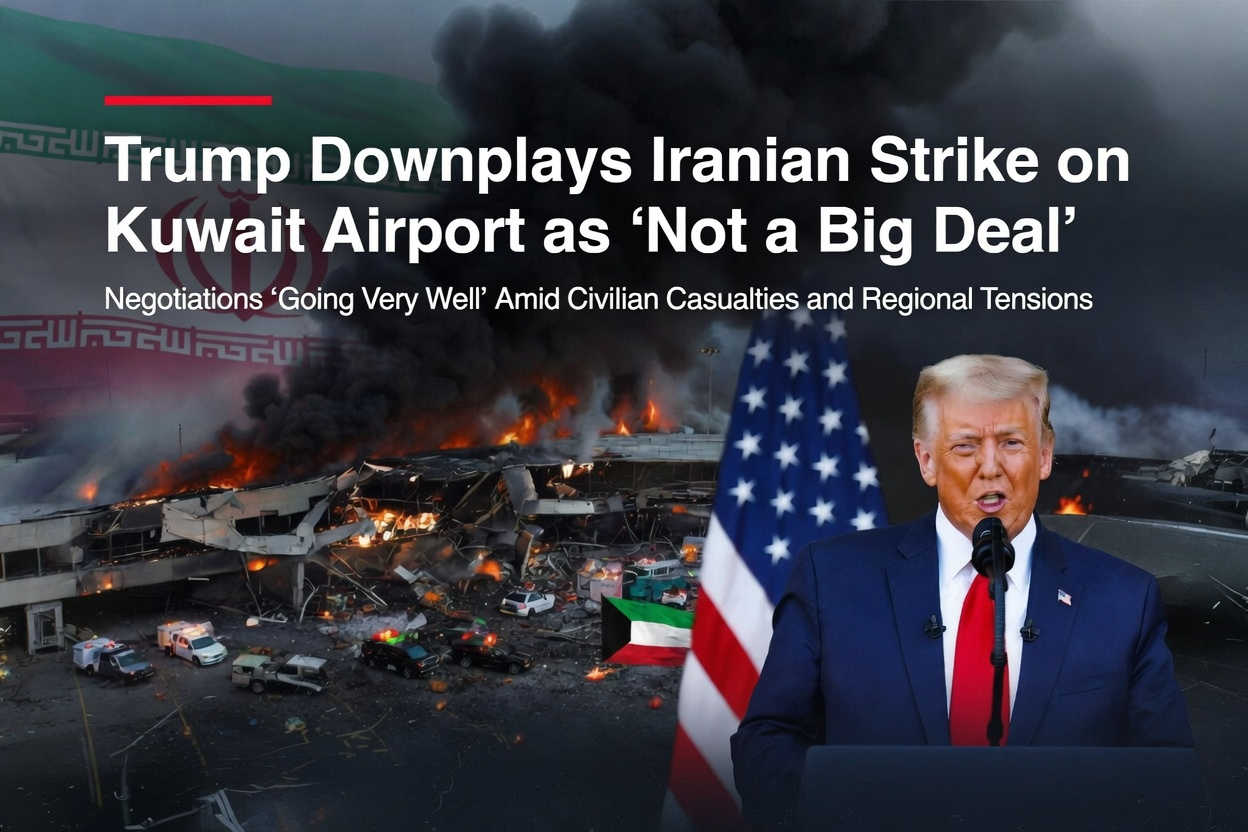
WASHINGTON D.C , June 3, 2026 — President Donald Trump has minimized the impact of Iranian strikes that damaged Kuwait International Airport, killing at least one person and injuring dozens, while insisting that diplomatic talks with Tehran remain on track.
The attack on Wednesday targeted a passenger terminal at Kuwait’s main airport, causing significant structural damage, fires, and debris across the facility. Flights were temporarily suspended, though Kuwait Airways later resumed operations. Kuwaiti officials reported one fatality — an Indian national — and more than 60 injuries.
Iran’s Islamic Revolutionary Guard Corps (IRGC) denied directly targeting the terminal, claiming the damage resulted from failed U.S. interceptor missiles. U.S. Central Command rejected the allegation as “totally false,” stating that Iranian drones struck the civilian airport.
In remarks to reporters, President Trump described the incident as “not a big deal” and expressed optimism about ongoing negotiations with Iran. “Negotiations are going very well,” he said, amid efforts to extend a fragile ceasefire brokered earlier this year and address issues including mines in the Strait of Hormuz.
The strike forms part of a cycle of retaliatory actions following U.S. and Israeli operations against Iranian targets. Iran has launched drones and missiles at U.S. allies in the Gulf, including Kuwait and Bahrain, in what it describes as responses to American aggression.
Kuwait, a key U.S. ally, strongly condemned the attacks on civilian infrastructure. India also expressed outrage over the death of its citizen.
Critics have questioned the administration’s approach, with some viewing Trump’s comments as dismissive of civilian casualties and risks to regional stability. Supporters argue the downplaying helps avoid escalation while prioritizing a potential deal to stabilize oil flows and ease global energy prices.
The situation remains fluid, with the ceasefire under strain from multiple fronts, including developments involving Israel and Hezbollah in Lebanon. Diplomatic efforts, mediated in part by Pakistan, continue as both Washington and Tehran weigh further military options.
About The Author