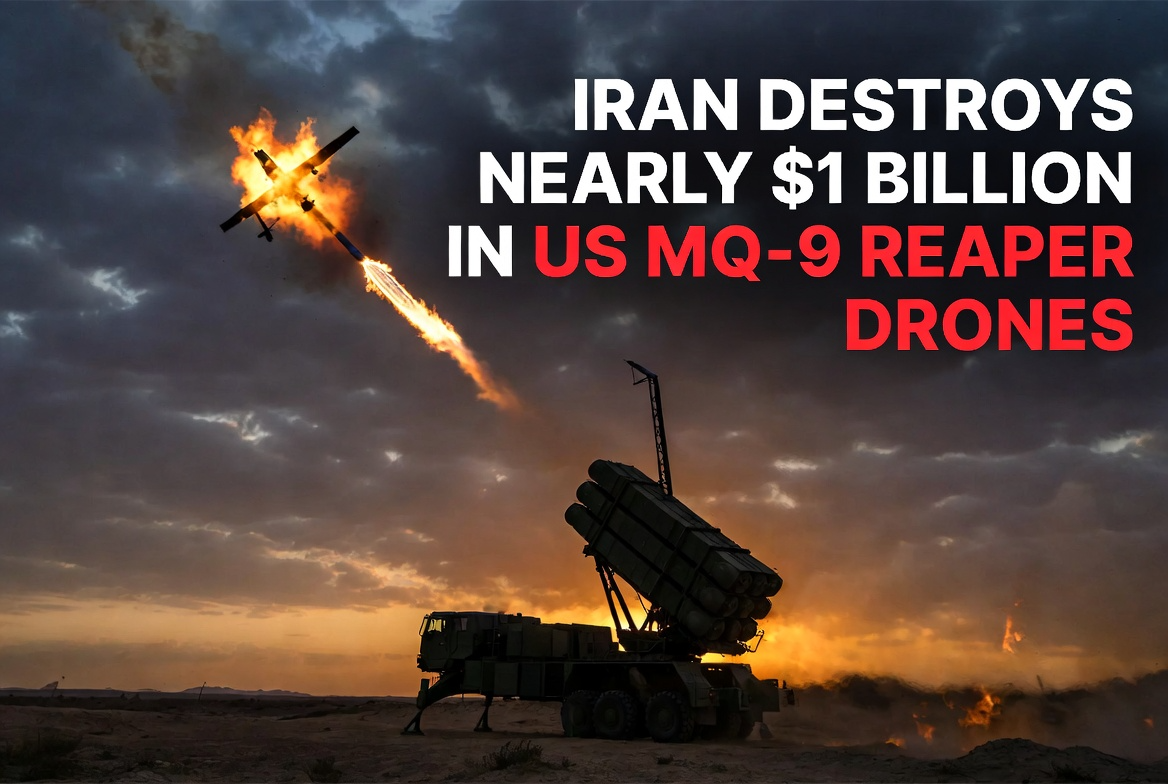
TEHRAN, May 21, 2026 — Iran has downed or destroyed more than two dozen US MQ-9 Reaper drones during the recent conflict with the United States and its allies, inflicting losses valued at nearly $1 billion, according to a Bloomberg report citing a person with direct knowledge of the matter.
The MQ-9 Reaper, a high-altitude, long-endurance unmanned aerial vehicle manufactured by General Atomics, serves as a key asset for intelligence, surveillance, reconnaissance, and precision strikes. Each unit typically costs around $30 million, depending on configuration and armaments. The reported losses represent roughly 20% of the Pentagon’s pre-war inventory of these hard-to-replace systems.
Many of the Reapers were shot down mid-flight by Iranian air defenses, while others were destroyed on the ground in missile strikes or lost in operational accidents. Broader US military aircraft losses in the conflict, known as Operation Epic Fury, total at least 42 aircraft damaged or destroyed — including fighters, tankers, and surveillance planes — with equipment losses estimated at $2.6 billion, according to a congressional report.
The Reaper losses highlight the effectiveness of Iran’s integrated air defense network against unmanned systems, even as the US conducted extensive airstrikes targeting Iranian missile facilities, nuclear sites, and drone production capabilities. The conflict, which began in late February 2026 and ended in a ceasefire in April, saw intense asymmetric exchanges where relatively low-cost Iranian missiles and air defenses inflicted disproportionate financial damage on high-value US assets.
US officials have described the MQ-9 as the “most valuable player” in the campaign despite the losses, crediting the drones with providing critical persistent surveillance and strike capability. The Pentagon is now seeking additional funding to replenish the fleet.
This development comes amid ongoing assessments of the war’s total cost to the US, estimated in the tens of billions when including operations, munitions, and force posture adjustments. No manned US aircraft were confirmed shot down by Iranian fire in the primary combat phase, though several incidents involved search-and-rescue operations following other losses.
The Bloomberg report underscores the shifting dynamics of modern warfare, where advanced drones face growing threats from layered air defenses, raising questions about future procurement strategies for unmanned systems.
About The Author