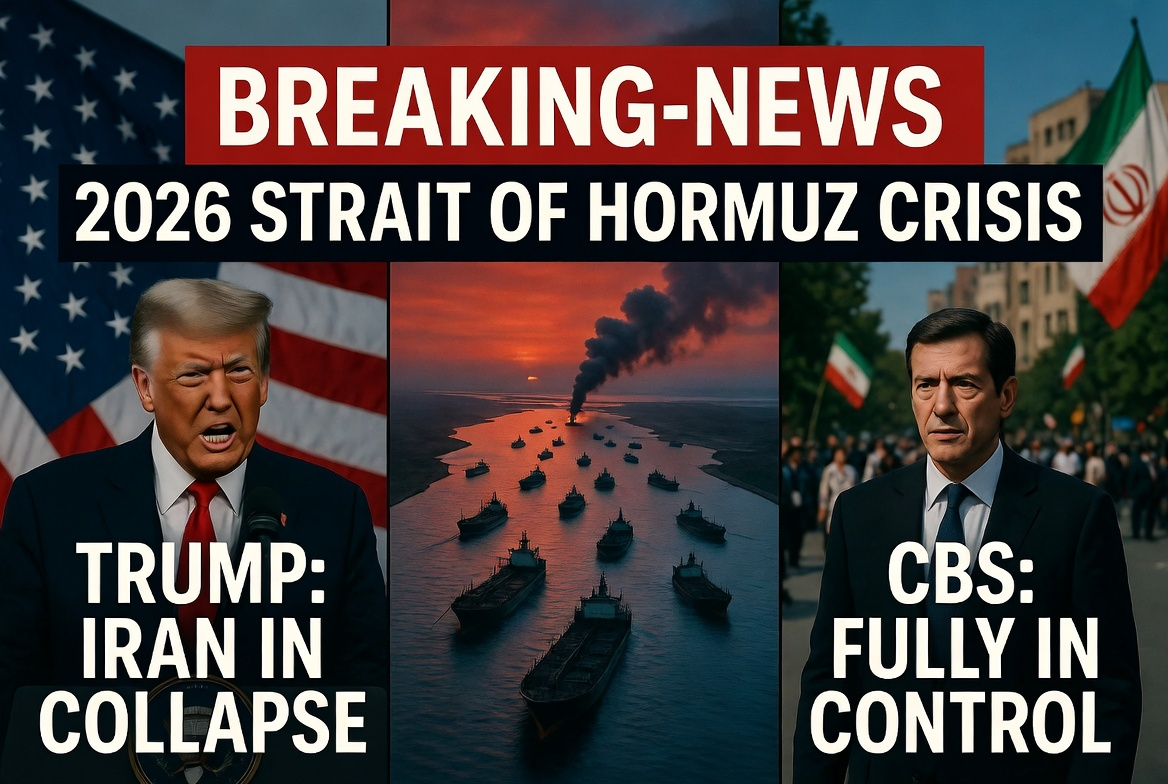
TEHRAN April 28, 2026 – U.S. President Donald Trump claimed Monday that Iran has privately informed Washington it is in a “state of collapse” and is urgently seeking the immediate reopening of the Strait of Hormuz.
However, a CBS News producer reporting from inside Tehran directly contradicted the assertion, stating there are “no visible signs of regime breakdown” and that the Iranian government remains “fully in control.”
The contrasting accounts come as the 2026 Strait of Hormuz crisis enters its third week, with U.S.-imposed blockades on Iranian ports and intensified pressure over Tehran’s nuclear program severely disrupting global oil shipments and pushing energy prices above $100 per barrel.
CBS’s on-the-ground assessment, filed from the Iranian capital, described normal government operations, intact leadership structures, and no evidence of the widespread chaos or collapse suggested by the Trump administration. The network’s producer noted that daily life in Tehran continues without the dramatic upheaval Trump described.
BRICS News, an independent geopolitics outlet, highlighted the discrepancy in a widely circulated post on X, underscoring the gap between Washington’s narrative and independent reporting from Iran.
The development adds fuel to ongoing debates about the effectiveness of U.S. sanctions and blockade tactics in a rapidly shifting multipolar world. Critics of the Trump administration argue the claims appear designed to justify continued pressure on Tehran, while supporters maintain that maximum economic pressure is nearing a breaking point for the Islamic Republic.
Iranian officials have not issued an official response to Trump’s specific claim but have repeatedly described the U.S. blockade as “economic terrorism” and insisted they will not negotiate under duress.
Oil markets reacted with volatility to the dueling reports, with traders closely watching for any concrete signs of Iranian capitulation or continued resistance.
Life News Agency will continue monitoring developments in Tehran and Washington as the Hormuz standoff threatens further disruption to global energy supplies.
About The Author