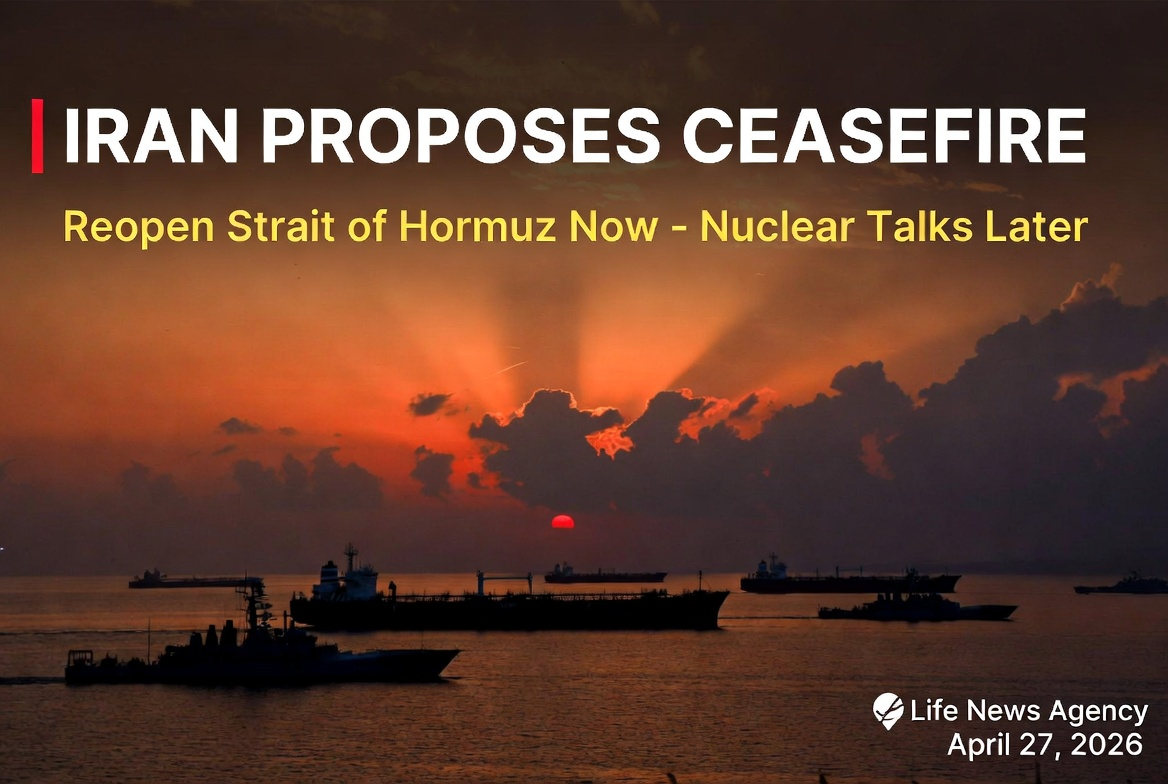
TEHRAN April 27, 2026 — Iran has offered the United States a new proposal to end the ongoing 2026 conflict by immediately reopening the Strait of Hormuz to international shipping and implementing a ceasefire, while postponing negotiations on its nuclear program to a later stage, Axios reported.
The initiative was conveyed through Pakistani mediators, who have played a central role in back-channel diplomacy between Tehran and Washington amid months of hostilities that began earlier this year. The proposal seeks to address the immediate economic fallout from restricted access to the Strait of Hormuz — a vital chokepoint for roughly one-fifth of global oil trade — which Iran partially closed following U.S. strikes, triggering disruptions in energy markets worldwide.
According to the report, the offer aims to break the current stalemate in talks. Iran would commit to reopening the strait and halting military actions in exchange for a ceasefire and the lifting of the U.S. naval blockade on Iranian ports. Core disputes over Tehran’s nuclear enrichment activities, ballistic missile program, and regional proxies would be addressed in subsequent phases rather than as a precondition for de-escalation.
Pakistani officials have been shuttling proposals between the two sides in recent weeks, with Islamabad emerging as a key neutral venue for indirect negotiations. Earlier frameworks discussed a two-phase approach: an immediate pause in fighting tied to strait access, followed by broader talks within 15–20 days. However, previous rounds have faltered over disagreements on the scope of any initial deal and Iran’s insistence on security guarantees.
U.S. officials have repeatedly stated that reopening the Strait of Hormuz remains a non-negotiable demand for any lasting ceasefire, citing threats to global energy security and freedom of navigation. President Trump has publicly linked any truce to this condition, while extending short-term pauses in hostilities to allow mediators more time.
No immediate official confirmation has emerged from Tehran or Washington on the latest proposal. Iranian Foreign Minister Abbas Araghchi is currently in Moscow for separate diplomatic consultations, while U.S. envoys continue to coordinate through intermediaries.
The report has already sparked debate on social media, with some observers questioning the timing — released just before Asian and European markets open — and labeling it potential market manipulation. Others noted Iran’s recent statements rejecting concessions on the nuclear file or strait access until a full war-ending agreement is reached.
Global oil prices, already volatile due to the conflict, could see short-term swings on the news. Analysts say any actual reopening of the strait would ease supply concerns, but deep-seated mistrust between the parties makes a swift breakthrough uncertain.
Life News Agency will continue monitoring developments from Islamabad, Tehran, and Washington as mediators push for clarity on the Iranian offer.
About The Author