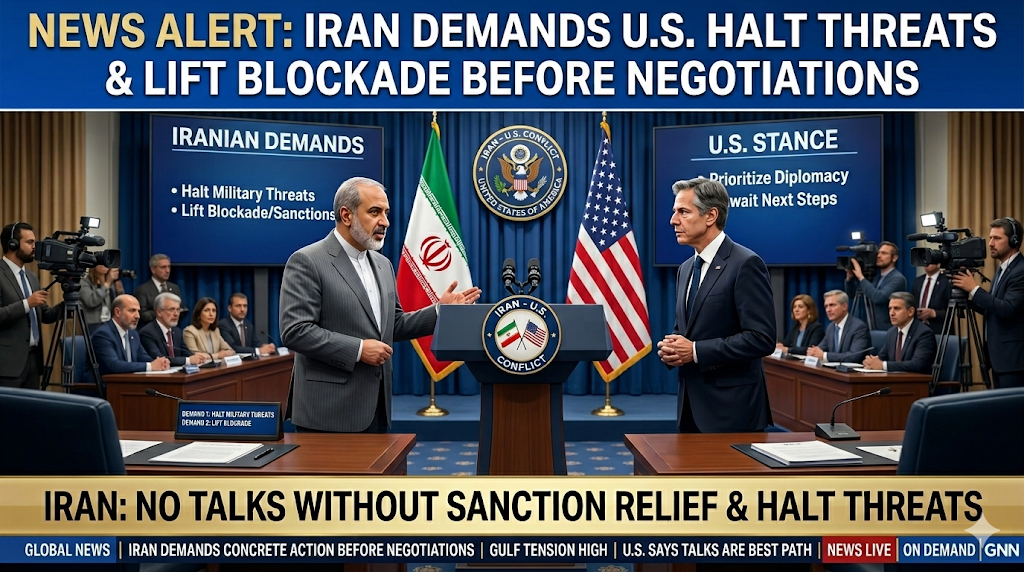
TEHRAN April 26, 2026 – Iran has firmly reiterated that the United States must cease all threats and military pressure before any resumption of nuclear or ceasefire negotiations can proceed, according to a breaking report from BRICS News.
Iranian Foreign Minister Abbas Araghchi has repeatedly emphasized that Tehran will not negotiate “under the shadow of threats,” a position echoed in recent statements amid escalating tensions with the Trump administration. The latest declaration comes as a fragile U.S.-Iran ceasefire — extended multiple times — faces uncertainty, with the U.S. maintaining a naval blockade on Iranian ports and shipping lanes, including areas near the Strait of Hormuz.
“We do not accept negotiations under the shadow of threats,” Araghchi and other senior Iranian officials, including Parliament Speaker Mohammad Bagher Ghalibaf, have stated in recent days. Iran has accused Washington of using military coercion, including threats of strikes on energy infrastructure, to force concessions on its nuclear program and regional activities.
The development follows indirect talks mediated in Islamabad, Pakistan, earlier this week. Iranian officials, including Araghchi, traveled to Pakistan to deliver demands through intermediaries, calling for the immediate lifting of the U.S. naval blockade, an end to all threats, and the rejection of what Tehran calls “maximalist” or “surrender” terms — such as full dismantlement of its nuclear capabilities.
U.S. President Donald Trump had planned to send envoys, reportedly including Steve Witkoff and Jared Kushner, to Pakistan for shadow diplomacy but canceled the trip at the last minute. Trump has publicly claimed the move prompted a “better proposal” from Iran, while continuing to assert strong leverage through the ongoing blockade and military readiness.
Iranian officials have warned they have prepared “new battlefield cards” if diplomatic efforts fail, while insisting that any talks must occur without coercion or excessive demands. The standoff has kept global oil markets on edge, with the Strait of Hormuz — a critical chokepoint for energy shipments — remaining a flashpoint.
This latest precondition from Tehran underscores deep mutual distrust. Both sides have accused the other of violating the spirit of recent ceasefires, with Iran pointing to the continued U.S. blockade and Washington citing Iranian proxy activities and nuclear advances.
About The Author