DAVOS, SWITZERLAND January 21, 2026 – U.S. President Donald J. Trump met with NATO Secretary General Mark Rutte on the sidelines of the World Economic Forum in Davos on Wednesday, where the two leaders discussed Arctic security and formed what Trump described as a “framework of a future deal” regarding Greenland. The meeting comes amid ongoing tensions over U.S. ambitions in the Arctic region, with Trump stating that new tariffs on European nations opposing his plans are no longer necessary.
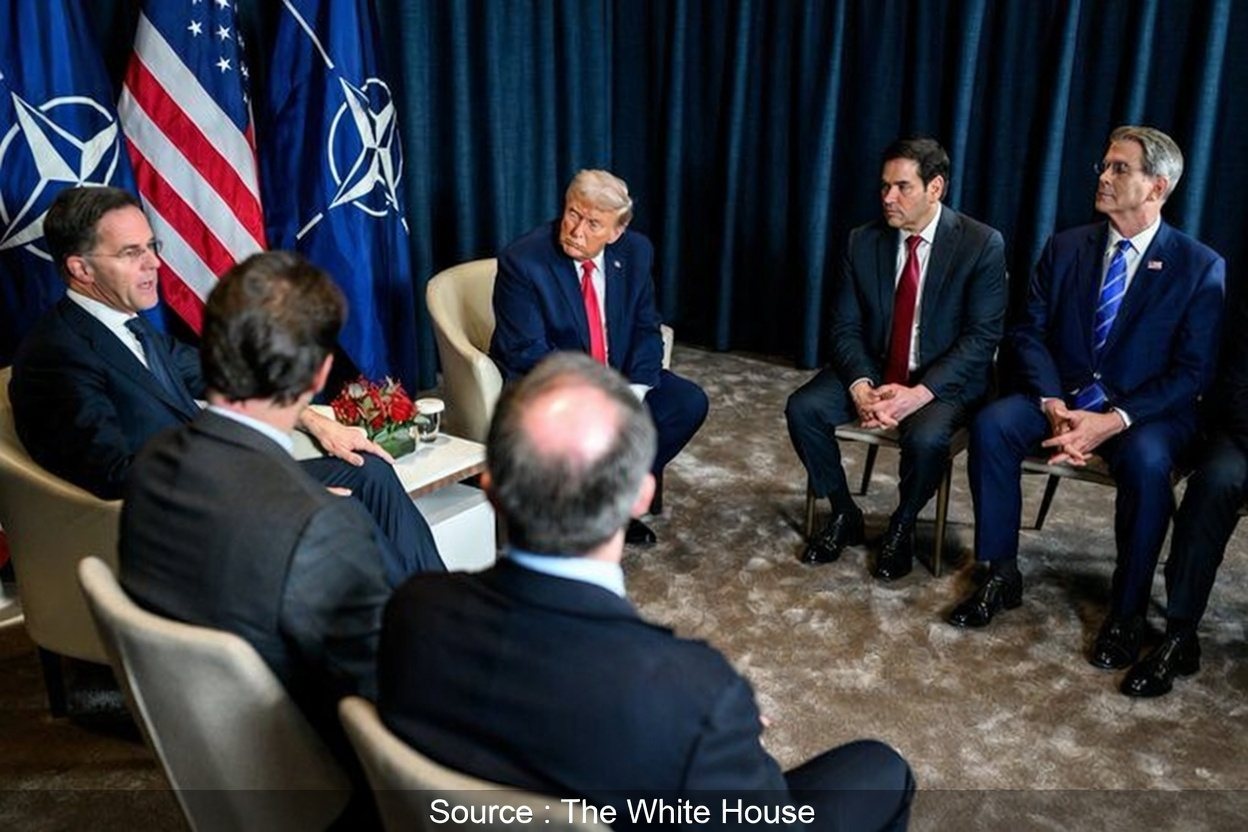
The White House posted a photo of the encounter on X, showing President Trump seated alongside Rutte and other officials in a formal setting adorned with U.S. and NATO flags. In the accompanying statement, Trump thanked Rutte for the discussion, noting they would address Greenland and previewing an upcoming event related to the “Board of Peace,” which he claimed is receiving “tremendous acceptance.”
According to a NATO spokesperson, the talks focused on Arctic security but did not touch on Denmark’s sovereignty over Greenland. Trump, however, emphasized progress on a deal framework that could involve mineral rights and enhanced U.S. positioning in the region, aligning with his long-standing interest in acquiring or influencing Greenland for strategic and resource purposes. In a subsequent interview with CNBC, Trump elaborated that the U.S. and European allies would collaborate on projects like the “Golden Dome” under this framework
The meeting also highlighted Trump’s newly established “Board of Peace,” an international initiative aimed at resolving global conflicts, including the Gaza crisis. Proposed in September 2025 and formally announced on January 15, 2026, the Board serves as a transitional body for overseeing reconstruction and peace efforts in conflict zones. Key members include former UK Prime Minister Tony Blair, U.S. Secretary of State Marco Rubio, and Trump’s son-in-law Jared Kushner. As of January 21, several countries have joined, including Saudi Arabia, Turkey, Egypt, and others, with a signing ceremony planned in Davos.
However, not all nations are on board. France, Norway, and Sweden have declined participation, citing concerns over international law, while Australia views joining as a potential risk without clear benefits. Critics, including some European leaders, have expressed caution, urging restraint until more details emerge.
Trump’s Davos appearance has stirred mixed reactions. Supporters praise his direct approach to security and peace-building, while detractors argue it injects uncertainty into alliances. The president’s speech at the forum earlier in the day emphasized strength through leverage, themes echoed in both the Greenland discussions and the Board of Peace rollout.
As the World Economic Forum continues, attention turns to Thursday’s potential Board of Peace event, which could further define Trump’s foreign policy agenda in his second term.
About The Author