WASHINGTON, D.C. December 3, 2025 – In a high-profile Oval Office gathering on Wednesday, President Donald J. Trump announced a bold reset of the Corporate Average Fuel Economy (CAFE) standards, aiming to dismantle what he called “burdensome regulations” that have driven up vehicle prices and stifled consumer choice. Flanked by key administration officials and industry leaders, Trump framed the proposal as a cornerstone of his “Make America Muscle Great Again” agenda, promising more affordable cars, trucks, and SUVs tailored to everyday American needs.
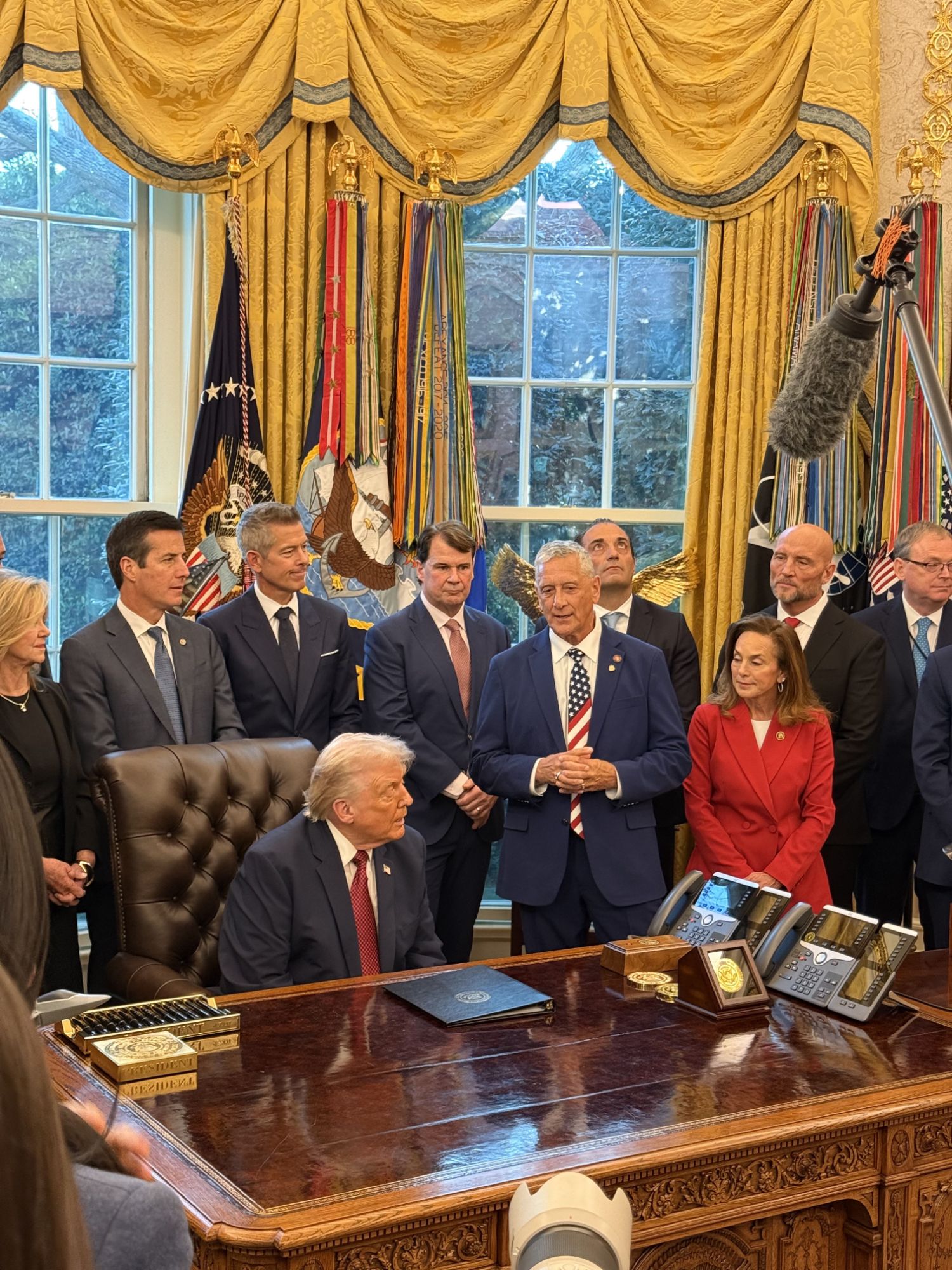
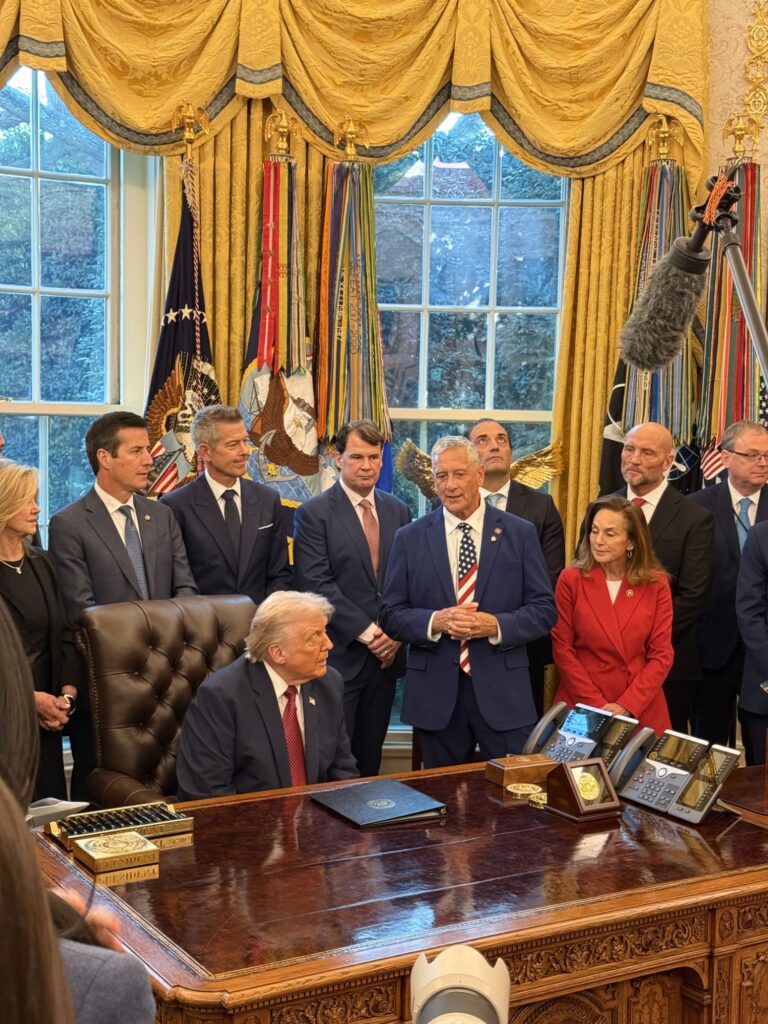
The event, captured in a widely shared photograph from the National Automobile Dealers Association (NADA), showed Trump seated at the Resolute Desk, surrounded by a cadre of suited allies against a backdrop of golden drapes and American flags. Among them were Transportation Secretary Pete Buttigieg, Energy Secretary Chris Wright, and NADA representatives, all nodding in apparent agreement as Trump gestured emphatically. The image, posted by NADA on X (formerly Twitter), quickly amassed thousands of views, with supporters hailing it as a win for working families.
“This is about giving Americans the freedom to choose the vehicles they want – powerful engines, spacious cabs, and prices they can actually afford,” Trump declared during the briefing. The proposed reforms, spearheaded by the National Highway Traffic Safety Administration (NHTSA), would roll back stringent fuel efficiency mandates set under the previous Biden administration. Instead, the new standards emphasize a “technology-neutral” approach, allowing automakers flexibility to meet targets using a mix of internal combustion engines, hybrids, and other innovations – without the heavy penalties for non-compliance that critics say inflated sticker prices by up to $1,200 per vehicle.
NADA, representing nearly 16,000 U.S. auto dealerships, issued a glowing statement in response, calling the move a “milestone” in their decades-long push for practical regulations. “NADA has advocated for rules that protect consumer choice and vehicle affordability,” the association said. “If finalized, these regulations would enable manufacturers to produce vehicles suited to a wide spectrum of consumers with varying budgets and fuel preferences. America’s franchised dealers support CAFE standards that are technologically feasible, economically practical, and in line with customer demand for affordable, fuel-efficient vehicles.”
The announcement comes amid Trump’s second-term focus on energy independence and deregulation, echoing his first-term efforts to ease CAFE rules. Administration officials project the changes could save consumers billions in compliance costs passed on by manufacturers, potentially lowering new vehicle prices by 5-10% across segments like pickups and family sedans. Early reactions on social media were enthusiastic: X users celebrated with memes of roaring muscle cars and quips like “Making America Muscle Great Again!” and “Finally, a car I can afford again.” One post even called for “Make diesel trucks great again!!!”
However, the proposal drew swift backlash from environmental groups and public health advocates. Critics, including the Sierra Club and American Lung Association, warned that loosening emissions standards could exacerbate air pollution, linking vehicle exhaust to higher rates of childhood asthma and respiratory issues. “Repealing rules to curb greenhouse gas emissions will increase gas prices and harm public health – even the Trump administration’s own analysis finds this,” tweeted one progressive user, citing a CBS News report on potential unintended economic ripple effects. California’s Democratic Governor Gavin Newsom was indirectly jabbed in replies, with one user labeling him a “douche” over the state’s stricter emissions rules, which could clash with federal policy.
NHTSA plans to open a public comment period next month, with finalization targeted for mid-2026. If approved, the reforms would mark a significant pivot from Biden-era policies that prioritized electric vehicles and aggressive decarbonization, potentially reshaping the $1 trillion U.S. auto market. For now, the Oval Office photo-op stands as a symbolic high-five between the White House and Detroit, signaling that in Trump’s America, horsepower – not just electron flow – is back on the menu.
As one dealer summed it up online: “They must be so happy Biden is out and PDJT is in!”
About The Author