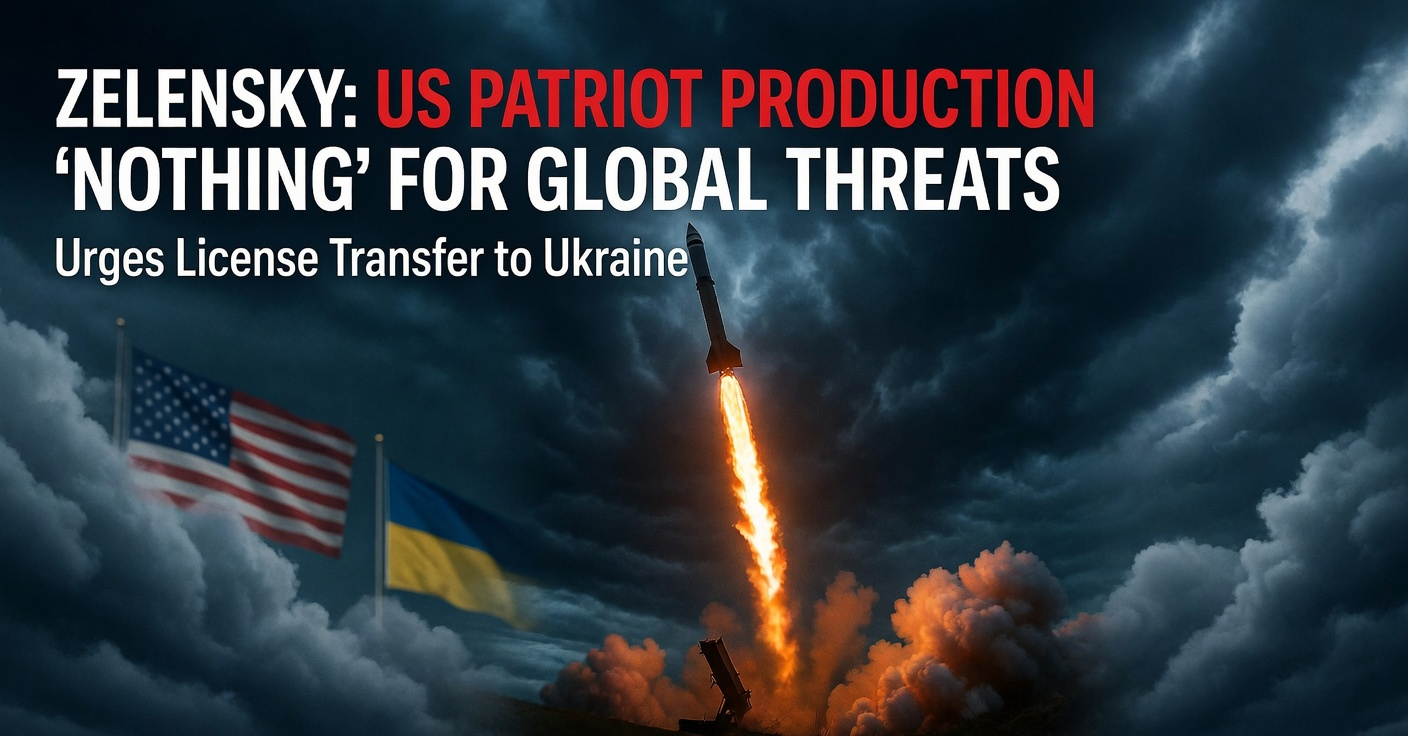
KYIV, UKRAINE June 1, 2026 — Ukrainian President Volodymyr Zelenskyy has publicly criticized the United States’ limited production of Patriot anti-ballistic missile interceptors, describing the current output as insufficient to meet escalating global security challenges.
In a recent interview, Zelenskyy stated that the US manufactures approximately 60–65 Patriot PAC-3 interceptors per month. “60–65 anti-ballistic missiles per month, compared to current challenges, is nothing,” he said. “It is no secret, and Russia knows this. We need to expand the production.”
Zelenskyy referenced high consumption rates during conflicts, noting that a single day of intense missile exchanges in the Middle East earlier this year reportedly used up the equivalent of nearly two years of US production capacity. He warned that such constraints could lead to crises in multiple regions.
The Ukrainian leader has formally requested that the US grant Ukraine licenses to produce Patriot missiles domestically. He confirmed making the same appeal to the previous US administration and is now repeating it to the current one. According to Zelenskyy, Ukraine has the capacity to ramp up output, which could benefit not only Kyiv but also US partners in the Middle East and elsewhere.
The Patriot system, produced by Raytheon (now part of RTX), is one of the world’s most advanced air and missile defense platforms. Its PAC-3 interceptors are designed to counter ballistic and cruise missiles. Demand has surged due to Russia’s sustained missile and drone campaign against Ukraine and other regional tensions.
US and allied production efforts have been ramping up, but industry experts and officials have acknowledged bottlenecks in scaling advanced munitions manufacturing. Ukraine has relied heavily on Western-supplied Patriots to defend against Russian strikes, particularly on cities and energy infrastructure.
Zelenskyy’s comments come amid ongoing Ukrainian appeals for additional air defense support as Russia prepares what Kyiv describes as potential large-scale attacks. The statement highlights broader concerns about defense industrial base capacity in prolonged high-intensity conflicts.
No immediate official response from the US administration has been reported. The issue touches on sensitive topics of technology transfer, supply chain security, and allied burden-sharing.
This development underscores the strains on global arms production exposed by the war in Ukraine and other flashpoints.
About The Author