Source : TechCrunch (AI-generated image)
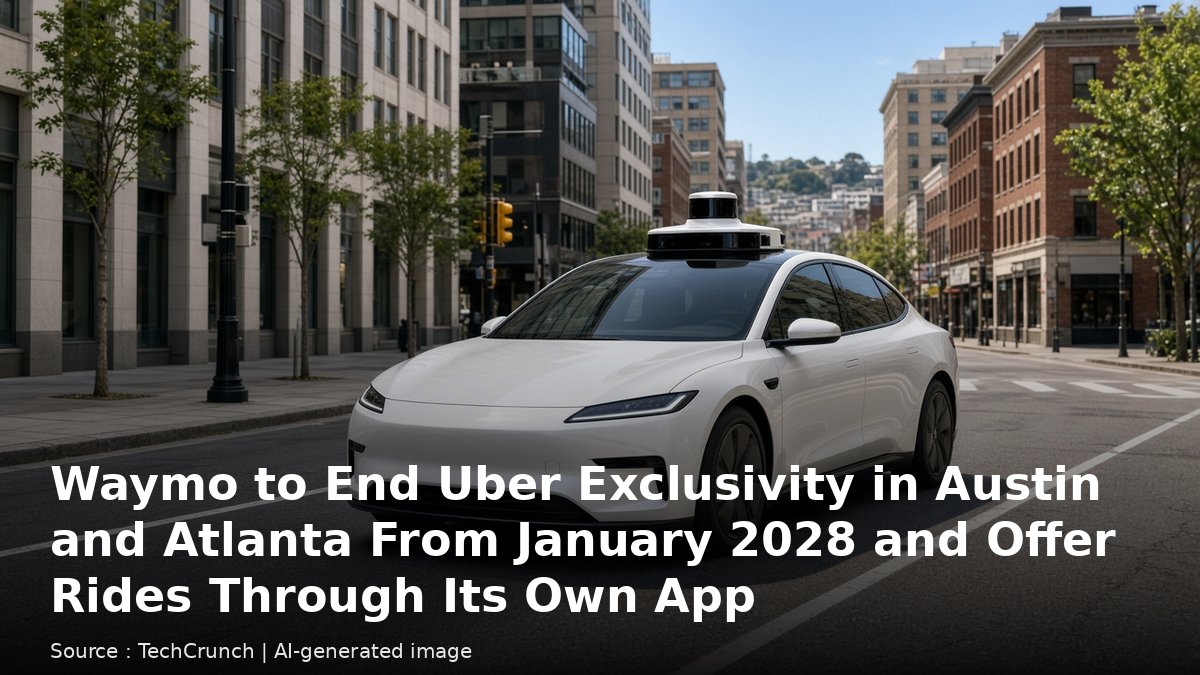
MOUNTAIN VIEW, California, November 4, 2026 – Waymo will end its exclusive arrangement with Uber in Austin and Atlanta from January 2028 and begin offering robotaxi rides in both cities directly through its own smartphone app, as reported by TechCrunch.
The change was disclosed by Waymo co-chief executive officer Tekedra Mawakana in an interview with Bloomberg News published on Wednesday. TechCrunch said Uber confirmed that it still intends to keep Waymo robotaxis available on its own app for as long as both companies agree to continue the arrangement.
At present, riders in Austin and Atlanta can only hail a Waymo vehicle through the Uber app, while in other cities where the self-driving service operates, customers book rides through Waymo’s own app. The planned change would bring the two Southern cities into line with the rest of Waymo’s markets, where the company already manages bookings and the rider experience itself.
Rider experience behind the decision
According to the report, Mawakana said Waymo first partnered with Uber because the ride-hailing company offered scale. However, she described the experience for riders as “a little bit of a crapshoot”, largely because people requesting a trip through Uber could never be sure whether they would be matched with a robotaxi or a car driven by a human.
“It’s important for us to have that relationship with the rider. We’ve gotten that feedback from the riders in those markets,” Mawakana said, as quoted in the report.
Her remarks follow reporting earlier this year by the Financial Times that Waymo was looking for a way out of its agreement with Uber, which had been set to run until May 2028. The January 2028 date therefore marks the end of exclusivity a few months before that deal would have expired.
Uber says app option was Waymo’s call
Uber, which works with a number of robotaxi and other autonomous vehicle partners, told Bloomberg that it had been Waymo’s decision not to include an option in the Uber app that would let riders book a robotaxi directly rather than leave it to chance.
TechCrunch noted that its story was updated after it received further information from Uber, and to make clear that Mawakana’s comments related to the exclusivity of the arrangement rather than the end of the partnership altogether. Waymo did not immediately respond to TechCrunch’s request for comment, and neither company has publicly set out what any arrangement after January 2028 would look like, including how rides would be shared between the two apps.
The shift highlights a wider tension in the robotaxi business between relying on large ride-hailing platforms to reach customers quickly and building a direct relationship with riders. Running bookings through its own app would give Waymo the direct relationship with riders that Mawakana described as important, while Uber’s stated plan to keep hosting Waymo vehicles on its app means the two companies could still cooperate after the exclusive period ends.
For riders in Austin and Atlanta, the practical change from January 2028 is expected to be a choice of where to book: through Waymo’s app, and possibly still through Uber, depending on how the companies’ relationship develops between now and then.
About The Author