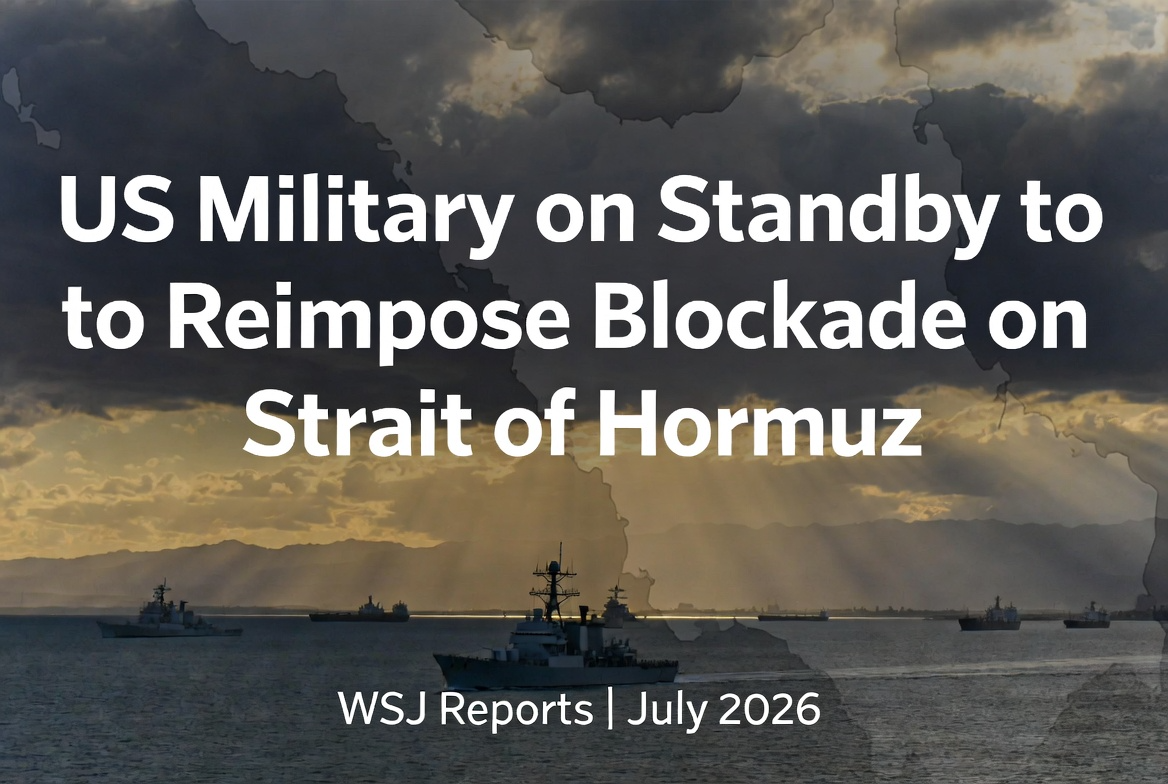
WASHINGTON D.C July 7, 2026 – The U.S. military is reportedly on standby and prepared to reimpose a blockade on Iranian ports in the Strait of Hormuz, according to reporting cited by the X account @BRICSinfo, which attributed the information to The Wall Street Journal.
This development comes amid heightened tensions following reported Iranian attacks on commercial vessels in the strategic waterway earlier on Tuesday.
The Strait of Hormuz, a critical chokepoint through which roughly 20% of global oil trade passes, has been at the center of the ongoing U.S.-Iran conflict that escalated earlier in 2026.
- In April 2026, the United States imposed a naval blockade on ships entering and leaving Iranian ports after Iran effectively closed parts of the strait and peace talks collapsed.
- The blockade was lifted in mid-June 2026 following a U.S.-Iran memorandum of understanding that included a 60-day window for toll-free transits and steps toward de-escalation.
The current reports suggest the U.S. may be preparing to reinstate similar measures in response to fresh provocations.
On Tuesday, Iranian forces were reported to have struck at least three commercial vessels near the Strait of Hormuz, including a Qatari-flagged LNG tanker and a Saudi crude oil tanker. The attacks were described by U.S. officials as a violation of the recent ceasefire understandings.
In response:
- U.S. Central Command launched strikes targeting Iranian air defense systems, coastal sites, missile positions, and port facilities in southern Iran (near areas like Sirik and Qeshm).
- The U.S. Treasury revoked a sanctions waiver that had allowed limited Iranian oil sales.
These events have raised fresh concerns about disruptions to global energy supplies and shipping.
A renewed U.S. blockade would aim to further restrict Iran’s ability to export oil and import goods, pressuring Tehran economically. However, it could also lead to:
- Higher global oil prices
- Increased shipping insurance costs
- Potential retaliation from Iran against commercial or military vessels
Markets are already reacting to the renewed volatility in the region.
The reported U.S. preparations come as talks between Washington and Tehran have been fragile. While a temporary halt in fighting was agreed upon in late June, Tuesday’s incidents have reignited tensions just as some shipping had begun to normalize.
No official confirmation of an imminent blockade has been issued by the White House or Pentagon as of the latest reports. The situation remains fluid, with U.S. forces already conducting retaliatory strikes.
Stay tuned for updates as this story develops rapidly. Geopolitical risks in the Strait of Hormuz continue to pose significant threats to global energy security.
About The Author