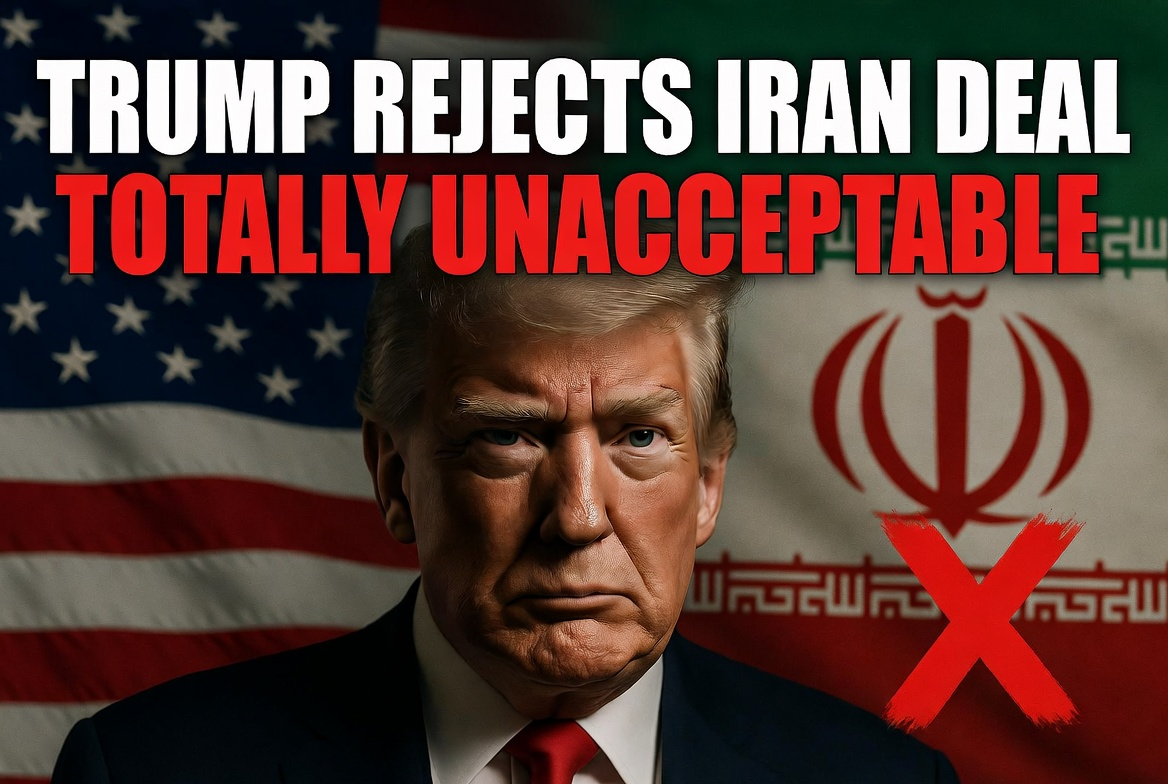
WASHINGTON D.C. May 10, 2026 — President Donald J. Trump has categorically dismissed Iran’s most recent response to U.S.-backed peace proposals, calling it “TOTALLY UNACCEPTABLE” in a statement released Sunday evening by the White House.
In the official post on X, the White House quoted Trump directly: “I have just read the response from Iran’s so-called ‘Representatives.’ I don’t like it — TOTALLY UNACCEPTABLE! Thank you for your attention to this matter.” The statement was accompanied by a graphic featuring a stern image of the president.
The sharp rejection arrives amid a fragile ceasefire that took effect on April 8, 2026, following weeks of direct U.S.-Iran military clashes, including American strikes on Iranian targets and naval confrontations that disrupted shipping through the Strait of Hormuz.
Pakistan has mediated the talks, which center on Iran’s nuclear program, unrestricted access for international shipping, sanctions relief, and regional security guarantees. Iran recently submitted a 14-point counterproposal, but Trump has repeatedly signaled dissatisfaction with Tehran’s offers, insisting on major concessions such as a long-term halt to uranium enrichment and the surrender of existing stockpiles.
U.S. officials have described the negotiations as ongoing but have warned that failure to reach a deal could lead to resumed military action. Earlier this month, Trump paused a short-lived operation dubbed “Project Freedom” to escort tankers through the Strait of Hormuz after allied pushback, while maintaining the naval blockade.
The latest development has fueled uncertainty in global energy markets, with oil prices remaining elevated due to fears of renewed disruptions in the Persian Gulf. No immediate comment from Iranian officials was available, though Tehran has previously described U.S. demands as unrealistic and warned against further escalation.
White House aides have not detailed next steps, but the president’s characteristically blunt language underscores Washington’s hardline stance: any final agreement must prevent Iran from acquiring nuclear weapons and ensure safe maritime passage — conditions Iran has so far resisted meeting in full.
Analysts say the impasse highlights deep mutual distrust built over decades. With the ceasefire repeatedly tested by minor exchanges of fire, both sides appear to be maneuvering for leverage as diplomatic efforts continue behind the scenes.
Further updates are expected in the coming days as mediators work to bridge the gap.
About The Author