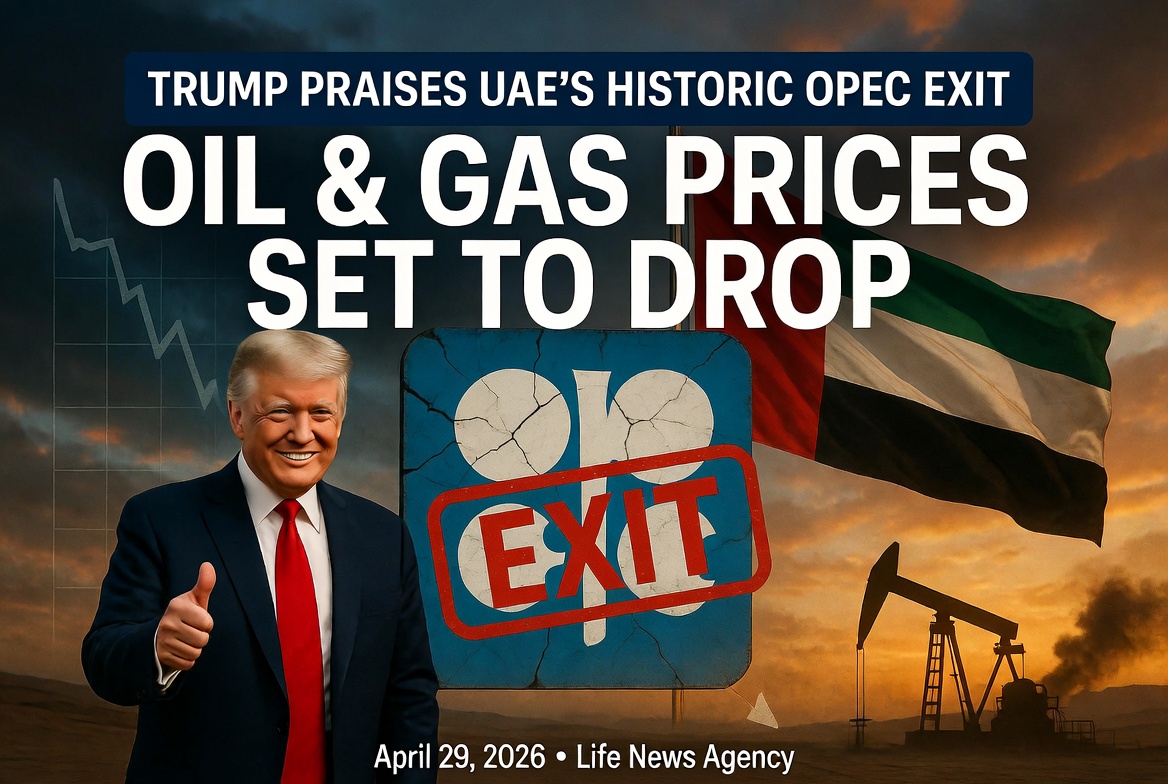
WASHINGTON April 29, 2026 – U.S. President Donald Trump has welcomed the United Arab Emirates’ surprise announcement that it will leave the Organization of the Petroleum Exporting Countries (OPEC) and the broader OPEC+ alliance effective May 1, describing the move as a significant step toward reducing cartel control and driving down global oil and gas prices.
The UAE, OPEC’s third-largest producer after Saudi Arabia and Iraq, formally notified the cartel it is withdrawing after nearly 60 years of membership. In a statement released via state news agency WAM, the UAE energy ministry cited its “long-term strategic and economic vision,” including plans for accelerated investment in domestic energy production and greater flexibility to respond to market demand.
Energy Minister Suhail Al Mazrouei emphasized that the decision aligns with national interests and a commitment to market stability, noting it comes at a time when the Strait of Hormuz—the critical chokepoint for much of the world’s oil—remains closed amid the ongoing Iran conflict. The timing limits any immediate market disruption from the exit.
President Trump, who has long criticized OPEC for what he calls artificially inflating prices, hailed the development. According to reports circulating on social media and aligned with his past positions, Trump stated that the UAE’s departure from the cartel will weaken its influence and allow for increased production, ultimately benefiting consumers with lower energy costs.
“This is great for the world,” Trump has signaled in response to the news, framing it as a blow to the decades-old production quota system that has at times clashed with U.S. interests. The move is widely viewed in Washington as a strategic win for the Trump administration, which has tied U.S. security commitments in the Gulf to more favorable oil pricing.
Market and Geopolitical Implications
Analysts say the exit reduces OPEC’s share of global oil supply control from around 30% to roughly 26%, potentially paving the way for higher output once Hormuz shipping resumes. However, immediate price relief remains uncertain due to the current energy crisis sparked by the Iran war, which has already pushed Brent crude above $100–$110 per barrel.
The UAE has stressed it will continue managing production responsibly and in line with global needs, but without the binding quotas that have frustrated Abu Dhabi in recent years. Experts note the departure could encourage other members to reassess their roles, further eroding Saudi-led cohesion within the group.
Oil prices trimmed gains Tuesday following the announcement, though broader volatility persists amid stalled U.S.-Iran ceasefire talks and heightened geopolitical risks.
The UAE’s decision marks the latest fracture in Gulf solidarity, coming against the backdrop of shifting alliances and Abu Dhabi’s push for energy independence and diversified economic ties—particularly with the United States.
Life News Agency will continue monitoring developments as the May 1 deadline approaches and OPEC+ prepares for its next coordination meeting.
About The Author