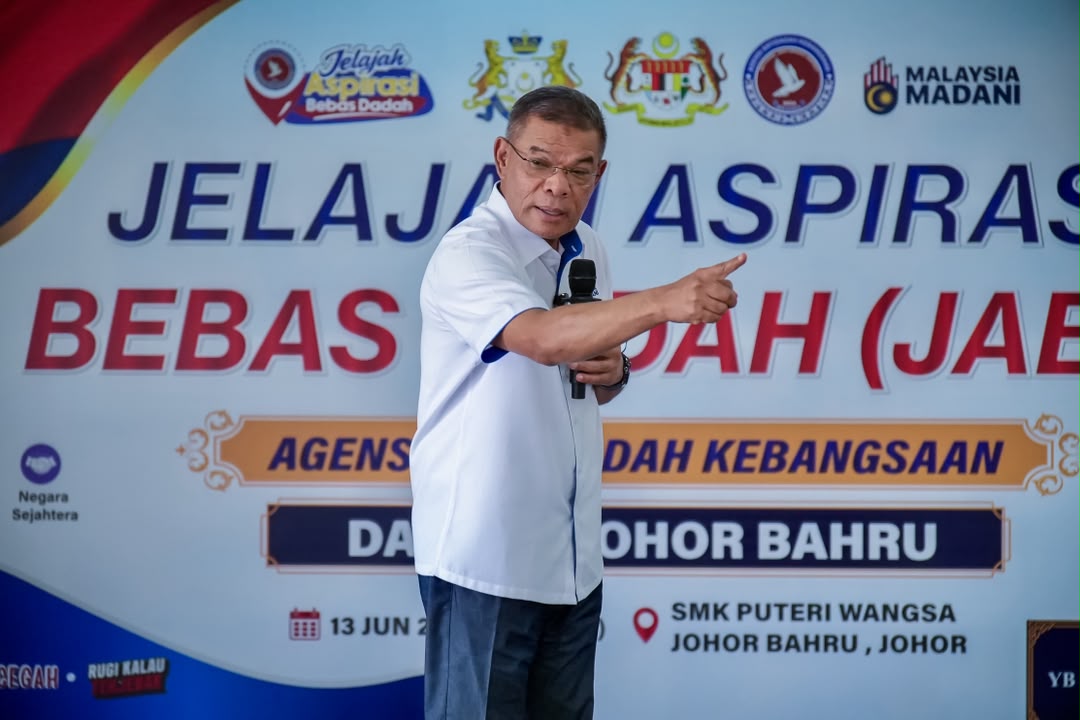
JOHOR June 13, 2026 — Home Minister Datuk Seri Saifuddin Nasution Ismail has responded to public concern over a viral social media campaign targeting Rohingya individuals, emphasising the need to differentiate between refugees and illegal immigrants while balancing humanitarian principles with national security and enforcement.
Speaking to the media during the Drug-Free Aspirations Tour outreach programme, the Minister acknowledged that temperatures have risen recently on the issue of refugees in Malaysia.
“Refugees are not the same as illegal immigrants,” he said. Illegal immigrants, who enter without documents or overstay illegally, are managed under the Immigration Act. Refugees, however, flee conflicts in their home countries due to push factors, with Malaysia acting as a pull factor.
He explained that the United Nations High Commissioner for Refugees (UNHCR) operates in Malaysia with two main roles: registering refugees and seeking their resettlement to third countries. Those awaiting resettlement are issued UNHCR cards. However, the success rate of resettlement remains far lower than the number of cards issued, resulting in refugees living within Malaysian society.
“Refugees are not only from Myanmar. As long as there is conflict anywhere in the world, they will come seeking protection,” the Minister noted.
On current management, the government is conducting its own data collection alongside UNHCR records. This domestic data will enable enforcement actions if refugees violate Malaysian laws. Prime Minister Dato’ Seri Anwar Ibrahim has stated that while awaiting a long-term solution, refugees must be managed humanely as they are fellow human beings, though their legal status remains under discussion.
“Anyone who commits violations will still be subject to enforcement action,” Saifuddin stressed.
The Minister encouraged open public discussion on the issue, which carries economic, security, and social implications. He invited academics, social activists, and experts to offer constructive and reasonable suggestions to the government.
He rejected attempts to portray the situation as a problem that only emerged in the past three years under the MADANI government, describing it instead as a long-standing legacy issue.
“Blame-shifting everything onto the government of the day is not fair,” he said, while affirming that the government remains responsible for national security and will continue to consider humanitarian factors.
The Minister added that the government is always open to constructive proposals as it fulfils its duty to manage the situation.
About The Author