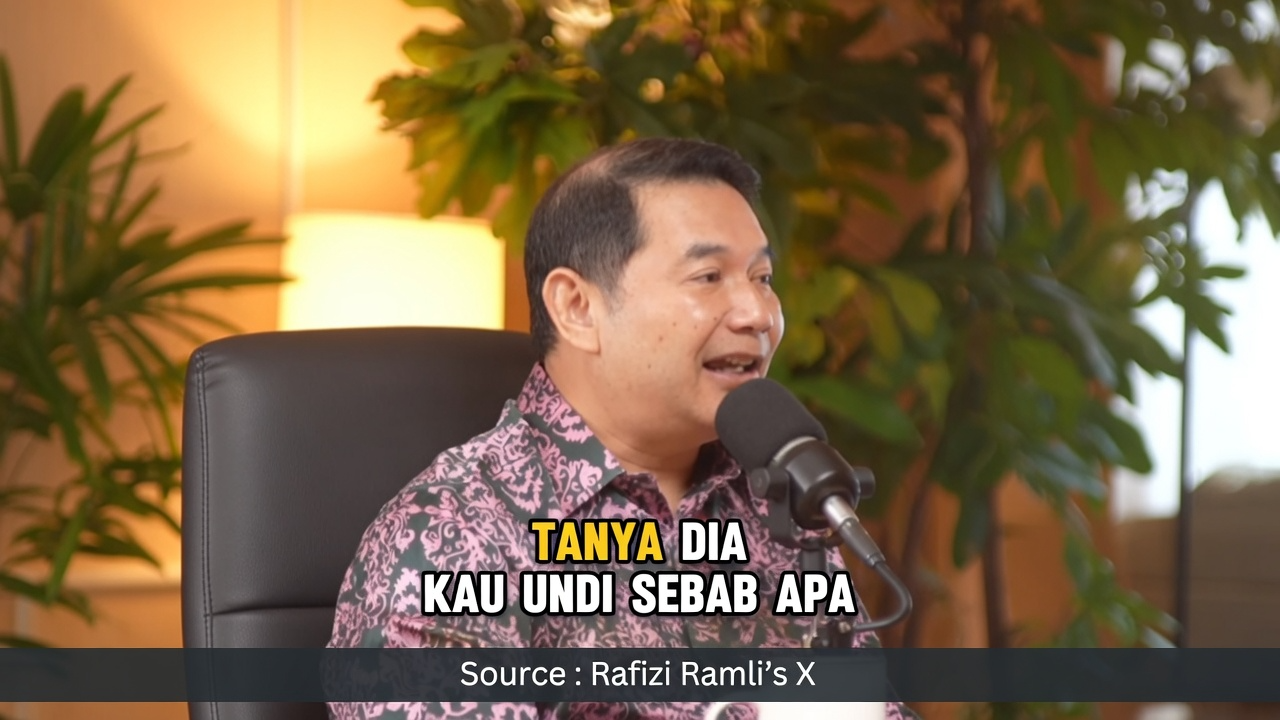
KUALA LUMPUR July 20, 2026 — Datuk Seri Rafizi Ramli, leader of the newly formed Parti Bersama Malaysia (BERSAMA), has called for a more nuanced understanding of his party’s performance in the recent Johor state election, rejecting the common narrative that BERSAMA’s participation simply split opposition votes and hurt Pakatan Harapan (PH).
In a post on X (formerly Twitter) on Monday, Rafizi addressed quick conclusions drawn after the July 11 poll.
“Many are quick to conclude about PRN Johor. New party enters, votes split, PH affected. It looks easy. It looks logical,” he wrote.
He highlighted a group of voters who approached BERSAMA representatives not to offer praise, but to express thanks. Some voters candidly shared that they had already decided on their votes before BERSAMA entered the contest.
Rafizi noted that an analyst referred to as DSA described this phenomenon as “voting in tears” (mengundi dalam tangisan).
“Sometimes, what appears on the surface is not the real story,” he stated. “Sometimes a party like BERSAMA, accused of disrupting, is actually holding back something bigger from happening.”
He emphasised that election data contains its own story when properly analysed and pointed to specific constituencies such as Perling and Stulang, where some voters reportedly cast their ballots with heavy hearts. Rafizi encouraged the public to watch the full analysis in Podcast YBM Episode 55.
The 16th Johor state election saw Barisan Nasional (BN) secure a strong victory with 48 seats in the 56-seat Dewan Undangan Negeri (DUN), while Pakatan Harapan (PH) was reduced to 8 seats. Perikatan Nasional (PN) won zero seats.
BERSAMA, contesting its first election in 15 seats, saw all its candidates lose their election deposits after polling an average of 3% to 6% of votes in those constituencies. Rafizi had earlier acknowledged a notable shift of votes toward BN across various demographic segments by age and ethnicity, which affected multiple parties including PH, PN, BERSAMA, and MUDA.
Despite the results, BERSAMA has signalled its intention to continue building the party. In a related announcement, the party indicated plans to contest in the upcoming Melaka state election, targeting 15 or more seats.
Rafizi’s latest comments come amid ongoing discussions about opposition dynamics in Johor and the challenges faced by newer political players in Malaysia’s multi-party landscape. The full post-election analysis is available in the referenced Podcast YBM episode.
About The Author