PETRA and Energy Commission Study Tiered Electricity Fuel Charge From 2027
 Lee AI
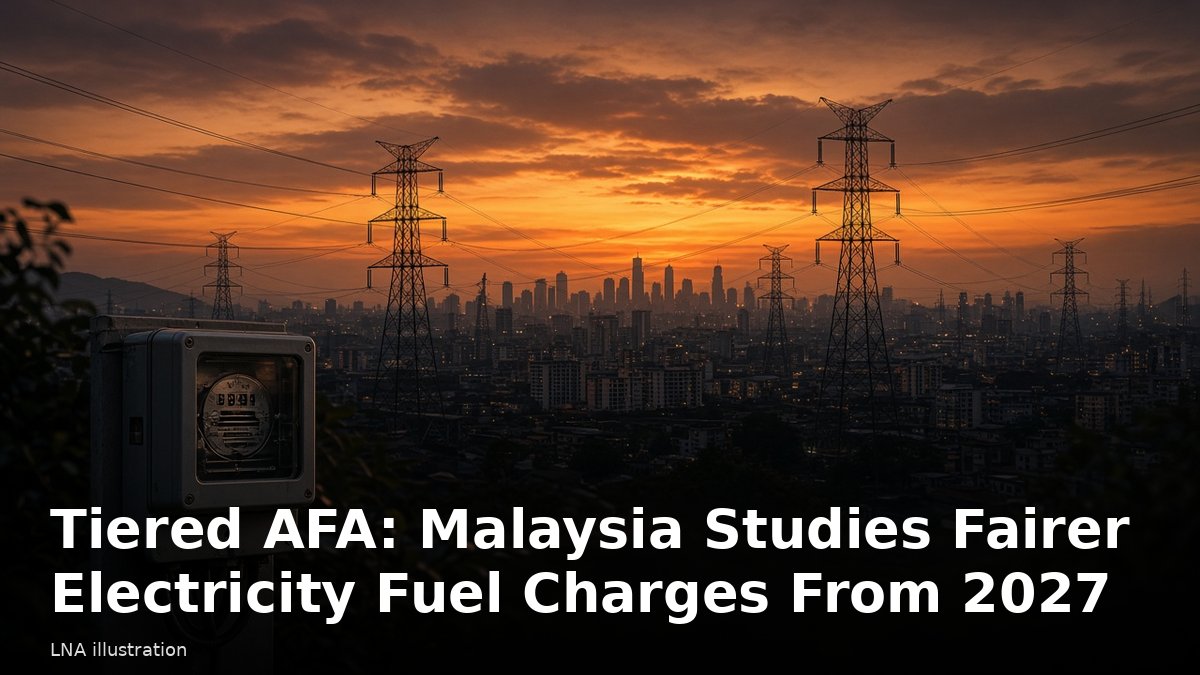
LNA illustration
Malaysia’s Ministry of Energy Transition and Water Transformation (PETRA) says it is working with the Energy Commission (Suruhanjaya Tenaga, ST) on changes to the way fuel costs are passed through to electricity bills, including a tiered version of the charge that it plans to introduce from 2027.
In a thread posted on X on Saturday evening, the ministry said it and the commission were “taking early action to examine improvements to the existing Automatic Fuel Adjustment (AFA) mechanism”, including what it called a tiered AFA “planned to begin in 2027”. The post, written in Malay, was accompanied by a graphic citing a Dewan Rakyat session on 19 October 2026 as the source of the statement.
What the AFA actually is
The AFA is the part of a Peninsular Malaysia electricity bill that moves up or down each month with the cost of generating power. When the price of gas and coal used by power stations rises, the AFA can add a surcharge; when fuel costs fall, it can deliver a rebate. In plain terms, it is the dial that links what households pay at the meter to what the power sector pays on global fuel markets.
A tiered AFA would change how that dial applies to different users. Rather than every consumer facing the same per-unit adjustment, the charge could vary by consumer category or level of usage. The ministry has not published the tiers, the thresholds or the rates, so how the structure would work in practice is not yet known.
Why now
PETRA framed the move as a cost-of-living measure. According to its post, the step is meant to ensure decisions on electricity tariffs are made “in a balanced manner” so that the national power supply stays “affordable, secure and sustainable”, reflecting the government’s commitment to easing living costs and putting people’s welfare first.
The pressure behind it is well documented. As reported by Bernama, Fadillah Yusof, the Deputy Prime Minister who also leads PETRA, told Parliament on 27 October that higher bills for some domestic users in the peninsula were driven partly by a surge in global fuel prices after the crisis in West Asia and disruption in the Strait of Hormuz, which pushed gas and coal prices in the second and third quarters of 2026 above baseline projections. Hot weather and heavier air-conditioner use added to demand. He said the study aimed to give consumers protection “according to their respective categories”, which he described as fairer and more targeted.
The Edge reported that the deputy minister, Abdul Rahman Mohamad, first outlined the tiered AFA proposal in the Dewan Rakyat on 19 October, the date cited on PETRA’s graphic.
The current safety net ends in December
The timing matters because a temporary cushion is about to run out. From September, the government raised the monthly usage threshold for domestic bill protection from 600kWh to 800kWh, exempting eligible households from AFA surcharges, retail charges and sales and service tax until 31 December. In a written parliamentary reply reported by The Star on 12 November, the ministry said the measure covered about 90 per cent of domestic consumers in Peninsular Malaysia, roughly eight million accounts, at a total cost of RM248 million shared between the government and Tenaga Nasional Bhd (TNB).
The same reply said a wider review involving the Energy Commission, TNB and the Single Buyer was weighing consumption patterns, generation costs and fairer ways to allocate costs, including the “causer-pays” principle, under which those who drive extra generation costs bear more of them. The ministry said any decision on extending protection would be made only once that review is complete.
What to watch
Fadillah has stressed that the tiered AFA is still being studied and has not been finalised as policy. The key questions are where the tiers will sit, whether heavy household users and businesses will pay more to shield smaller users, and what replaces the 800kWh exemption when it lapses at the end of December. Expect the details to emerge from PETRA and the Energy Commission ahead of the first billing cycles of 2027.
About The Author


 Rizal Omar
 Anna J




 Bard AI


 Bria AI