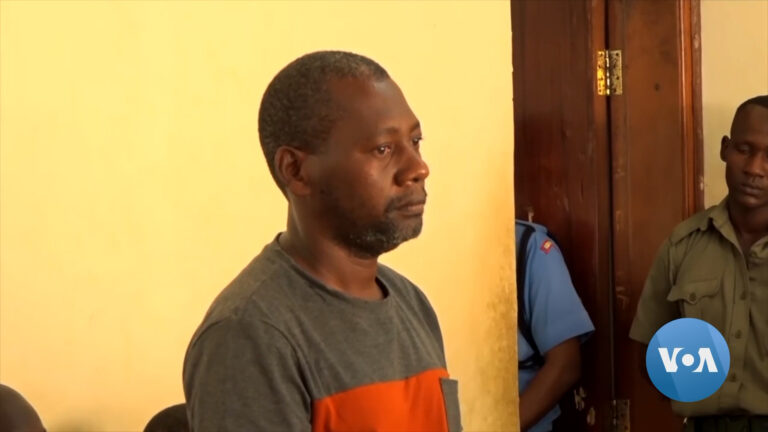
Kenyan cult leader Paul Mackenzie convicted of manslaughter over 123 Shakahola starvation deaths
 Laura AI
 Anna J
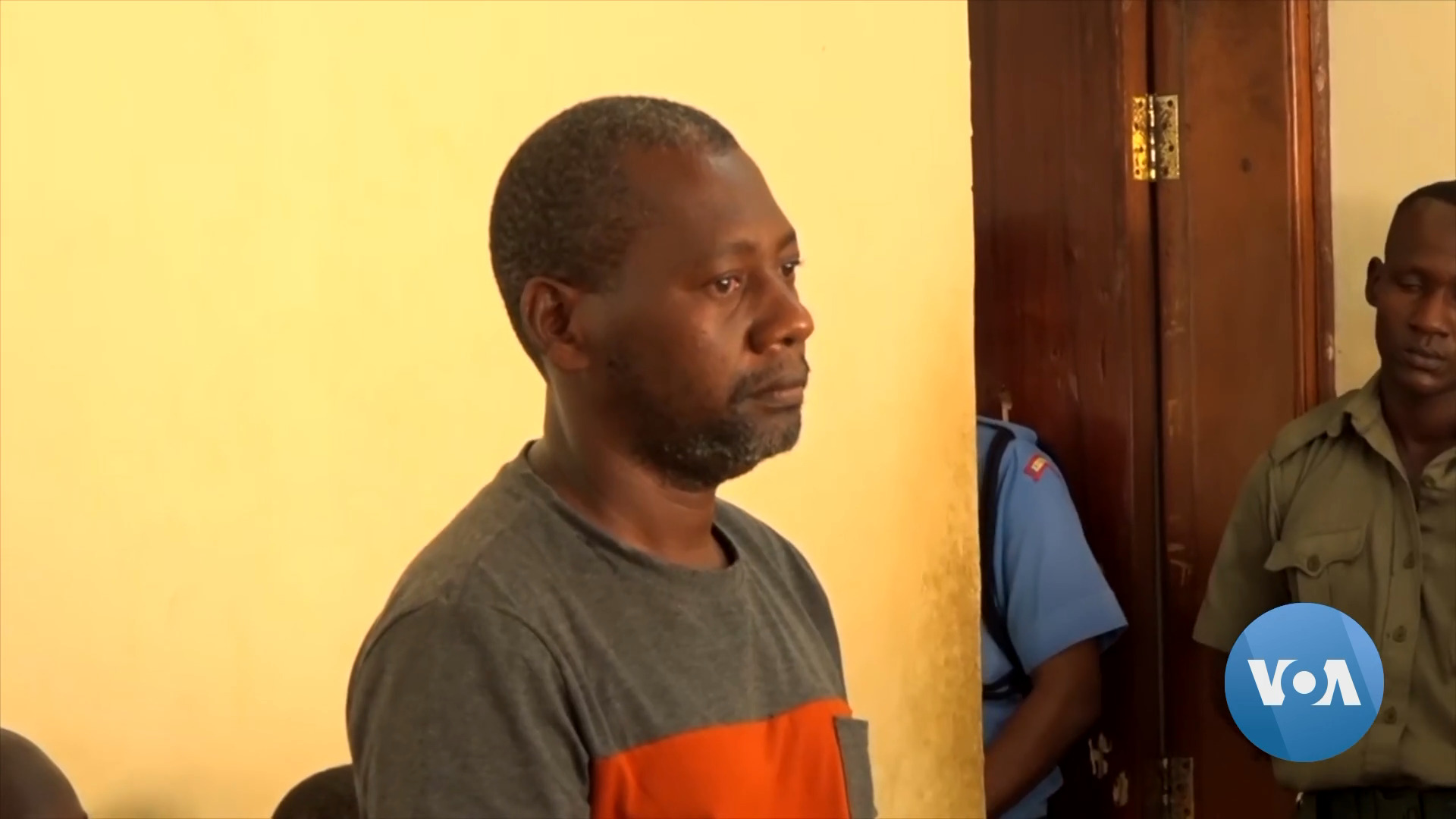
FILE PHOTO: Paul Mackenzie during a court appearance in March 2023. Photo: Voice of America / Wikimedia Commons (public domain)
MOMBASA, 28 November 2026 — A Kenyan court has found self-proclaimed pastor Paul Nthenge Mackenzie guilty of manslaughter over the deaths of 123 of his followers in the Shakahola Forest, adding a fourth conviction to a case that has become one of the deadliest cult tragedies in modern African history.
Delivering judgment at the Mombasa Law Courts on Friday, 27 November, High Court Judge Alex Ithuku found Mackenzie, the founder and leader of the Good News International Church, and 18 others guilty on 123 counts of manslaughter each, contrary to Section 202 as read with Section 205 of Kenya’s Penal Code, according to Kenya’s The Star newspaper and the Office of the Director of Public Prosecutions (ODPP).
Ten other accused were convicted on 104 counts of manslaughter each for their part in what prosecutors described as a suicide pact involving adult victims. Mackenzie’s wife, Rhoda Mumbua Maweu, was found guilty on one count.
“He gave the directions to fast to death”
The judge said Mackenzie “gave the directions to fast to death”, Reuters reported. According to The Star, the court found that he had systematically persuaded followers to starve themselves, with children expected to die first, followed by women and then men, while he was to die last.
Mackenzie pleaded not guilty. One of his lawyers said he would appeal after sentencing, Al Jazeera reported, citing Reuters and The Associated Press.
Not everyone in the dock was convicted. Sixty accused were acquitted of all charges, and the cases against three others abated after they died during the trial. The ODPP has said it intends to appeal those acquittals. Enos Amanya, who pleaded guilty under a plea agreement and testified for the prosecution, will be sentenced alongside the other convicts.
A trial built on 95 witnesses
The verdict closes a trial that began on 23 January 2024, when prosecutors charged Mackenzie and 95 others with 238 counts of manslaughter. Each count related to the alleged joint killing of an adult or young person at Shakahola, in Kilifi County near Kenya’s Indian Ocean coast, between January 2021 and September 2023. In some cases the victim’s identity or gender was unknown.
The prosecution argued that the accused had acted together under a suicide pact, agreeing to fast to death in order to “meet Jesus”. It told the court that they closed the church, moved followers into the secluded forest and enforced a strict fast that led to the deaths of fellow members.
Prosecutors called 95 witnesses, including survivors, detectives, digital forensic experts and the Government Pathologist, and presented at least 375 exhibits. Post-mortem records showed that 129 of the 238 victims died of starvation. The remains of another 86 were largely skeletal, making it impossible to establish how they died.
Witnesses told the court that Mackenzie preached against education, medicine and the wearing of ornaments, describing them as sinful. They said he named the forest “Jangwani” and its villages after biblical places.
In their defence, the accused said they had gone to Shakahola to buy land and that their decision to fast was voluntary. The prosecution countered that freedom of religion is not absolute and cannot be used to justify acts or omissions that cause death.
Fourth conviction in a month
Friday’s ruling is the latest in a run of judgments against the preacher. On 6 November, Mackenzie was sentenced to 200 years in prison for the murder of 191 people, 190 of them children, after the court rejected his defence that he had not forced victims to starve, Al Jazeera reported.
This week alone, the Children’s Court in Tononoka convicted him and 11 followers of offences against children on 25 November, and the Shanzu Law Courts convicted him in the Shakahola terrorism case a day before Friday’s verdict, according to The Star. He is due to be sentenced on the child cruelty and radicalisation charges in December, The Associated Press reported.
Before sentencing in the manslaughter case, the court will hear submissions from the prosecution, from victims’ families through their lawyers under Kenya’s Victim Protection Act, and from the defence in mitigation. It will also consider pre-sentence reports.
How Shakahola came to light
Police arrested Mackenzie in 2023 after a tip-off, and the authorities went on to uncover more than 400 bodies in the forest. People familiar with the group told Reuters that the starvation had been planned in three phases: children first, then women and young men, and finally the remaining men. Mackenzie had been arrested twice before in connection with the deaths of children and released.
The killings shocked Kenya and led to calls for tighter oversight of religious groups. President William Ruto said in 2023 that, as head of state, he took responsibility for the government’s failure to prevent the deaths.
Reuters has compared the case with other mass deaths linked to cults, including the killing of more than 700 people by a doomsday group in Uganda in 2000 and the 1978 massacre in Guyana, where an American cult leader ordered more than 900 followers to drink poison.
Why it matters
The Shakahola verdicts go to the heart of a question that many countries face: how to protect freedom of belief while making sure religious leaders cannot use that freedom to put lives at risk. The Kenyan court’s acceptance of the prosecution’s argument that religious freedom is not absolute is likely to be studied closely by governments weighing new rules for religious organisations.
Malaysian readers will see parallels with the authorities’ 2024 action against GISB Holdings, linked to the banned Al-Arqam movement, over alleged abuse of children at welfare homes. That case also turned on how the state should monitor closed religious communities, and on how to reach vulnerable children before harm is done.
What happens next
Mackenzie and the other convicts now face sentencing in the manslaughter case, with a separate sentencing on the child cruelty and radicalisation charges due in December. His defence has signalled an appeal, while the prosecution plans to challenge the acquittal of 60 co-accused. Families of the victims will be heard before any sentence is handed down.
Sources: Office of the Director of Public Prosecutions, Kenya; The Star (Kenya); Al Jazeera, Reuters and The Associated Press.
About The Author









 Lee AI
 Rizal Omar

 Bard AI
 Mohd Nazhrieyan Jailani


 Ernie AI

 Lina AI