By Professor Dato Dr Ahmad Ibrahim
Interest in science diplomacy has skyrocketed in recent times. Once a niche footnote in international relations, it is now touted as the last, best hope for mending a fractured world. The logic is seductive: while politicians bicker, scientists can collaborate on climate, pandemics, and space. But beneath this hopeful veneer lies a sprawling, under-theorized field. We’ve celebrated the “what”, joint research, and the “why”, peace and prosperity. It’s time we interrogated the “how,” the “when,” and the “for whom.” If we are serious about using science to resolve global conflicts, our research agenda must move beyond feel-good case studies. Here are four uncharted frontiers that demand our attention.
First, the dark matter of science diplomacy: failure. The literature is overflowing with success stories—CERN, the Antarctic Treaty, the Iran nuclear monitoring deal. But for every triumph, a dozen quiet failures litter the floor. Think of the collapsed Arctic fisheries negotiations, the stalled data-sharing agreements between hostile neighbors, or the science envoys who returned home with nothing but polite silence. We need rigorous research into negative results. Some of the research questions include, when does science collaboration fail to build trust? Does it sometimes deepen suspicion—for instance, when a joint project is perceived as espionage or technological theft? Until we map the fault lines of collapse, our prescriptions are wishful thinking.
Second, the tyranny of metrics. How we measure the effectiveness. Diplomats want impact; scientists want citations. Neither knows how to measure science diplomacy’s true return on investment or value. Current evaluation is embarrassingly crude: number of co-authored papers, memoranda signed, or “trust-building” events hosted. But how do you quantify a slow shift in perception? How do you attribute a de-escalation of border tensions to a water-sharing hydrology project versus unrelated economic pressures? Researchers must develop new, hybrid methodologies—perhaps combining social network analysis, ethnographic process-tracing, and longitudinal trust indices. Without credible metrics, science diplomacy will always lose funding to tanks and tariffs.
Third, the equity paradox. Most science diplomacy today is a rich-nation’s game. Western capitals dispatch scientific attachés to the Global South, framing collaboration as benign aid. But beneath the surface lurks neocolonialism: data extraction, brain drain, and the imposition of research agendas that serve Northern priorities. A critical research topic, then, is decolonizing science diplomacy. How do we design genuinely reciprocal frameworks where the host country’s indigenous knowledge, local research needs, and ethical oversight are not afterthoughts but pillars? Studies of South-South science cooperation—Brazil-Africa on agricultural biotechnology, or India-ASEAN on tsunami warning systems—offer a neglected goldmine. We must ask: who sets the agenda, and who reaps the rewards?
Fourth, the agent of change. Much scholarship assumes that scientists are natural diplomats—rational, truth-seeking, and above the fray. This is a dangerous myth. Scientists carry their own biases, career ambitions, and institutional loyalties. A researcher from a sanctioned state may be a patriot, a spy, or a dissident; a Nobel laureate can be a terrible negotiator. We need granular, psychologically-informed research on the individual diplomat-scientist. What training actually works? Are scientists with prior policy experience more effective? How do gender, seniority, and cultural fluency shape outcomes? Without this, we are throwing brilliant but unprepared people into geopolitical firestorms.
The window for action is narrow. As multilateralism crumbles and anti-expert populism rises, science diplomacy cannot afford to remain a collection of heartwarming anecdotes. The research community must step up—not with more abstract frameworks, but with gritty, comparative, and sometimes uncomfortable studies of power, failure, and inequality. Let’s stop asking whether science diplomacy can work. It can, sometimes. Let’s start asking under what precise conditions, for whose benefit, and at what hidden cost. Those are the research topics that will turn a promising idea into a reliable tool for a planet in distress.
In Malaysia, the International Institute of Science Diplomacy and Sustainability, IISDS, under the auspices of UCSI university, is embarking on such research journey to unravel the many unknowns of science diplomacy. The hope is through such research undertakings, there will better appreciation of the real power of science diplomacy as a potent instrument to propagate global peace.
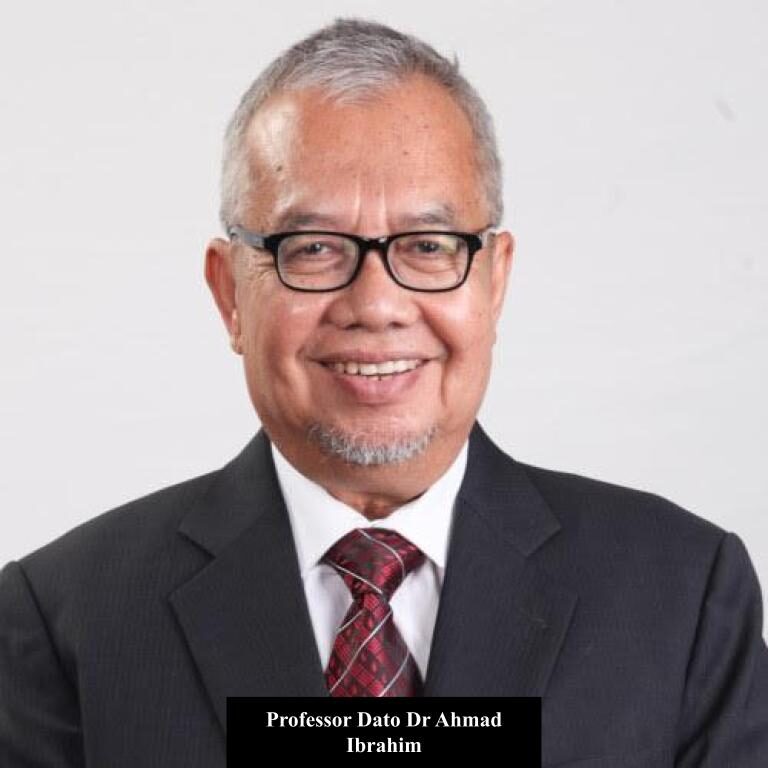
The author is affiliated with the Tan Sri Omar Centre for STI Policy Studies at UCSI University and is an Adjunct Professor at the Ungku Aziz Centre for Development Studies, Universiti Malaya.
About The Author