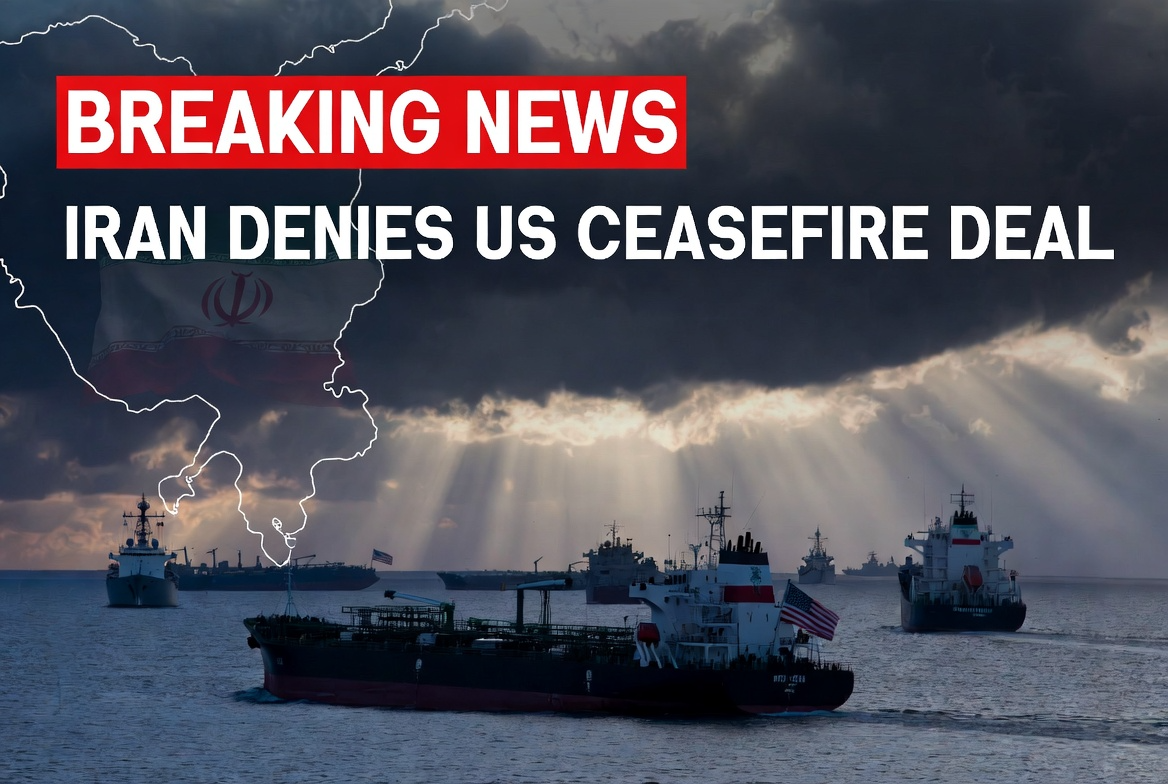
TEHRAN, May 28, 2026 — Iranian state media has firmly rejected reports claiming that the United States and Iran have reached any agreement, pushing back against recent leaks and statements suggesting a breakthrough in negotiations.
The denial comes hours after U.S. officials and media outlets, including Axios, reported progress toward a 60-day memorandum of understanding (MOU) to extend the fragile ceasefire. According to those accounts, the tentative framework would reopen the Strait of Hormuz to unrestricted commercial traffic, with Iran clearing mines within 30 days in exchange for the U.S. lifting its naval blockade. It would also initiate broader talks on Iran’s nuclear program and potential sanctions relief, while requiring Tehran to pledge no pursuit of nuclear weapons during the period.
Iranian officials dismissed these claims as premature or fabricated. A foreign ministry spokesperson emphasized that no deal has been finalized and highlighted “contradictory statements” from the U.S. side, along with alleged Israeli interference, as major obstacles.
“Future management of the Strait of Hormuz is a matter for Oman and Iran,” one official noted, describing proposed charges not as tolls but as “fees for navigational services.” Tehran has repeatedly stressed that it will not reopen the vital waterway without concrete U.S. concessions and an end to perceived violations of the existing ceasefire.
The Strait of Hormuz, through which about one-fifth of global oil passes, has been a flashpoint since the outbreak of hostilities. Iran has periodically restricted or threatened to close the strait, deploying mines, drones, and fast-attack craft, in response to U.S. blockades and military actions. The U.S. briefly paused its “Project Freedom” escort operations earlier this month, citing progress in talks, but tensions persist.
Negotiations, often mediated through intermediaries like Oman, Pakistan, and Qatar, have focused on:
- Extending the ceasefire
- Restoring commercial shipping
- Addressing Iran’s nuclear enrichment activities
- Potential sanctions relief
U.S. President Donald Trump has publicly stated that a deal is “largely negotiated,” while cautioning that time is on Washington’s side and military options remain available.
Iranian sources, however, maintain that core demands—such as surrendering highly enriched uranium stockpiles—have not been accepted, and no commitments have been made on key nuclear issues.
Oil prices have fluctuated sharply on conflicting signals, with markets sensitive to any disruption in the Strait of Hormuz. Some analysts describe the back-and-forth as “geopolitical schizophrenia,” contributing to volatility in energy and stock markets.
As a BRICS member, Iran’s position underscores broader challenges in U.S.-Iran diplomacy, including enrichment rights, sanctions, and external influences. Both sides continue indirect talks, but a final agreement remains elusive.
This story is developing. Further updates are expected as negotiators reconvene.
About The Author