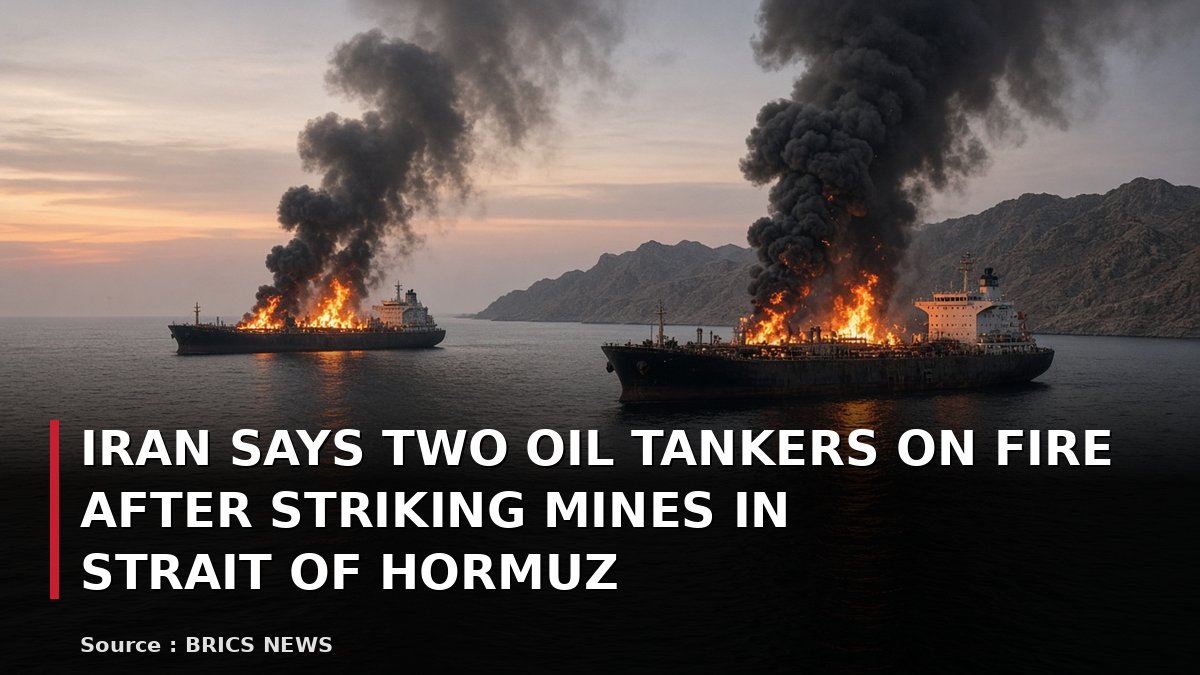
Source : BRICS NEWS
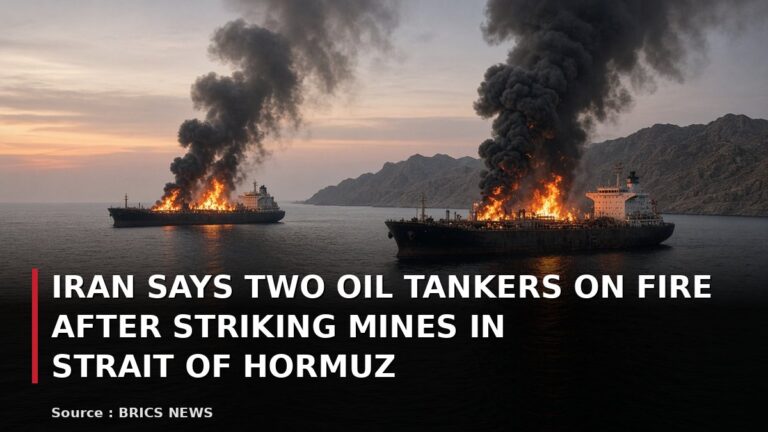
Iran says two oil tankers are on fire after being struck by mines while crossing the Strait of Hormuz, BRICS News reported in a post on X on Tuesday, October 20, the latest in a run of mine incidents claimed by Tehran in the strategic waterway.
The brief “just in” post attributed the claim to Iran and gave no names for the vessels, their owners or their crews. It did not say whether anyone was injured.
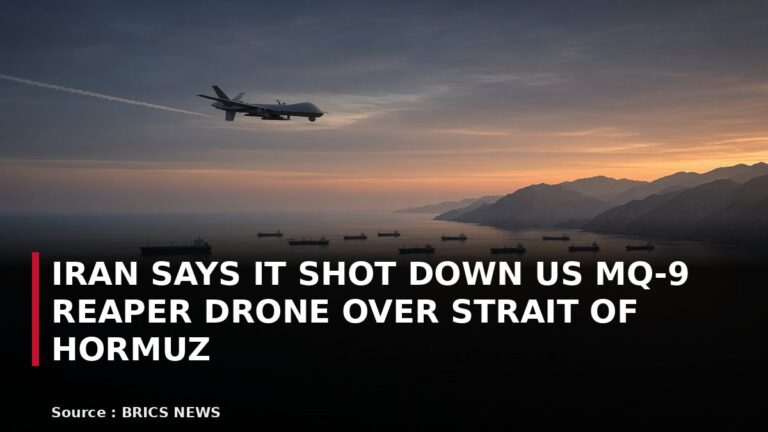
The claim appears to rest on a statement from the naval arm of Iran’s Islamic Revolutionary Guard Corps (IRGC), shared by Iranian state media on Tuesday. According to Reuters, the statement said two tankers had been set ablaze and brought to a halt south of the Strait of Hormuz after hitting Iranian mines, without saying when the vessels were hit. The same statement said Iran had downed a US drone on Monday night. There was no independent confirmation of the tanker incidents.
The announcement follows a series of similar claims by the IRGC Navy over the past week. On Saturday, October 17, it said two oil tankers, each carrying about two million barrels of crude, had caught fire after hitting naval mines while crossing the strait, Iran’s official IRNA news agency reported. IRNA said the vessels had switched off their positioning and radar systems and tried to use a route not authorised by Iran, and that the second vessel was left immobilised.
Late on Sunday, October 18, the IRGC Navy said a further oil tanker had struck a mine in the southern part of the strait, causing an explosion and a fire in its engine room as it tried to leave the waterway by what Tehran calls an “unauthorised southern route”, according to Anadolu Agency and Al Arabiya. That statement did not identify the ship or give details of damage or casualties. The force warned that any vessel in the Strait of Hormuz and the Gulf operating with its navigation and identification systems switched off would face a “firm response”.
Iran seized control of the Strait of Hormuz after the US-Israeli war on the country began in late February, and has since demanded that all ships seek its authorisation before transiting, Al Jazeera reported. About one-fifth of global oil consumption passed through the waterway before the war. IRGC naval commander Rear Admiral Ali Azmaei warned last week that any vessel that deactivated its navigation systems would be treated as “hostile”. The United States has imposed its own naval counter-blockade on Iranian oil exports.
Attacks on shipping in and around the strait have surged over the past two weeks, with Iran saying it is stepping up strikes in response to the US blockade of its ports and tougher sanctions imposed last month. At least 18 vessels were reported attacked in that period, according to shiptracker Kpler, cited by Reuters. Kpler data showed nearly 20.8 million barrels of oil passed through the strait on October 8, but only 2.9 million on October 11. On October 14, maritime officials said a container ship and a dry bulk carrier had sunk near the strait after being hit by projectiles in separate incidents.
The disruption is weighing heavily on energy markets. Brent crude futures rose to $111.05 a barrel on Tuesday, the highest since May, Reuters reported, as traders priced in a risk premium from vessel attacks in the Gulf and Houthi claims of strikes on Saudi energy, airport and military targets. “The market is pricing in a significant risk premium, given the situation’s volatility,” ING analysts said in a note. US Energy Secretary Chris Wright has said crude flows from the Gulf have recovered to about 80 per cent of pre-war levels, though shipments of refined products remain constrained.
US President Donald Trump has said he believes a deal to end the war will be reached after the November 3 US midterm elections, and has ruled out using a nuclear weapon against Iran or sending ground troops, Al Jazeera reported.
Source: BRICS News on X.
About The Author