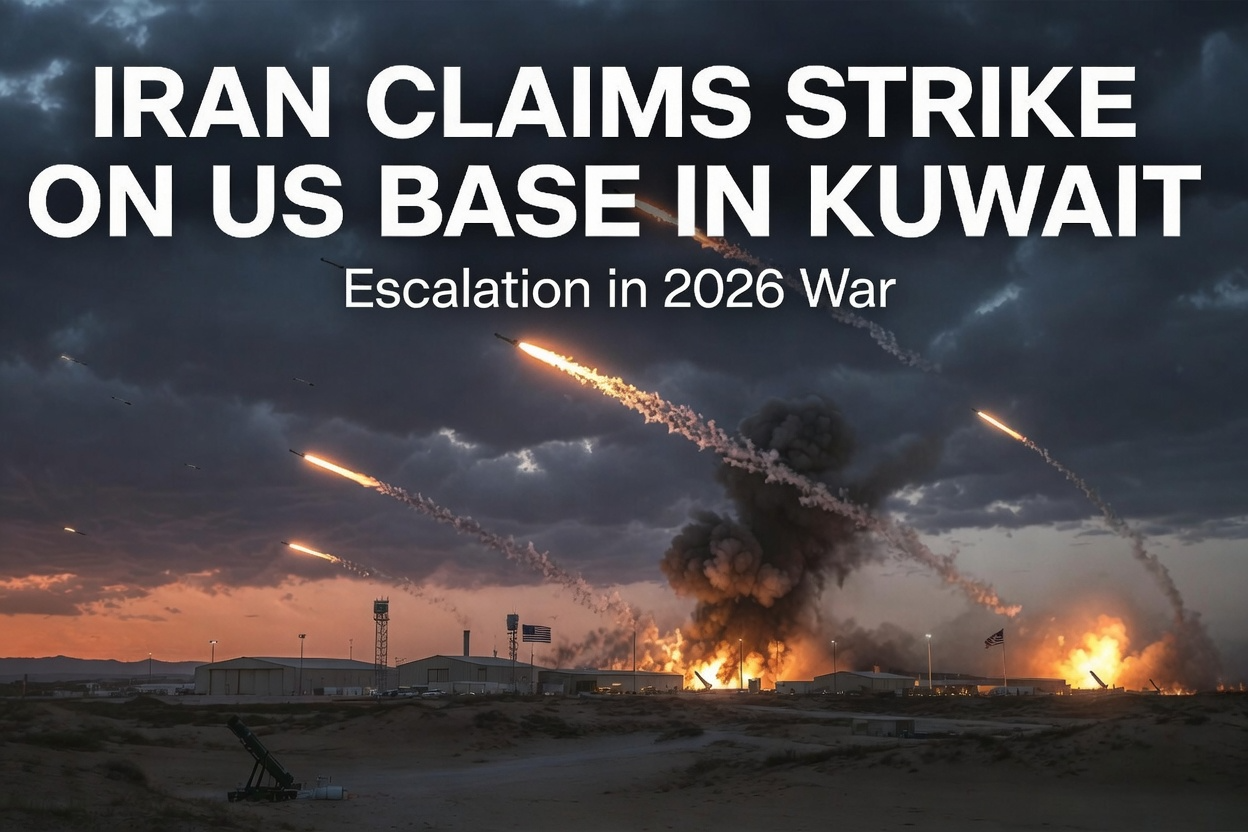
TEHRAN/KUWAIT CITY June 3, 2026 — Iran’s Islamic Revolutionary Guard Corps (IRGC) announced it targeted US military facilities in Kuwait in retaliation for American strikes on Iranian radar and drone sites, marking the latest tit-for-tat exchange in the ongoing 2026 Iran conflict.
The IRGC stated that its forces struck an airbase used in recent US operations against Iranian targets, including a communications tower near Sirik Island in Hormozgan Province. Iranian state media broadcast footage of ballistic missile launches, with one missile reportedly bearing imagery taunting US leadership and referencing the Strait of Hormuz.
Kuwait’s air defenses activated amid incoming missile and drone threats, with sirens sounding across the country. Kuwaiti authorities condemned the attacks as “blatant aggression” and confirmed interceptions. US Central Command (CENTCOM) reported that American and allied forces successfully intercepted the incoming ballistic missiles, with no US casualties.
The incident follows US strikes over the weekend on Iranian radar installations and drone command sites in Goruk and Qeshm Island. CENTCOM described the action as self-defense after Iran downed a US MQ-1 drone operating over international waters.
This flare-up occurs against a fragile ceasefire established in April 2026, following initial major US-Israeli strikes in February. Negotiations for a lasting peace have continued amid disputes over Iran’s nuclear program, missile capabilities, and access through the Strait of Hormuz.
Kuwait, which hosts significant US military presence including Army Central Command elements, has been drawn into the conflict as a key Gulf ally. Earlier phases of the war saw Iranian strikes on regional US bases, including in Kuwait.
No immediate confirmation of damage from the Iranian-claimed strike has been independently verified. Analysts note that such announcements often serve both military and psychological purposes in the conflict.
Oil prices have shown sensitivity to the renewed tensions, with concerns over potential disruptions in the Gulf. President Trump and US officials have downplayed the incidents while emphasizing a strong defensive posture and ongoing diplomatic efforts.
The situation remains fluid, with risks of further escalation threatening broader regional stability involving Gulf states, Israel, and international shipping lanes. Both sides have signaled willingness to de-escalate through talks, but core issues persist.
Life News Agency will continue monitoring developments.
About The Author