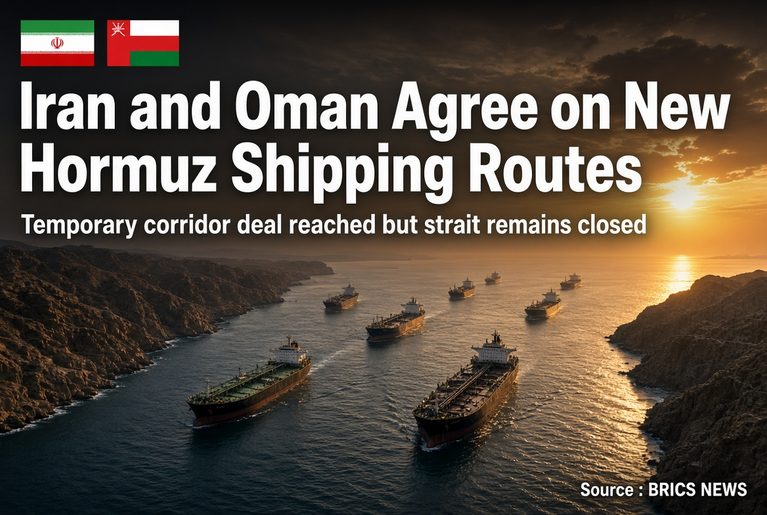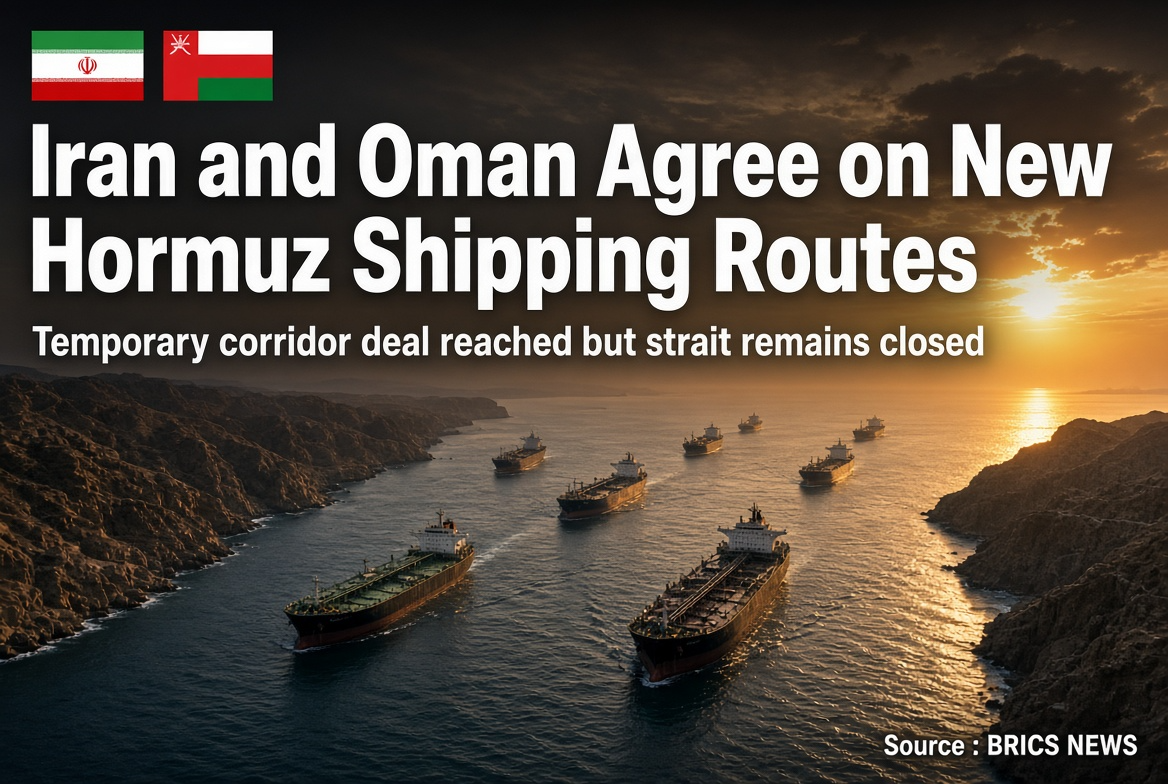
TEHRAN Sept 12, 2026 – Iran and Oman have reached an understanding on new entry and exit shipping routes through the Strait of Hormuz following intensive technical and diplomatic talks, Iranian media reported Saturday.
According to a source close to Iran’s negotiating team cited by the semi-official Tasnim news agency, the agreement was finalized in late August. Under the arrangement, inbound traffic into the Gulf would travel entirely through Iranian territorial waters, with a portion of the outbound route also passing through Iranian waters. The new system would operate under Iranian arrangements, and the existing southern route—closer to Oman—would close once the corridor becomes operational.
Iranian officials stressed that the deal does not reopen the Strait of Hormuz. “The understanding in no way means that the Strait of Hormuz will be opened,” the Tasnim source said. Tehran has presented seven conditions to the United States for any full reopening, including an end to the U.S. naval blockade of Iranian ports and other demands related to sanctions and regional security. Officials said the waterway will remain closed until those conditions are met, with any change depending on U.S. actions.
The details will be presented to foreign ministers from Gulf states at a meeting in Oman on Monday. Iran’s Foreign Ministry spokesman Esmaeil Baghaei confirmed that the gathering of Persian Gulf littoral states will address regional issues, including the Iran-Oman talks on safe navigation routes. The Financial Times reported the meeting is planned for Salalah and would mark the first such gathering between Gulf Cooperation Council foreign ministers and a senior Iranian official since fighting began in February.
The Strait of Hormuz is a critical chokepoint for global energy supplies. Before the current conflict, it handled roughly one-fifth of the world’s oil and liquefied natural gas shipments. Traffic has dropped sharply amid the war, with vessels using disputed alternative corridors and facing risks from mines, attacks, and competing claims over authorized routes.
Iran and Oman, the two countries bordering the strait, have negotiated for weeks on a temporary corridor and related issues such as mine clearance and future management. Earlier announcements described a roughly 7-mile-wide transit route, with Iran seeking greater oversight of both inbound and outbound traffic compared with pre-war patterns that largely used Omani waters. Tehran has also discussed potential service fees, though those remain unresolved and opposed by the United States and some Gulf states.
The latest understanding is framed as a temporary, practical step toward safer navigation rather than a resolution of the broader standoff. Full restoration of unrestricted commercial traffic continues to hinge on diplomatic progress between Iran and the United States. Oil markets have watched the talks closely, as any credible path to increased tanker movements could ease pressure on prices that have risen during the disruption.
About The Author