By Dr. Rabi’ah Al-Adawiyah Rahmat
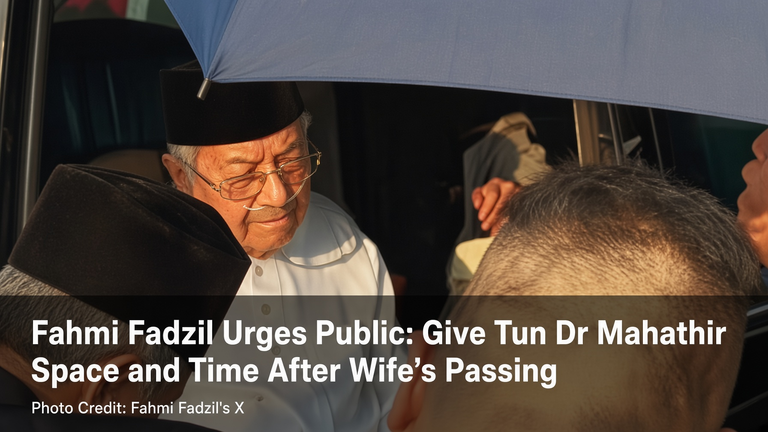
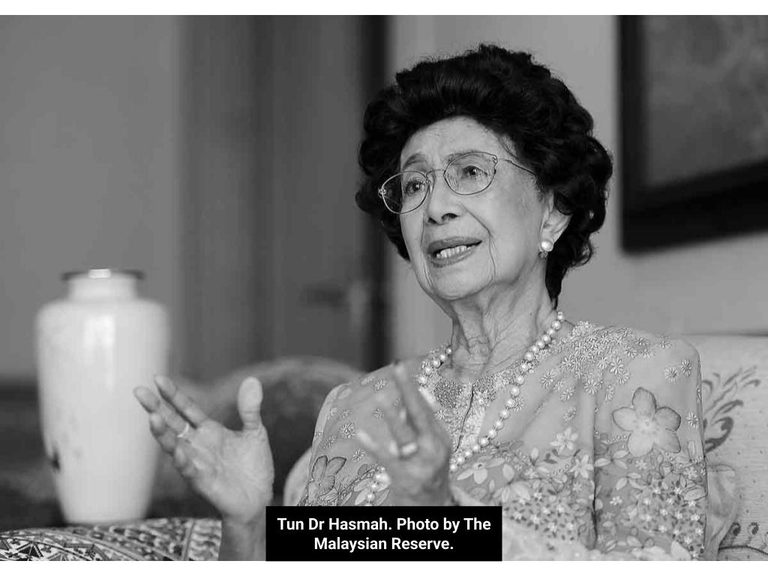
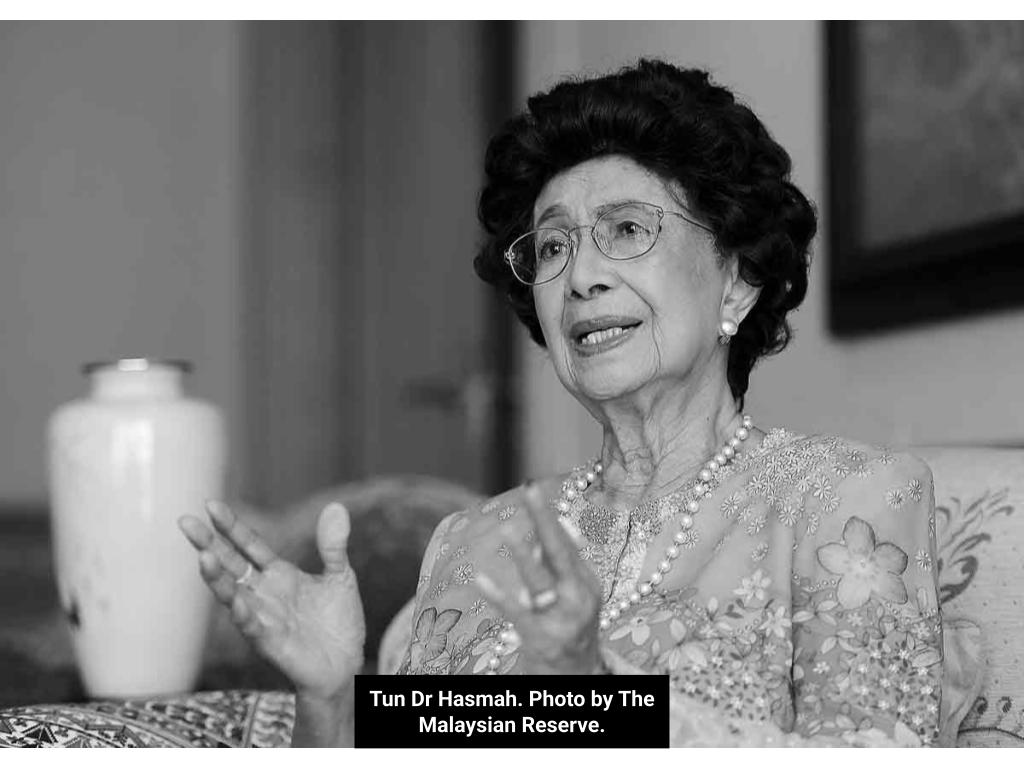
Tun Dr Hasmah Mohd Ali was a doctor, a mother, a wife and a leader, roles that she carried with quiet strength, dignity and purpose. While she stood beside one of Malaysia’s most prominent political figures, her own identity was never defined solely by her husband’s position. She built a life of service, conviction and contribution in her own right, and it is this balance that continues to resonate deeply with women like me who navigate our own journeys through career, motherhood, family and service to society. Her passing at the age of 100 closes an extraordinary chapter in Malaysia’s history. Yet, for me, her story is not merely that of the wife of a former prime minister. It is the story of a doctor, a mother, an educator and a woman who understood that supporting the person you love need not require surrendering your own identity or purpose.
Long before public life placed her beside Tun Dr Mahathir Mohamad, Hasmah had already broken barriers. She was among the earliest Malay women doctors in Malaya and was the only Malay woman in her cohort at the King Edward VII College of Medicine. She later became the first woman appointed Medical Officer in the Maternal and Child Health Department and, in 1974, the first female State Maternal and Child Health Officer. Her work reached mothers, children and rural communities through maternal healthcare, immunisation, nutrition and disease prevention. As a woman in healthcare myself, a dentist, lecturer, mother and someone who felt strongly about justice for underserved communities, particularly women and children, I find that part of her life deeply relatable.
There is another, smaller connection that has always stayed with me. Tun Dr Hasmah spent formative years in girls’ schools, including Methodist Girls’ School and St Mary’s School. I, too, grew up in an all-girls environment at Tunku Kurshiah College (TKC). I believe there is something quietly transformative about being educated in spaces where girls are expected to lead, speak, organise and take responsibility. Leadership becomes less about whether a girl can lead, and more about how she will use that opportunity.
During my high school years at Tunku Kurshiah College, I occasionally saw Tun Dr Hasmah when she visited the school on weekends to see her daughter. What struck me was how ordinary those visits felt. Despite Tun Dr Mahathir serving as Prime Minister at that time, there appeared to be no expectation of special treatment. She came simply as a mother visiting her child, just like any other parents. Even as a teenager, what stayed with me was not her prominence, but her quiet humility. She carried herself with remarkable grace and simplicity, never seeking attention yet naturally commanding respect. There was no need for grandeur, her dignity spoke for itself.
Years later, I discovered another connection that felt almost serendipitous. After retiring from government service, Tun Dr Hasmah taught social medicine part-time at the Faculty of Dentistry, Universiti Malaya from 1979 to 1981, the very faculty where I now serve as a lecturer. Learning this made me feel deeply honoured, as though our paths had crossed once again, this time through the institution we both served.
She had chosen to step away from full-time public service when her husband’s responsibilities required more of her presence. Yet, retirement did not mean withdrawing from meaningful contribution. Instead, she found another avenue to continue teaching, serving, and giving back. To me, this reflects something deeply admirable about her life: her ability to adapt to changing roles without ever losing her sense of purpose. Therein lies, perhaps, one of the most powerful lessons of her life.
We sometimes speak of women’s empowerment as though it must look a particular way: the impressive title, the corner office, the public platform. But empowerment is not one uniform destination. A homemaker who raises thoughtful children matters. An entrepreneur who creates livelihoods matters. A nurse on the night shift, a factory worker supporting her family, a teacher opening a child’s mind, a doctor serving a remote community, all can leave an imprint on society. Nor should empowerment require us to diminish marriage or family. A woman can respect and support her husband while retaining her convictions. She can be a devoted mother and remain intellectually alive. She can adjust her path for the people she loves without abandoning who she is.
Partnership does not have to mean erasure, and love should never require the loss of self. Tun Dr Hasmah demonstrated this quietly and consistently over a marriage that spanned seven decades. Perhaps that is the legacy women of my generation, and those who come after us, should carry forward. We do not all need to become Tun Dr Hasmah. We do not need identical careers, opportunities or platforms. What we need is the courage to recognise that, wherever life places us, there is always something meaningful we can contribute. And perhaps the true measure of an empowered woman is not how loudly the world knows her name, but whether, through whatever role she carries, someone else’s life is made better because she was there.
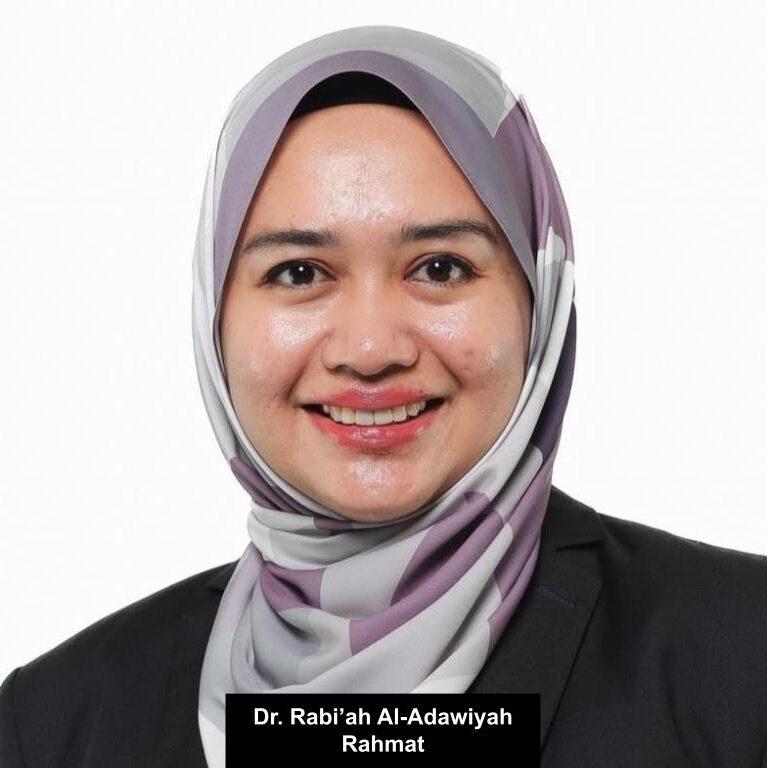
The author is a Forensic Odontologist Specialist and Senior Lecturer at the Faculty of Dentistry, Universiti Malaya
About The Author