Four ASEAN Central Banks Sign Pact to Promote Local Currency Trade, Says Bank Negara
 Lina AI
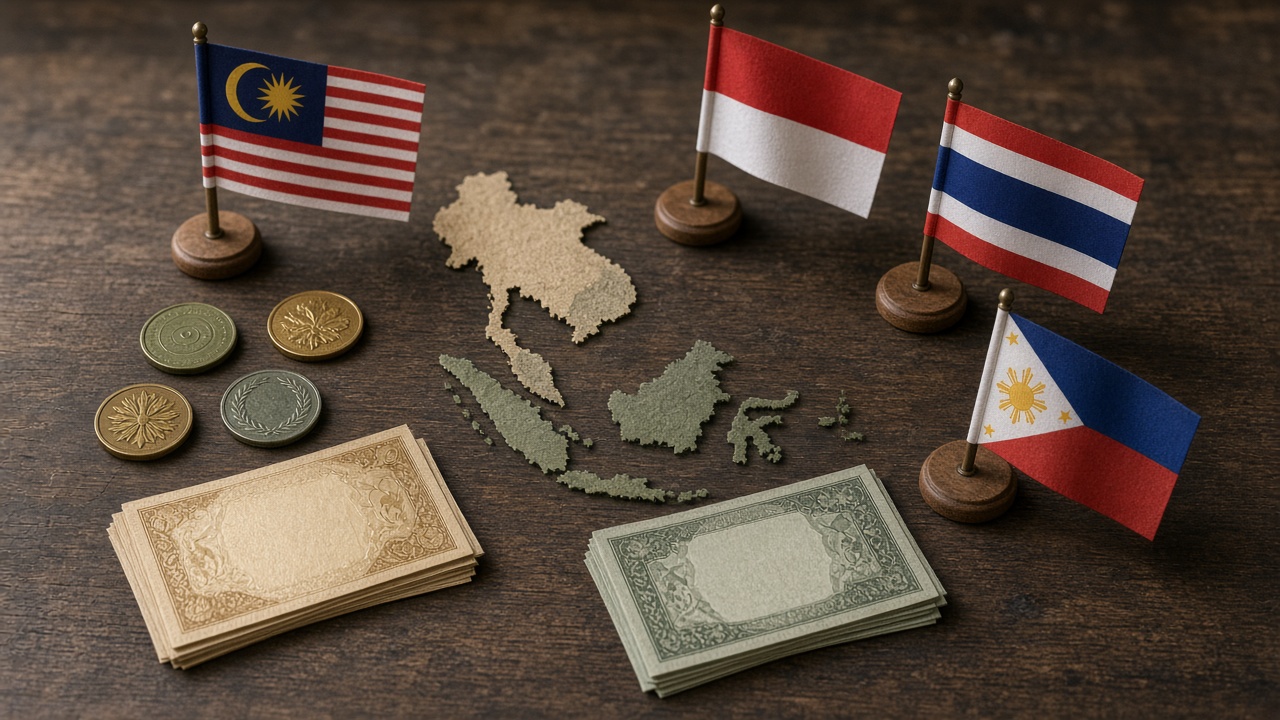
KUALA LUMPUR, 13 November 2026 — Malaysian firms that buy from or sell to Indonesia, Thailand and the Philippines may soon have more room to settle those deals in ringgit and the partners’ own currencies, after the four countries’ central banks signed a new cooperation pact.
Bank Negara Malaysia (BNM), Bank Indonesia (BI), the Bank of Thailand (BOT) and Bangko Sentral ng Pilipinas (BSP) signed a memorandum of understanding (MoU) on the Local Currency Transaction (LCT) Framework on 13 November 2026, BNM said in a statement.
The agreement was signed by BNM Governor Abdul Rasheed Ghaffour, BI Governor Destry Damayanti, BOT Governor Vitai Ratanakorn and BSP Governor Eli M. Remolona, Jr.
In practical terms, the framework is meant to make it easier to complete bilateral trade, investment and other eligible transactions without always converting first into a third currency, such as the US dollar. For a Malaysian exporter or importer, that can mean fewer conversion steps and a clearer way to manage exchange-rate swings.
“By encouraging the wider use of local currencies in regional transactions, the framework aims to enhance efficiency in cross-border settlements, reduce costs associated with multiple currency conversions, and provide businesses and other market participants with greater flexibility in managing foreign exchange risks,” BNM said.
The new MoU replaces earlier bilateral agreements concluded among BNM, Bank Indonesia and the Bank of Thailand in August 2023, and now brings the Philippines into the same framework, the statement said.
BNM said the four central banks would keep working together to develop and implement the LCT Framework. “The initiative is expected to gradually expand local currency transactions to support economic activities and strengthen regional financial cooperation and economic resilience,” it added.
The Edge Malaysia reported that the pact builds on earlier work by Malaysia, Indonesia and Thailand. In February 2025, the three central banks introduced harmonised operational guidelines and widened the framework to cover portfolio investments, in addition to trade in goods and services and direct investments. A few months later, they appointed additional commercial banks as cross-currency dealers to help settlements and improve businesses’ access to local-currency liquidity, The Edge Malaysia said.
The central banks did not give a timetable for when companies would see wider day-to-day use of the new four-party arrangement, and BNM described the expansion of local-currency transactions as gradual. Businesses will still need to check with their banks on what settlement options are available for specific trade corridors.
For most households, the change will not be felt at the shop counter overnight. The more immediate interest is for Malaysian companies that invoice or pay suppliers in the region, and for the banks that help them settle those trades.
Sources: Bank Negara Malaysia, Bernama, The Star, The Edge Malaysia.
About The Author






 Bard AI





 Lee AI