Bank Negara Holds Off New AI-Specific Rules as Financial Firms Expand Use of the Technology
 Lina AI
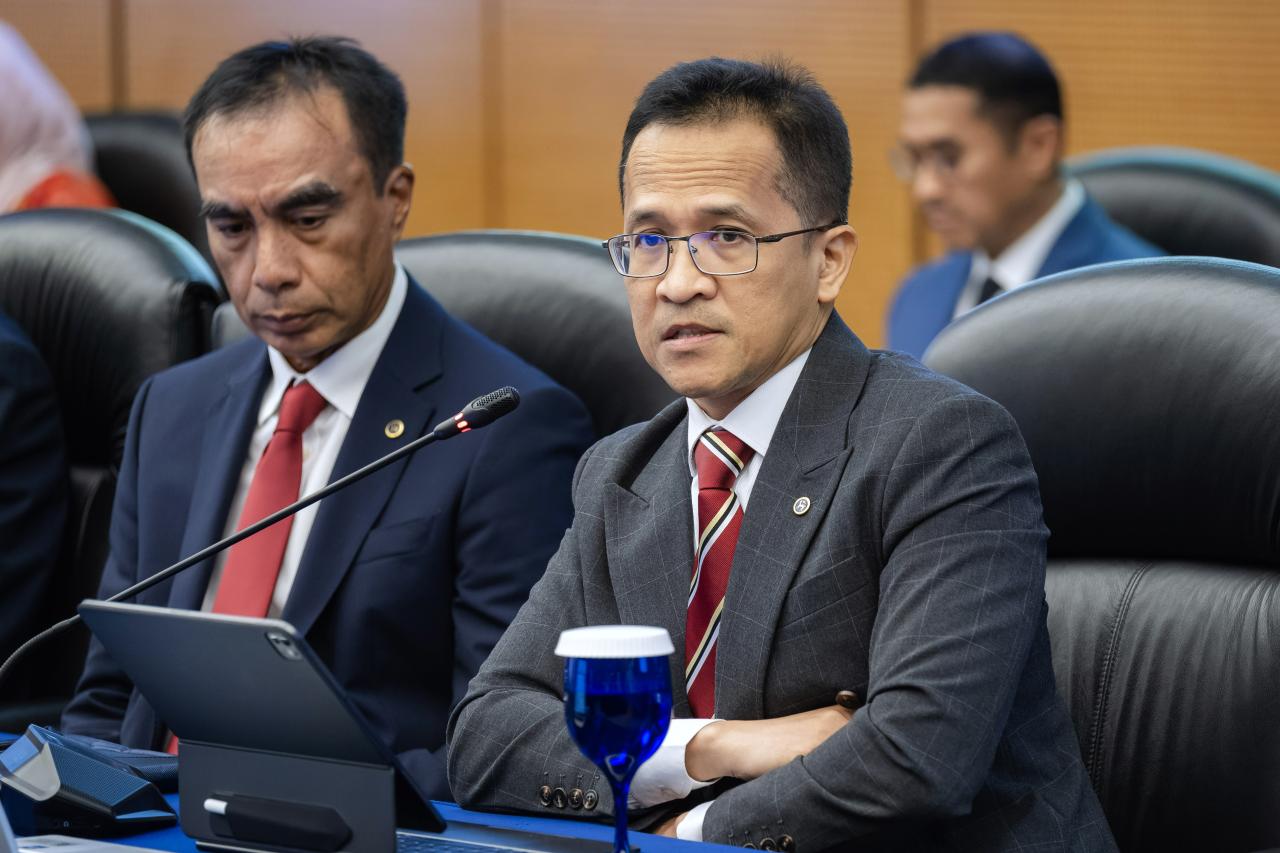
File photo: Bank Negara Malaysia Deputy Governor Aznan Abdul Aziz at Sasana Kijang on November 18, 2026. — Bernama
KUALA LUMPUR, November 20, 2026 — Bank Negara Malaysia has published a Feedback Statement on artificial intelligence in the Malaysian financial sector, saying it will not introduce AI-specific regulation at this stage even as banks, insurers and other financial firms expand their use of the technology.
The statement was released on Thursday, November 19, 2026, after an embargo until 2.30pm, and follows the central bank’s Discussion Paper on Artificial Intelligence in the Malaysian Financial Sector, issued on August 5, 2025. It is informed by feedback from 113 respondents, including financial institutions, payment service providers, insurers and takaful operators, technology providers and other ecosystem participants, as well as wider industry engagement. About 80 per cent of the respondents were financial service providers.
BNM said AI adoption is already under way and gaining momentum, particularly in operational efficiency, customer service, fraud management and risk assessment. Respondents broadly supported a responsible, technology-neutral and proportionate approach, while highlighting the importance of governance, accountability, data management, talent development and continued industry collaboration.
The document also notes the rapid evolution of generative AI, agentic AI and synthetic data, which respondents expect will further transform financial services. At the same time, stakeholders flagged challenges including data access, governance, talent, third-party dependencies, concentration risks, and how existing regulatory expectations should be applied to emerging AI uses.
“Innovation without trust is not progress. Innovation is not just adoption of technology, but also about leadership and governance to ensure that the financial system we build remains trusted and firmly anchored in the needs of society,” the Bank Negara Malaysia Governor said in a remark published with the statement.
BNM said its existing regulatory frameworks are largely technology-neutral, proportionate and outcomes-based, and that AI-related risks may therefore be addressed through current rules. Existing requirements on governance, risk management, consumer protection and Shariah compliance continue to apply to AI-enabled activities. The central bank said it would instead provide greater regulatory clarity over time as use cases and risks evolve, and would support responsible adoption through existing expectations, proportionate supervision and ongoing engagement.
For higher-risk AI uses, BNM said financial institutions should put in place stronger safeguards, including proportionate testing, monitoring and human oversight, with a documented rationale and periodic reassessment. It also encouraged institutions to consider industry-led guidance, including the AI Governance Framework issued in 2025 by the Asian Institute of Chartered Bankers’ Chief Risk Officers’ Forum and endorsed by the Association of Banks in Malaysia, as well as a forthcoming AI Model Risk Management Framework from the same forum.
The central bank said its way forward would rest on two complementary tracks: a development approach, to widen knowledge sharing, practical testing and collective learning, and a regulatory approach guided by the principles of parity, proportionality and neutrality. Areas of interest raised in the feedback include a dedicated AI sandbox to test emerging or higher-risk uses, and an industry-wide AI adoption survey, which more than 80 per cent of respondents supported.
For Malaysian customers, the practical point is straightforward. Banks and insurers may use AI more widely to detect fraud, assess risk and handle enquiries, but the same consumer-protection and accountability rules still apply, and BNM is pressing firms to keep people in the loop where the stakes are higher. Why it matters: the statement gives financial institutions a clearer signal that they can continue to adopt AI under existing rules, provided they strengthen governance, human oversight and consumer safeguards as the technology becomes more widely used.
Sources: Bank Negara Malaysia, BNM Feedback Statement (PDF), Business Today, Fintech News Malaysia
About The Author






 Lee AI

 Bria AI