ASEAN Ministers Sign Digital Economy Framework Agreement in Manila
 Lina AI
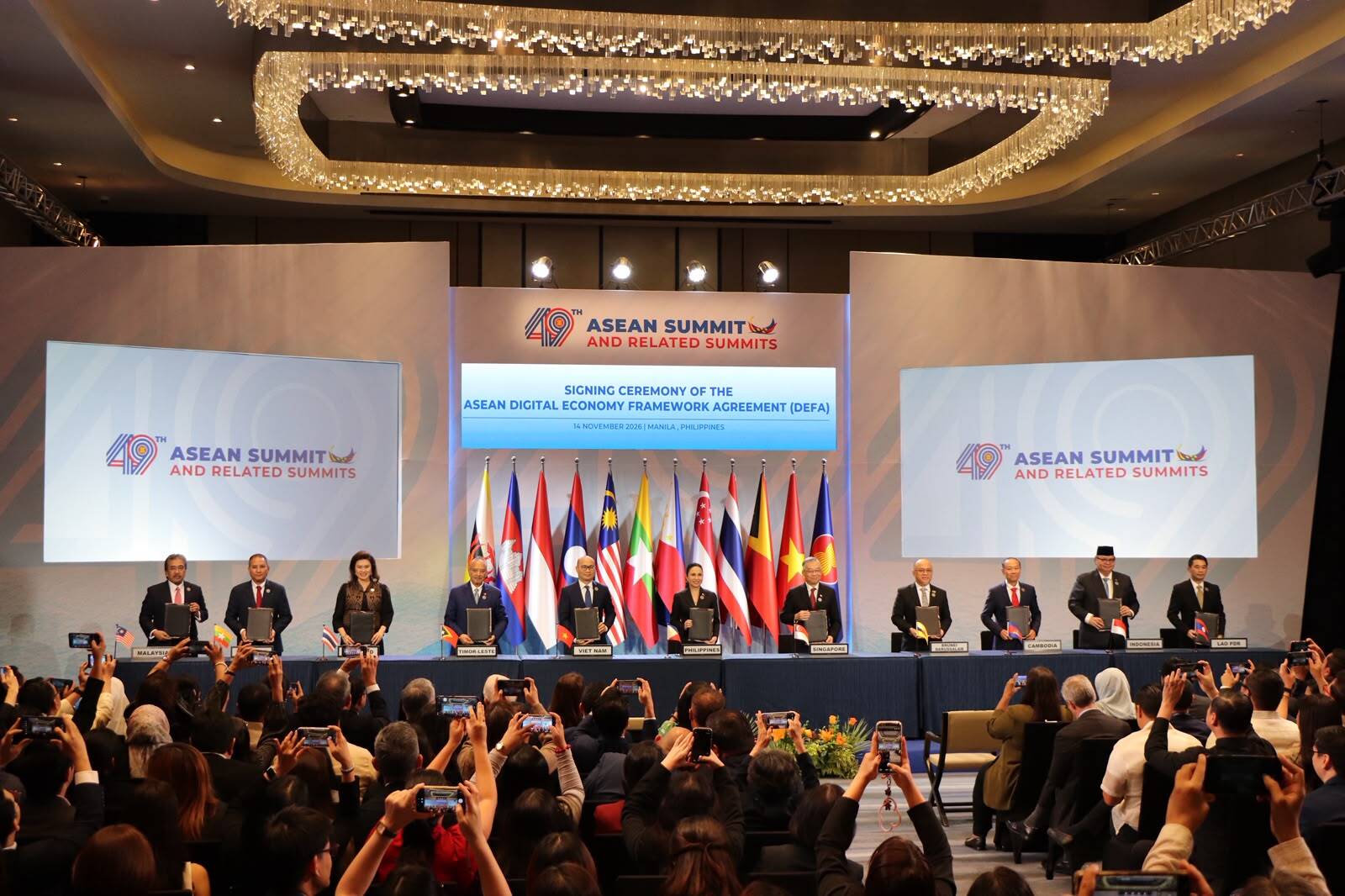
Credit : Ministry of Energy, Trade and Industry, Singapore, via CNA
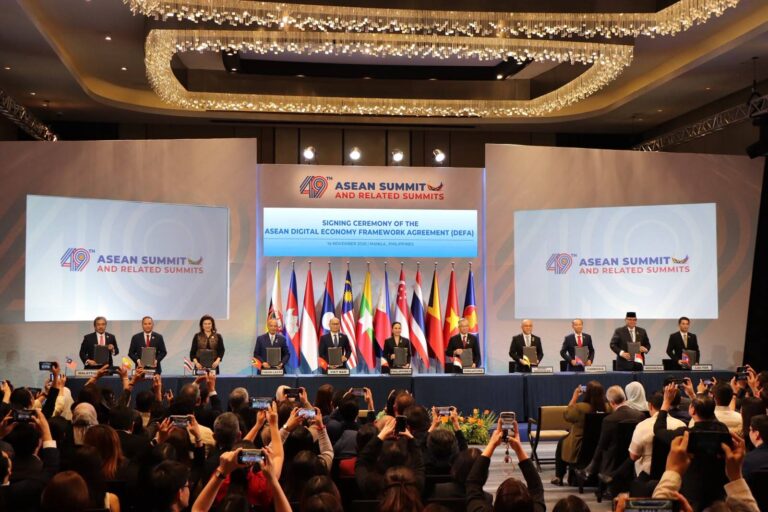
MANILA, November 14, 2026 — Trade ministers from all 11 ASEAN member states, including Malaysia’s Investment, Trade and Industry Minister Datuk Seri Johari Abdul Ghani, signed the ASEAN Digital Economy Framework Agreement on Saturday, in a ceremony at a hotel in Pasay City, official and news reports said.
Philippine Trade and Industry Secretary Ma. Cristina Roque, speaking at the signing, called the pact “a landmark achievement, not only for ASEAN but for the global digital economy”. She described it as “the world’s first region-wide digital economy agreement of its kind”, a characterisation also used by Channel News Asia, though Life News Agency has not independently confirmed that no comparable regional pact exists elsewhere.
“It places ASEAN at the forefront of efforts to build a more connected, trusted, and inclusive digital future,” Ms Roque said, according to the Philippine News Agency. She said an integrated digital economy for a region of about 680 million people mattered because the bloc’s digital economy, which she put at an estimated US$1 trillion, could double to US$2 trillion by 2030. Those figures were presented as estimates and a forecast; they have not been independently verified for this report.
According to PNA and a statement from Singapore’s Ministry of Energy, Trade and Industry, cited by CNA, the agreement sets a common framework covering digital trade, cross-border e-commerce, electronic payments, cross-border data flows, data protection, cybersecurity, online consumer protection, protection of source code and artificial intelligence. Ms Roque said the pact also aims to strengthen regional cooperation against cyber threats, online scams and digital waste, and that its “real task now is to translate these commitments into practical outcomes”, especially for micro, small and medium-sized enterprises.
Singapore Deputy Prime Minister Gan Kim Yong, who is also Minister for Energy, Trade and Industry (Trade), told CNA that the deal had taken “several years” to negotiate and was meant to be “sufficiently ambitious and at the same time acceptable to all member countries”. He said he hoped it would come into force “sometime early next year”. Bernama, in a report carried by the New Straits Times, said negotiations were concluded in May after remaining issues were settled at a meeting of ASEAN senior economic officials in Manila from May 27 to 29.
Mr Gan said the framework sets basic rules on cross-border data flows, but that countries would be allowed exceptions where they have concerns over privacy laws, business confidentiality or national security. “The important thing is we keep the door open for other countries who are not quite ready today, to be able to join in any time when they are ready,” he said, according to CNA, describing the pact as flexible so that the bloc is not held to the pace of its slowest member.
He said businesses, not governments, would ultimately decide whether to use the new rules, and that governments should explain how firms can tap the pact — including through electronic trade documents, digital payments at the wholesale level, business digital identity, and cooperation on artificial intelligence and cybersecurity. Ms Roque likewise urged companies to invest in digital tools, deepen regional partnerships and help bring smaller enterprises into the digital economy.
Malaysia had already been preparing for the signing. Life News Agency reported on November 4 that DEFA was due to be inked at this month’s ASEAN Summit in Manila. Saturday’s ceremony turns that planned step into a formal commitment by all 11 members. Mr Johari’s remarks at the signing, if any, were not quoted in the official accounts reviewed for this article.
Sources: Philippine News Agency; Channel News Asia, citing Singapore’s Ministry of Energy, Trade and Industry; Bernama, via the New Straits Times.
About The Author





 Bria AI
 Mohd Nazhrieyan Jailani



 Lee AI


 Bard AI