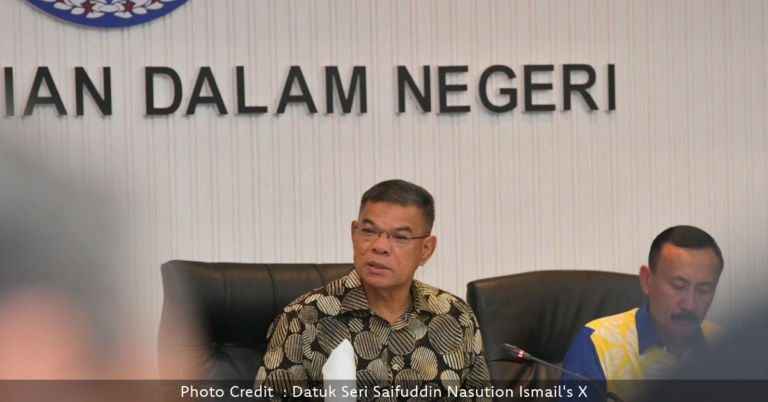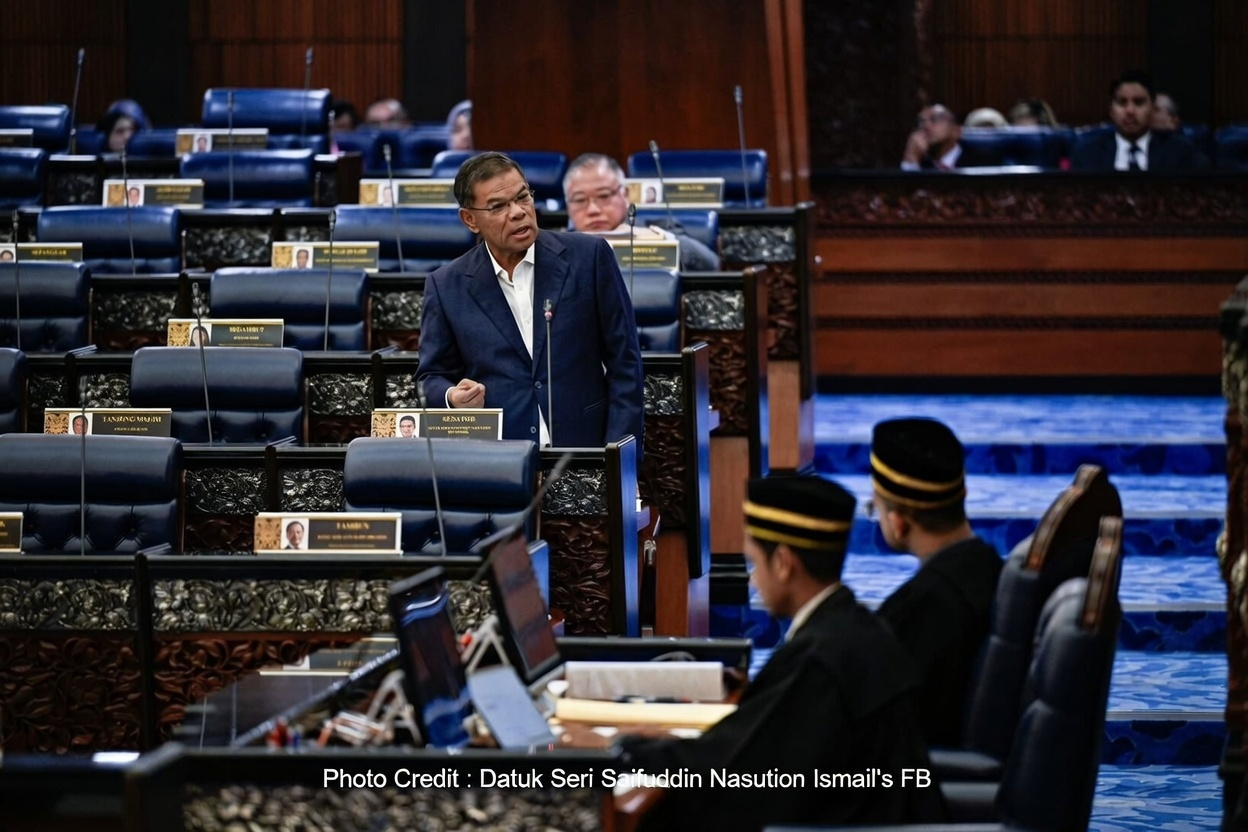
KUALA LUMPUR, MALAYSIA January 21, 2026 – The Malaysian Border Control and Protection Agency (AKPS), which has been in operation for just one year, is facing staffing shortages with its current strength at only about half of the ideal requirement, said Home Minister Datuk Seri Saifuddin Nasution Ismail.
In response to an additional question from the Kota Bharu Member of Parliament in the Dewan Rakyat yesterday, he shared that at AKPS Headquarters, there are 98 staff members, including one Director General and three Deputy Director Generals. Meanwhile, in the field, 6,866 officers from various core agencies such as the Royal Malaysian Customs Department, Immigration Department of Malaysia, and others are currently serving under AKPS supervision.
“The ideal strength required to fully fulfill the functions for which the agency was established is 13,721 personnel. However, the implementation of positions and the recruitment process must be carried out in phases,” he said.
To date, AKPS is responsible for controlling 22 national entry points in the first phase over one year. Malaysia as a whole has 140 entry points, with 122 of them active, and this number is expected to increase this year.
Saifuddin emphasized that the establishment of AKPS aims to unify land, maritime, and air border control operations to enhance national security, reduce smuggling, illegal migration, and ensure better revenue collection.
He also announced the latest initiative to strengthen AKPS’s workforce through the recruitment of 200 former military personnel, which has received approval from the Public Service Department (JPA). “They possess extensive experience in land, sea, and air operations, as well as specialized expertise such as commando units. We want to leverage these skills to bolster AKPS,” he said.
On the matter of integrity, Saifuddin stressed the agency’s firm stance. As many as 29 AKPS officers and personnel have been arrested this year for various offenses related to corruption, abuse of power, as well as breaches of ethics and discipline.
“The fact of these arrests shows there is no compromise on any acts that violate integrity. We do not conceal wrongdoing in the name of protecting the agency’s reputation. AKPS is free to act, and if necessary, the Malaysian Anti-Corruption Commission (SPRM) can conduct open investigations,” he asserted, while expressing full confidence in AKPS leadership in handling such issues.
He added that he welcomes any reprimands or criticisms at the parliamentary level to ensure accountability.
Saifuddin also listed four key performance indicators guiding AKPS:
- No security threats at the country’s borders.
- Increased government revenue collection.
- Preservation of staff integrity.
- Clearance time at entry points that is not excessively long, in order to uphold the country’s image.
“AKPS is still young, only one year old. Nevertheless, with cooperation from all parties, this agency will continue to grow to protect Malaysia’s sovereignty and prosperity,” said the Home Minister.
The establishment of AKPS under the Ministry of Home Affairs through Act 860 represents a strategic government move to streamline border control in an integrated manner, replacing the previous fragmented approach by multiple agencies.
About The Author