The road to sustainable transport runs through the last mile—and our charging gap
 Professor Dato’ Dr. Ahmad Ibrahim
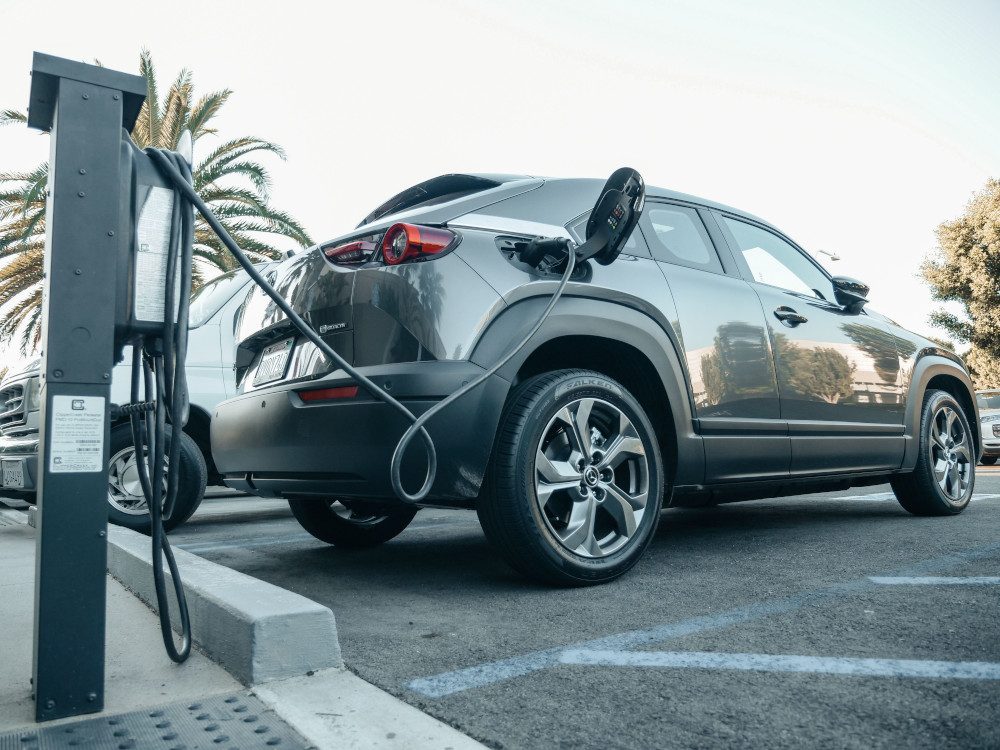
Photo: Pexels
By Professor Dato Dr Ahmad Ibrahim
The global conversation on sustainable transportation has matured beyond the question of whether electric vehicles will replace combustion engines. The real debate now concerns infrastructure, equity, and the uncomfortable truth that the transition will fail unless it reaches the people who cannot afford a new car or charge one at home. As the United Nations launches its first Decade of Sustainable Transport, the world has a framework for action. Malaysia has the targets. What it lacks, increasingly visibly, is the connective tissue between ambition and delivery.
Globally, transport accounts for nearly a quarter of energy-related greenhouse gas emissions, and road crashes claim over a million lives annually. The solutions are well understood: cleaner fleets, safe walking and cycling infrastructure, integrated public transit, and resilient roads that survive extreme weather. The UN’s six focus areas—access for all, low-carbon systems, efficient logistics, people-centred urban mobility, safety, and innovation—reflect a hard-won consensus that technology alone will not suffice.
The harder challenges are structural. Heavy-duty transport, shipping, and aviation remain difficult to electrify, with fuel uncertainty and infrastructure lock-in delaying convergence on a single pathway. Critical mineral supply constraints threaten the pace of battery deployment, and the risk of carbon leakage between nations with differing levels of ambition complicates any coordinated approach. These are not reasons for despair, but they are reasons for honesty: the low-hanging fruit is gone. What remains requires policy coherence, sustained investment, and a willingness to make sustainable mobility genuinely cheaper and easier than driving alone.
Malaysia’s situation illustrates both the promise and the trap. The National Energy Transition Roadmap sets ambitious targets: a 40% public transport modal share by 2040 and 60% by 2050, alongside an 80% electrified vehicle fleet by 2050. The recent launch of the LRT3 Shah Alam line, which recorded over 60,000 passenger trips on its first full day of service, demonstrates genuine public appetite for better transit when it is provided. Rapid KL’s pilot of fixed-route feeder vans to strengthen first- and last-mile connectivity is precisely the kind of operational innovation that turns rail investment into actual ridership.
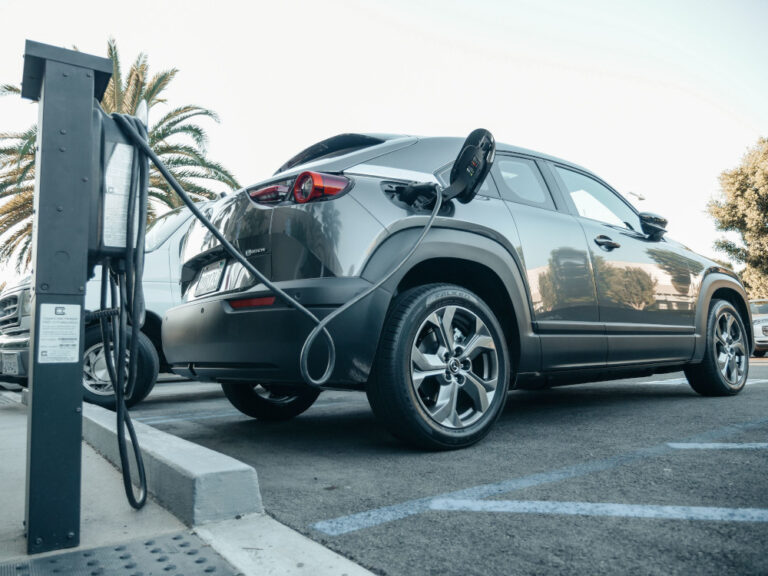
Yet the electric vehicle story is far less encouraging. The government’s four-year tax exemption for imported EVs cost RM3.3 billion in forgone revenue, but investment in public charging infrastructure fell far short of expectations. As of mid-2026, Malaysia had installed 6,416 public charging points—progress, but still far from the 30,000 target for 2030, and heavily concentrated in the Klang Valley and Johor. The government is now considering a levy on every EV sold to fund charging infrastructure, a tacit admission that market incentives alone did not deliver the ecosystem needed.
The deeper problem is equity. Charging infrastructure gaps disproportionately affect residents of apartments and public housing projects who cannot install home chargers. For commercial operators, electric trucks cost two to three times more than diesel equivalents, and interstate routes of 800 to 900 kilometres pose range and charging challenges that no amount of tax exemption can solve overnight. Malaysia’s diesel subsidy bill provides a fiscal incentive to electrify freight, but the carrot must be substantial enough to overcome the capital barrier.
What Malaysia needs is not another roadmap but a delivery mechanism. The NETR’s targets are sound; the implementation readiness is not. Research on electric bus adoption in Johor found that success depends on organisational readiness—technical preparedness, financial planning, and institutional capacity—that cannot be assumed into existence. The government’s decision to retain tax exemptions only for locally assembled EVs signals a welcome shift toward industrial policy that builds domestic capability rather than simply subsidising imports. But the charging levy, if poorly designed, risks taxing the very consumers the policy aims to convert.
The article’s conclusion is uncomfortable but necessary: sustainable transportation in Malaysia will be won or lost on the mundane details of governance. A feeder van that connects a housing estate to a rail station matters more than a headline target. A charger in a PPR car park matters more than a tax exemption for a luxury sedan. A coherent levy that funds visible, reliable infrastructure matters more than another round of consultation papers. The global decade of sustainable transport has begun. Malaysia has the plans. What it needs now is the unglamorous discipline of execution.

The author is affiliated with the Tan Sri Omar Centre for STI Policy Studies at UCSI University and is an Adjunct Professor at the Ungku Aziz Centre for Development Studies, Universiti Malaya. He can be reached at ahmadibrahim@ucsiuniversity.edu.my.
Photo: Pexels
About The Author





 Lina AI


 Bard AI
 Azrul Rizal

 Mohd Nazhrieyan Jailani



 Laura AI
 Anna J