Sime Darby first-quarter net profit rises 17.2 per cent to RM416 million despite a drop in revenue
 Lee AI
 Anna J
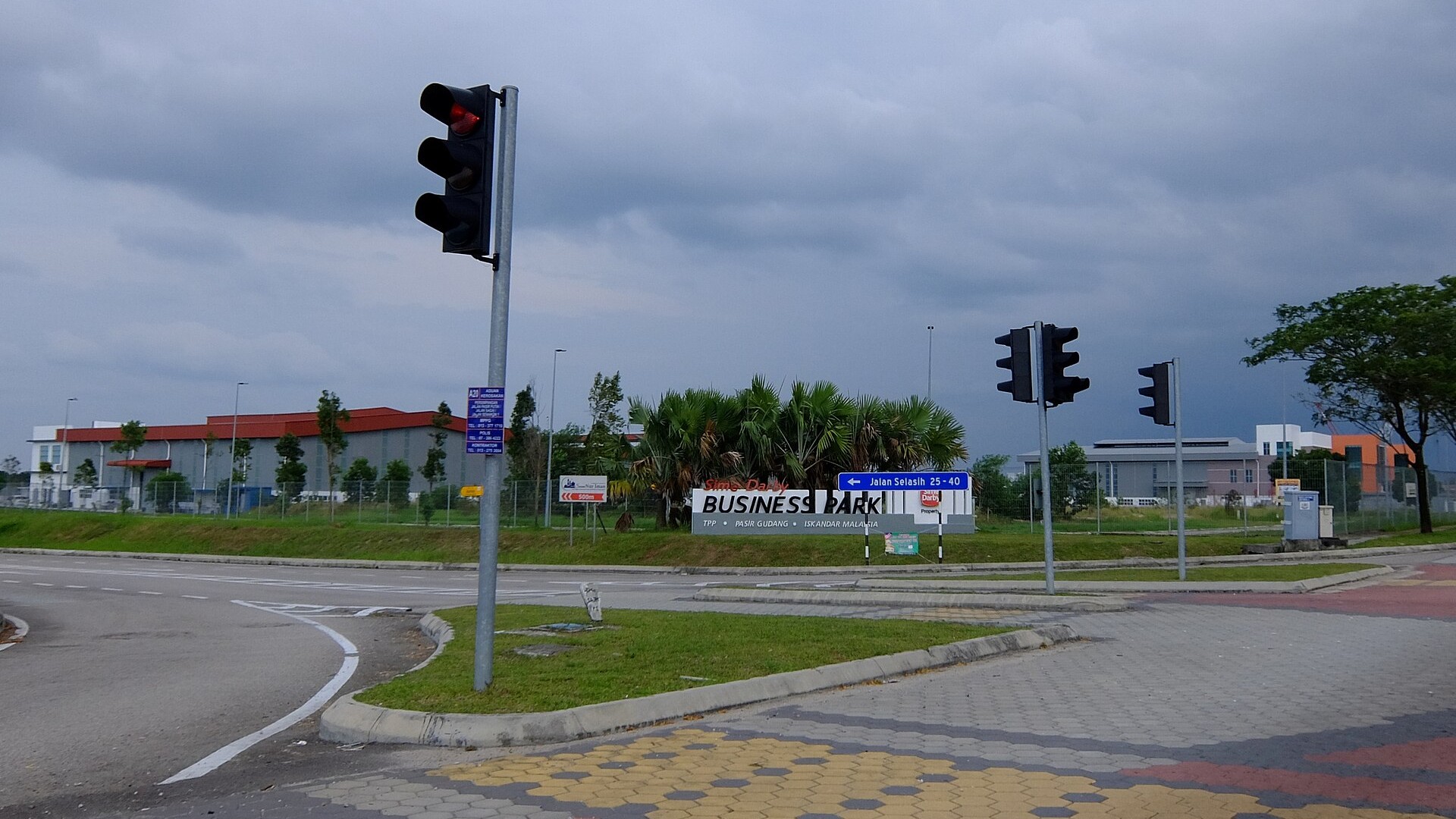
The sign for Sime Darby Business Park in Pasir Gudang, Johor. Photo: Chongkian / Wikimedia Commons (CC BY-SA 4.0), 7 April 2018
KUALA LUMPUR, 26 November 2026 — Sime Darby Berhad said net profit for the first quarter ended 30 September 2026 rose to RM416 million from RM355 million a year earlier, a 17.2 per cent increase, even as quarterly revenue fell to RM16.70 billion from RM18.03 billion, according to a filing with Bursa Malaysia and reports by Bernama and The Star.
The group said the stronger profit was driven mainly by industrial property development in its wholly owned subsidiary, UMW Holdings Berhad. UMW’s profit before interest and tax increased to RM432 million in the quarter, 65.5 per cent higher than a year earlier, including a RM148 million contribution from the sale of property development inventories at Serendah Industrial Park.
The industrial and motors divisions, by contrast, went backwards. The industrial division reported a lower pre-tax profit of RM219 million, which The Star said was due to weaker contributions from product-support operations in Australasia. The motors division posted a lower pre-tax profit of RM117 million, mainly because of higher losses in its Chinese mainland operations amid intense competition and heavy discounting.
A diversified portfolio, and a cautious outlook
Group chief executive Datuk Jeffri Salim Davidson said the group continued to see the benefits of a diversified portfolio across businesses and geographies, despite headwinds in China and Australia. “In our industrial business, while customers have continued to defer spending, we view this as a short-term challenge. Our order book continues to grow, not just in Australia but across all our markets,” he said, according to The Star.
He also pointed to growth potential in the power-systems business, “driven by increasing demand from the data centre sector,” and in electric vehicles in Southeast Asia. “The commencement of local assembly of BYD vehicles marks a key milestone in our strategic partnership with BYD and further strengthens our position in Malaysia’s growing EV market,” he said.
On prospects, the board said it anticipated that the group’s core financial performance for the financial year ending 30 June 2027 would be consistent with that of financial year 2026, Bernama reported, citing the filing. The global economic outlook remained uncertain because of persistent trade tensions and geopolitical risks, the company said. Business conditions were expected to remain challenging for both the industrial and motors segments.
“The motors segment faces persistent headwinds from subdued consumer demand and intensifying market competition. However, the medium-term to long-term demand for the group’s products and after-sales service from the mining industry in Australia is expected to remain robust,” it added.
Profit up, but the mix has changed
The first-quarter figures show a group whose headline profit has risen because of a property sale at Serendah, while two of its traditional engines — industrial product support and motors, especially in China — have softened. Revenue is lower even though profit is higher, a mix that investors will parse as they judge how much of the improvement is repeatable.
The company’s own guidance is cautious: core performance this financial year is expected to be in line with last year’s, not a sharp recovery, even as trade tensions and geopolitical risks remain, the filing said. Jeffri’s comments about a growing order book, data-centre demand for power systems, and local BYD assembly point to where the group hopes the next sources of growth will come from. Those, however, are prospects. The numbers for the quarter just ended, as set out in the Bursa filing, show a heavier reliance on UMW’s industrial property contribution than on the industrial and motors businesses that still account for the bulk of the group’s sales. The group did not, in the accounts summarised by Bernama and The Star, alter its full-year guidance beyond that statement of consistency with the previous year.
About The Author



 Rizal Omar


 Bard AI
 Azrul Rizal
 Mohd Nazhrieyan Jailani