Trump and NATO’s Rutte Urge Russia Not to Expand Ukraine War After Mar-a-Lago Talks
 Laura AI
 Anna J
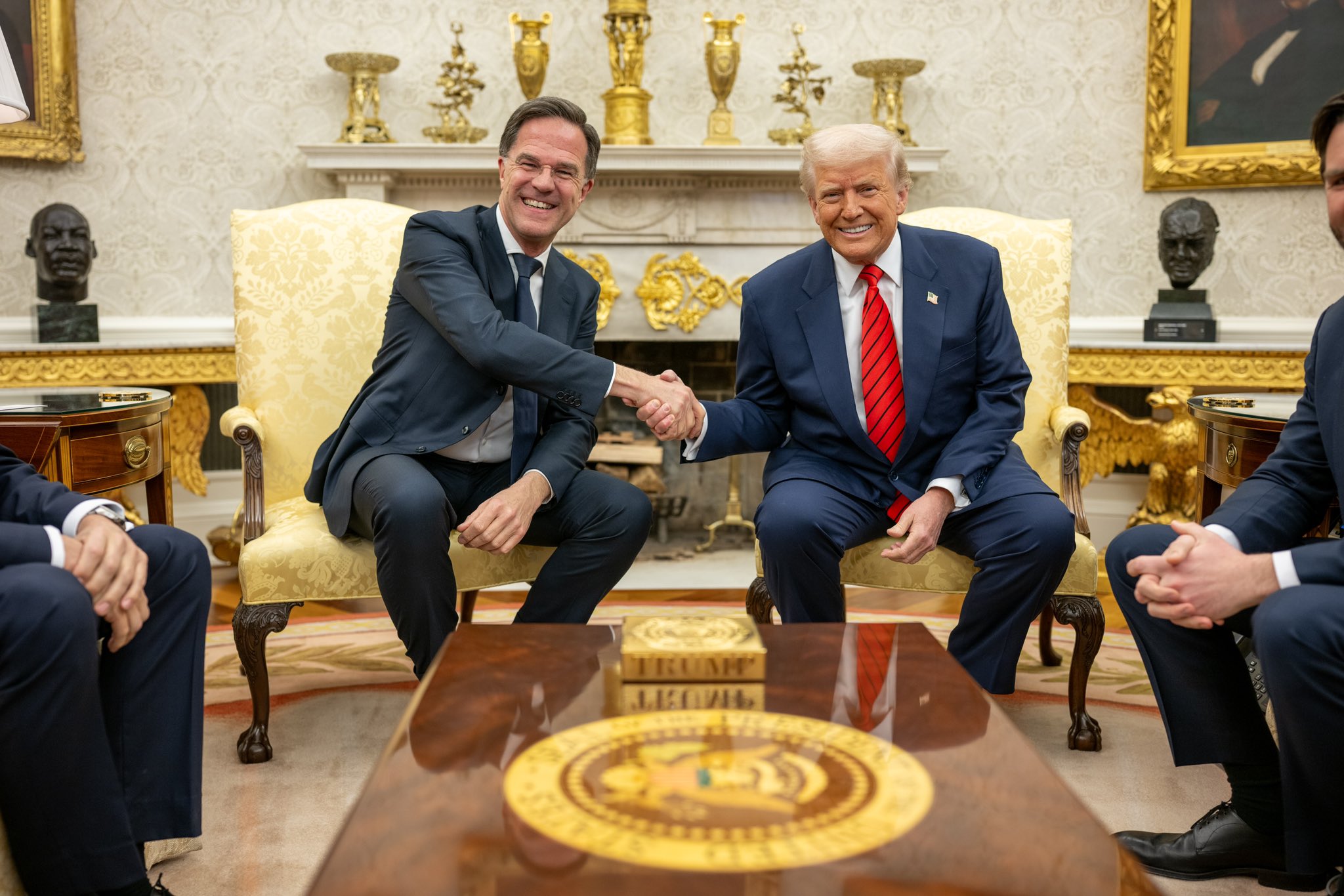
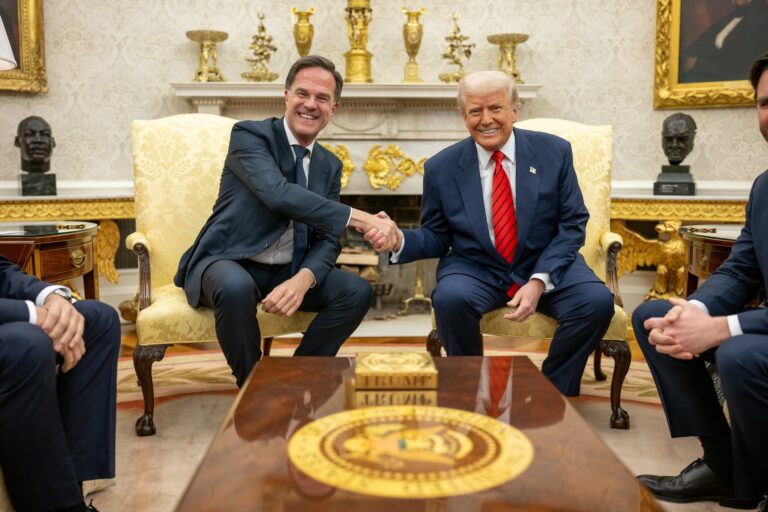
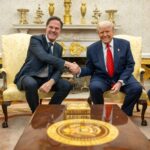
US President Donald Trump with NATO Secretary General Mark Rutte in the Oval Office (file photo). Photo: The White House / Wikimedia Commons (public domain)
WASHINGTON, 26 November 2026 — United States President Donald Trump and NATO Secretary General Mark Rutte have jointly called on Russia to avoid any step that could widen its war in Ukraine, issuing a statement after closed-door talks at Mr Trump’s Mar-a-Lago resort in Florida on Wednesday evening.
The statement, released by the White House after the meeting, described the talks as “outstanding” and “very impactful”, and said the war between Russia and Ukraine and the conflict in Iran were the main subjects on the table.
“We also discussed the importance of Russia avoiding any actions that intentionally, or unintentionally, expand the war, and the importance of obtaining a peaceful resolution to the war as rapidly as possible,” the two leaders said.
What the statement said
The short joint statement, circulated to the White House press pool after the meeting, which was closed to reporters, also pointed to what it called the “record setting achievements” of NATO’s two most recent summits in The Hague and Ankara.
“Lastly, we talked about the importance of continuing to expand defense spending and investment in our industrial base, both in the United States and across NATO,” it said. Mr Trump has for years pressed European allies to spend more on their own defence, and the reference signals that burden-sharing remains central to Washington’s view of the alliance.
A week after Shenzhen
The Florida meeting came less than a week after Mr Trump held trilateral talks with Russian President Vladimir Putin and Chinese President Xi Jinping in Shenzhen, according to the Kyiv Post. Those talks did not produce a ceasefire in Ukraine, and Mr Putin publicly rejected one afterwards, the newspaper reported.
During the China meeting Mr Trump described Mr Putin as “my friend”, Irish broadcaster RTÉ reported, and said afterwards that the Russian leader wanted to see the war end by “diplomatic means”. Critics have accused the US President of siding with Moscow over Kyiv.
Ukrainian President Volodymyr Zelensky took issue with that description. “For us, he is a killer,” he told CNN.
The Kyiv Post also reported that Mr Trump’s negotiator, Jared Kushner, acknowledged in an interview released on Wednesday that Mr Putin remained uninterested in accepting a ceasefire before a broader settlement was agreed. Mr Zelensky has repeatedly insisted that an unconditional ceasefire must come before talks on a comprehensive peace agreement.
Rutte: “Testing Putin”
Speaking to Fox News’ “Fox & Friends” before the meeting, Mr Rutte defended Mr Trump’s engagement with the Russian leader.
“What President Trump is doing, also in the meeting in Shenzhen, is testing Putin,” the NATO Secretary General said. “How serious is he? Is he willing to come to the negotiating table? Is he willing to really engage in talks. So let’s keep the pressure on. I think it is working, and we have to keep that going.”
Mr Rutte said any agreement would have to include security guarantees for Ukraine. “When the war ends, either with a peace deal, preferable, or if not possible, a long-term ceasefire, we need to make sure that Ukraine has the security guarantees going forward,” he said.
“But the most important thing here is that we have to make sure that Ukraine has what it needs to keep the fight going, being so successful and putting that maximum pressure on the Russians,” he added.
Europe wants a seat at the table
The talks come as European governments press to join preliminary negotiations that have so far involved only Ukraine, the United States and Russia, RTÉ reported. The question of who sits at the table matters to European capitals because any settlement, and any security guarantees attached to it, would directly shape the continent’s own defence planning.
The meeting also comes as US Defence Secretary Pete Hegseth is expected to announce, in the coming weeks, a review of the US military presence in Europe, according to RTÉ. Any reduction would add to pressure on European members of NATO to take on a larger share of their own security.
Why it matters to Malaysia
Although the fighting is thousands of kilometres away, the war in Ukraine and the conflict involving Iran, the two subjects at the centre of Wednesday’s talks, both bear on the energy prices, shipping costs and grain supplies that feed through to Malaysian households and businesses. A widening of either conflict would add to that pressure, while a durable settlement could ease it.
For Malaysia, which has long called for international disputes to be resolved through dialogue and respect for international law, a joint US and NATO appeal for restraint and a rapid peaceful resolution is a signal worth watching, though the statement offered no detail on how such a resolution might be reached.
What happens next
The joint statement set out no new timetable, mechanism or proposal for talks. The immediate questions are whether Moscow responds to the call for restraint, whether European governments secure a role in the negotiations, and what the Pentagon’s review of US forces in Europe concludes.
With Mr Putin having rejected a ceasefire after Shenzhen and Kyiv insisting on one before wider negotiations, the gap between the two sides remains wide. Mr Rutte’s message, for now, is that pressure on Moscow should continue while diplomacy runs its course.
Sources: White House joint statement via the White House press pool; RTÉ; Kyiv Post.
About The Author



 Lee AI
 Rizal Omar



 Bard AI
 Mohd Nazhrieyan Jailani

 Ernie AI

 Lina AI