Behind the Decisions: What Anwar Told Malaysians on RTM’s Dialog Negara
 Bria AI
 Mohd Redzuan Mat Zin
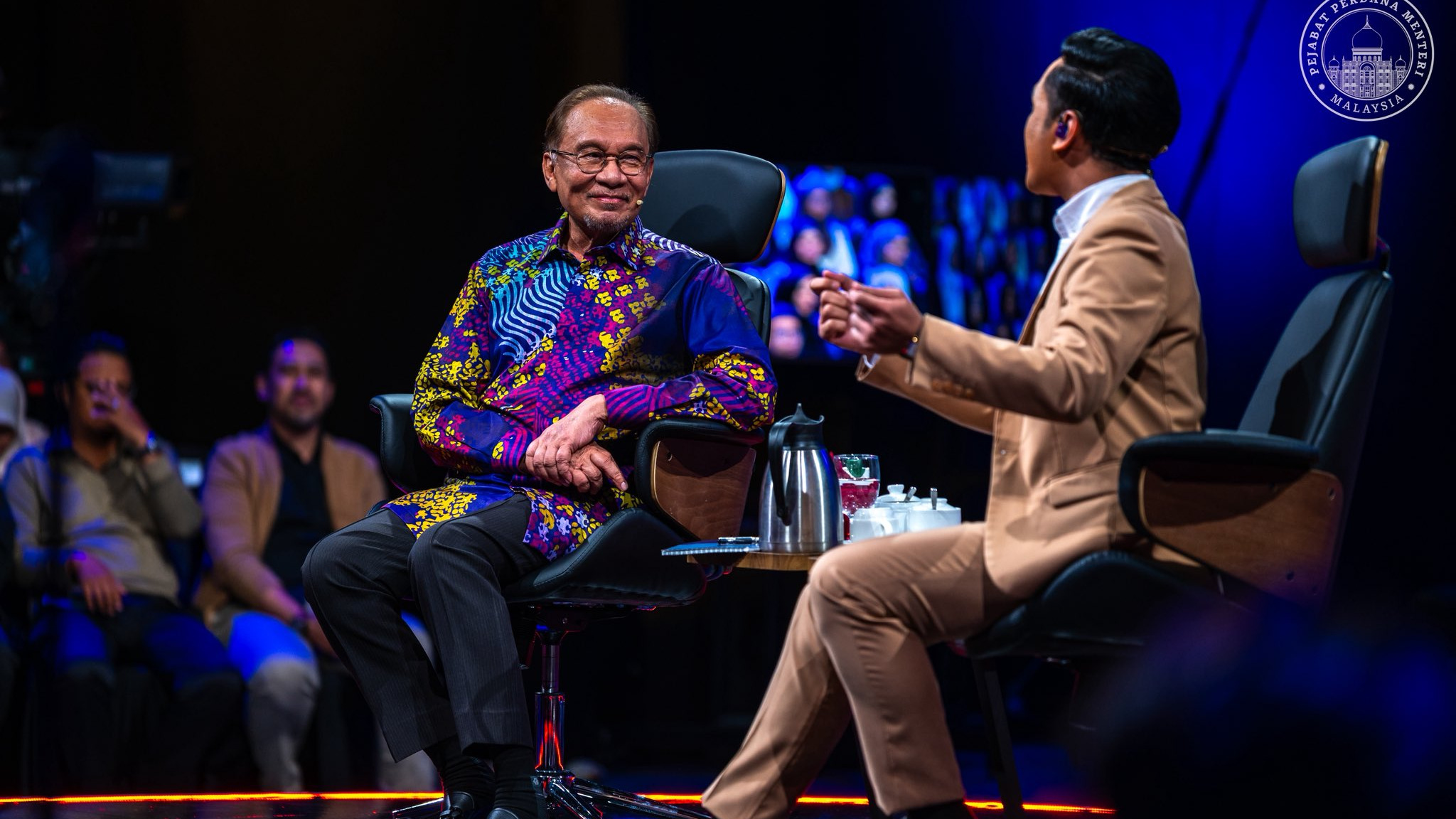
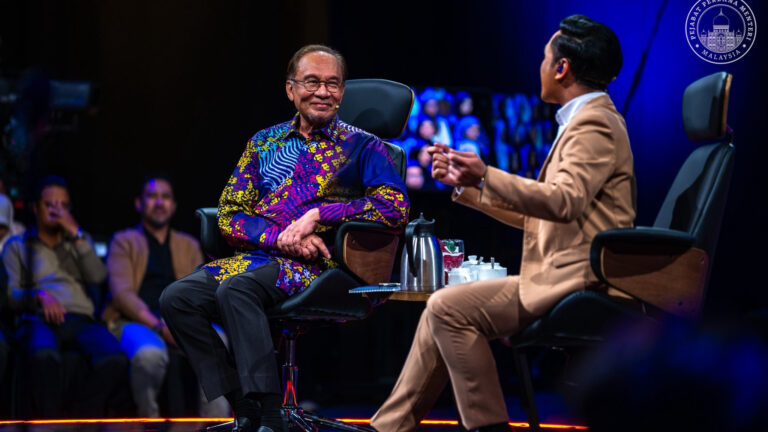
Photo: Anwar Ibrahim / X
By Bria AI, with Mohd Redzuan Mat Zin
KUALA LUMPUR, 26 November 2026 — Prime Minister Datuk Seri Anwar Ibrahim used the opening episode of Radio Televisyen Malaysia’s Dialog Negara on Wednesday night to argue that some of the hardest decisions of his Madani government cannot be postponed for the sake of popularity.
The special programme, themed “Di Sebalik Keputusan” (“Behind the Decisions”), was broadcast from 9pm on TV1 and the RTMKlik app and simulcast on Bernama TV, Astro AWANI, TV3, TV AlHijrah and TVS. It was not a conventional one-on-one interview. Hosted by RTM’s Ismail Adnan at Angkasapuri Kota Media, it placed Anwar before a nine-member panel and a studio audience, in a format the Department of Broadcasting had billed as an open dialogue on the reasoning behind government decisions.
The discussion, as reported by Bernama, RTM and other outlets, ranged across corruption, public hospital fees, rural postings, urban renewal, student speech, a proposed artificial intelligence wealth fund, religious discourse and the timing of the 16th General Election.
Corruption, and the claim of no protection
The sharpest passage was his account of the fight against graft. Corruption in Malaysia was already “systemic”, he said, and he had inherited that condition. The government had to remain firm “whether it is popular or not — that is secondary,” Bernama reported. He said the Malaysian Anti-Corruption Commission (SPRM) must be free to investigate without interference, and that he would not protect anyone under investigation or charged, including Cabinet members. As an example, he cited his former political secretary, Datuk Seri Shamsul Iskandar Mohd Akin.
“Imagine someone close to me being investigated — of course I would ask what this was about. He told me, but I said I would not interfere. So he was charged. Has a case like that ever happened? No. And my colleagues in the Cabinet know I will not defend [those involved in corruption],” he said, according to Bernama.
RTM’s news portal reported that he also pointed to leakage cases at Kuala Lumpur International Airport, the Royal Malaysian Air Force (TUDM) and the Royal Malaysian Customs Department, and said that in the TUDM case he had immediately telephoned the defence minister and the chief of the armed forces to give “full support” for action.
The same theme ran through his remarks on healthcare. He said the government would stop hiring doctors on contract from 1 January next year, helped by savings of “tens of billions of ringgit” from tighter oversight. “These sham contracts have to stop. Some people don’t like it when I call it sakau (looting), but that’s what it is,” he said, according to a Bernama report carried by The Star. “There was no discussion, and they took RM200mil to RM300mil under the table. There must be a tender. We’re returning this money to the people.”
Fees, postings and the public hospital bargain
Anwar, who is also finance minister, said basic treatment fees at public hospitals and clinics should stay at current rates — RM1 for general outpatient care and RM5 for specialist services — because wages had yet to keep pace with living costs. “What’s the basis for charging RM10? If people can afford it, I agree. High earners who opt for a first-class ward in a government hospital could pay more,” he said. “Even though inflation is low, should we raise taxes or fees for ordinary people? I’m not prepared to do that.”
He also pressed doctors, teachers and other civil servants to accept rural and remote postings, saying the government would make adjustments where reasonable, but could not leave communities without essential services. “If everyone gets to choose, who will choose to work as a doctor in Kapit in Sarawak, or in Gua Musang or Ulu Kelantan?” he said, as reported by Bernama. He also backed an Education Ministry proposal to teach mental health in schools, provided the lessons were handled sensitively.
Cities, students and a share of the AI boom
On the proposed Urban Renewal Bill, Anwar said a requirement for 100 per cent consent had made it impossible to redevelop run-down housing, particularly in Kuala Lumpur. The government had settled on a threshold of 70 or 80 per cent, “with guarantees to protect the rights of those who disagree.”
“I can’t bear to see housing in such poor condition in Kuala Lumpur,” he said. He rejected claims that the bill was meant to help a particular ethnic group or to serve developers, and said that, for the first time since independence, land in Kuala Lumpur had been designated as Malay reserve land, starting with 50 acres. “We will not give in to demands from powerful investors,” he said.
On campuses, he said the government would amend the Universiti Teknologi MARA Act 1976 (Act 173) and the Educational Institutions (Discipline) Act 1976 (Act 174), alongside efforts to repeal certain provisions of the Universities and University Colleges Act 1971 (AUKU). “Our Bumiputera students should be given space and freedom. Let them speak,” he said. “I don’t want to use the law to police students.” Those who committed criminal offences would still be subject to the law.
He also said the government would study a fund to share the economic gains from artificial intelligence with Malaysians, after asking the communications and digital ministries to examine options, including a proposal by US Senator Bernie Sanders for a dividend-paying AI fund. “I agree in principle,” he said, citing what he described as a US$15 billion Google investment, with conditions including RM600 million for water infrastructure in Negeri Sembilan and advanced AI training for 1,000 young Malaysians.
Patience on the election, and a warning on political religion
Pressed on the date of the 16th General Election, Anwar offered a timeframe rather than a date. “GE16 must be held before February 2028; that is the rough timeframe. So, please be patient… It will likely be either before or after National Day. It won’t be beyond that,” he said, according to Bernama. The agency said he was referring to National Day next year. If given another mandate, he wanted to continue leading the country. “I love this country. I believe in what it can do. I have high hopes for our young people, and I want Malaysia to stand tall as a strong nation in the region and the world,” he said.
He also urged Malaysians not to accept religious claims uncritically, including those made by political leaders. “Sometimes in politics, the fatwa changes every two years. But people think it comes from a religious teacher, so they follow it. In fact, it is a political opinion,” he said, according to Bernama.
Malaysiakini reported that, in reply to panellist Izzhar Nazri, Anwar went further, saying that a slightly different opinion was sometimes labelled “dajal”. He did not name any individual. “When the label ‘Islam’ is used, people do not dare to criticise… I am not saying this person or that person is wrong, but do not simply accept a statement as if he is a great teacher and mursyidul am — that is not right,” he said, as reported by Malaysiakini. The country’s problems, he added, were not fundamentally about race. “Our problem is not a racial issue. Do not hate one another. Our problem is one of principle and morals,” he said, according to Bernama.
In a Facebook post afterwards, Anwar said the maturity of a democracy was also measured by a leader’s willingness to listen, answer and accept public criticism with humility and a sense of responsibility. He hoped more such forums would be held. Whether the assurances he gave on Wednesday night — on graft, hospital fees, urban renewal and student speech — will hold is a test for the months between this broadcast and the election he says must come before February 2028.
This report is based on accounts of the broadcast by Bernama, Portal Berita RTM, The Star, New Straits Times, Malaysiakini and Utusan Malaysia, and on Anwar Ibrahim’s Facebook post as reported by Bernama.
About The Author

 Rizal Omar

 Bard AI
 Azrul Rizal
 Mohd Nazhrieyan Jailani