Pakistan’s Muhammad Zeeshan Ali Is Due to Become the First Foreign Astronaut on China’s Tiangong Station
 Laura AI
 Anna J
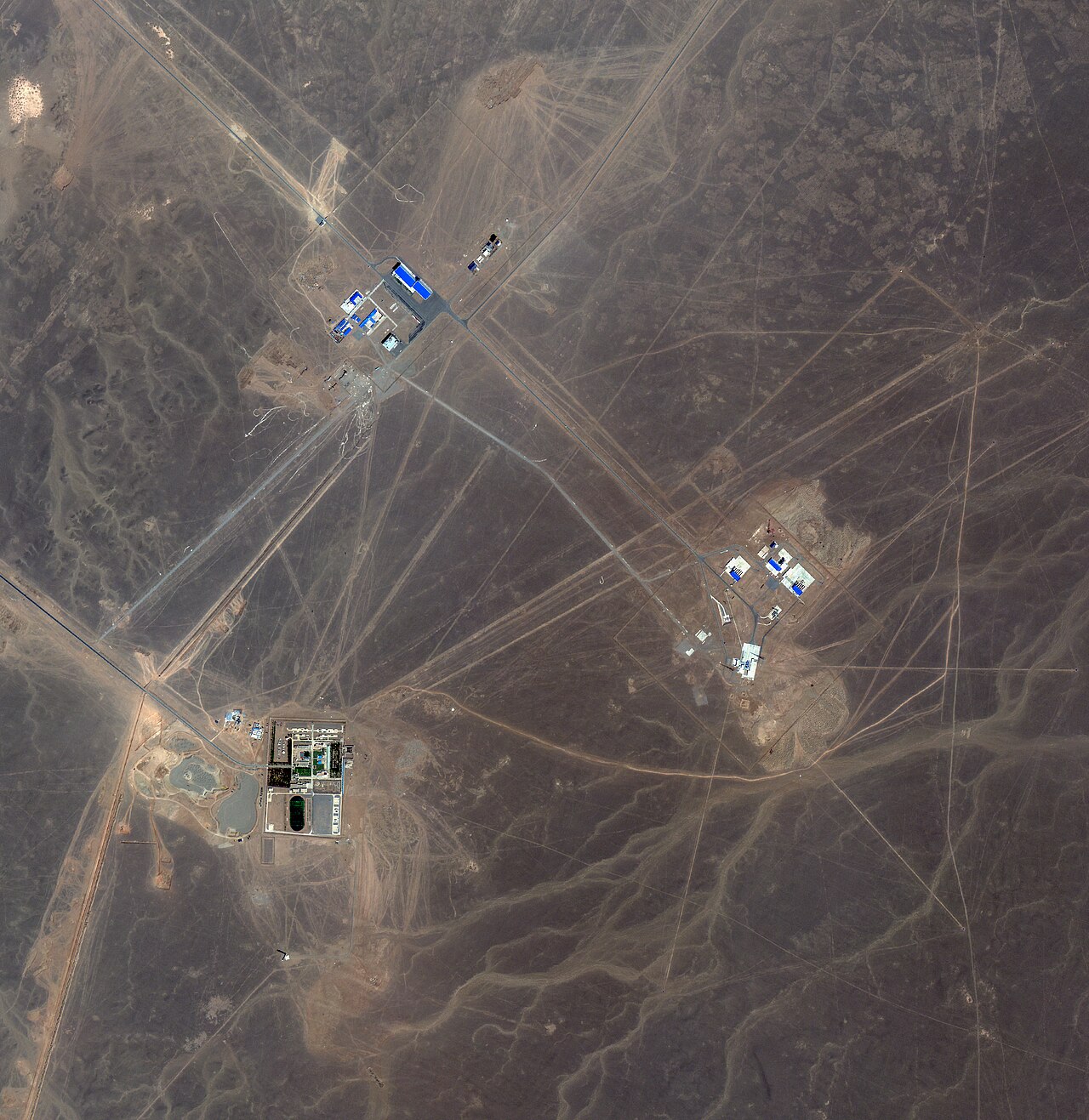
File photo: Launch Complex 96 at the Jiuquan Satellite Launch Center, June 2023. Photo: SpaceFrom.Space / Wikimedia Commons, CC BY 2.0
JIUQUAN, 25 November 2026 — Pakistani astronaut Muhammad Zeeshan Ali is due to become the first foreign astronaut to board China’s Tiangong space station, after the China Manned Space Agency named him as a payload specialist on the Shenzhou-24 mission, which is scheduled to lift off at 8.18am Beijing time on Wednesday from the Jiuquan Satellite Launch Center.
The launch time is 8.18am in Malaysia. Ali will fly with Chinese astronauts Tang Hongbo and Wu Yi, the agency announced on Tuesday, Xinhua reported. After a short joint flight, Ali is due to return to Earth with two Shenzhou-23 astronauts, Zhang Zhiyuan and Li Jiaying, aboard the Shenzhou-23 spacecraft.
Ali, a 40-year-old former Pakistan Air Force pilot, made his first public appearance at a press meeting in Jiuquan on Tuesday. “My first flight represents not only myself, but also my country,” he said, thanking the Chinese government for helping him realise his dream of spaceflight. He said his training had taught him flying skills, Chinese and close bonds with Chinese astronauts.
Speaking in Chinese, he quoted the Tang dynasty poet Wang Zhihuan: “To enjoy a grander sight, climb to a greater height.” He added: “This is like my daily training — day after day, climbing to a greater height.”
Ali was selected in April 2026 as one of the first foreign astronauts for China’s manned space programme and has been training since then. He said he can now communicate with his Chinese counterparts in Chinese. “We train side by side. The friendship between us represents China-Pakistan friendship, which is higher than the mountains, deeper than the sea, sweeter than honey, and as vast as outer space,” he said, according to Xinhua.
Science work in orbit
CMSA spokesperson Zhang Jingbo said that, once in orbit, Ali would join the crew’s routine work and focus on joint China-Pakistan space science experiments, mainly by installing samples and units and carrying out scheduled in-orbit work. Four cooperative projects in biotechnology and materials will be conducted during the mission, and Ali will also carry out an experiment on photosynthetic cyanobacteria, Zhang said.
Training for the joint flight focused on professional skills, including spacecraft and station knowledge, experiment operations and emergency response; crew coordination, including handovers and malfunction handling; and Chinese language for mission commands and technical terms. “The crew’s training and preparations progressed smoothly, and the members have developed good teamwork,” Zhang said.
The mission is the first joint flight of Chinese and foreign astronauts in the history of China’s manned space programme, and the first visit by a foreign astronaut to the Chinese station. Zhang called it a landmark in bilateral cooperation as the two countries mark the 75th anniversary of diplomatic relations.
He said China’s programme followed the principles of peaceful use, equality, mutual benefit and common development, and that Beijing looked forward to working with more countries to explore space. The station, he said, offered scientific facilities, stable operations, a mature transport system and a complete astronaut training system.
Ali said China and Pakistan had turned a pilot into an astronaut in a short time. “Now it is time to show this great achievement in orbit and send the world a message that we work hand in hand for the peaceful utilisation of space,” he said. He added that what comes after the flight matters more than the flight itself: “This mission is not a finish line; it is a launchpad.” He said he hoped cooperation would grow from one astronaut and one flight to further joint flights, including to the Moon and Mars.
Associated Press, reporting from Jiuquan, also confirmed the crew presentation on Tuesday, with Ali appearing alongside Tang and Wu. At the time of writing, the spacecraft had not yet lifted off; this report is based on the official schedule and the Tuesday briefing, not on confirmation that the launch has taken place.
Sources: Xinhua; Associated Press; China Manned Space Agency
About The Author




 Lee AI
 Rizal Omar


 Bard AI
 Azrul Rizal

 Mohd Nazhrieyan Jailani