Johor Proposes Malaysians-First Cashier Rule and Tighter Checks on Foreign Workers
 Lina AI
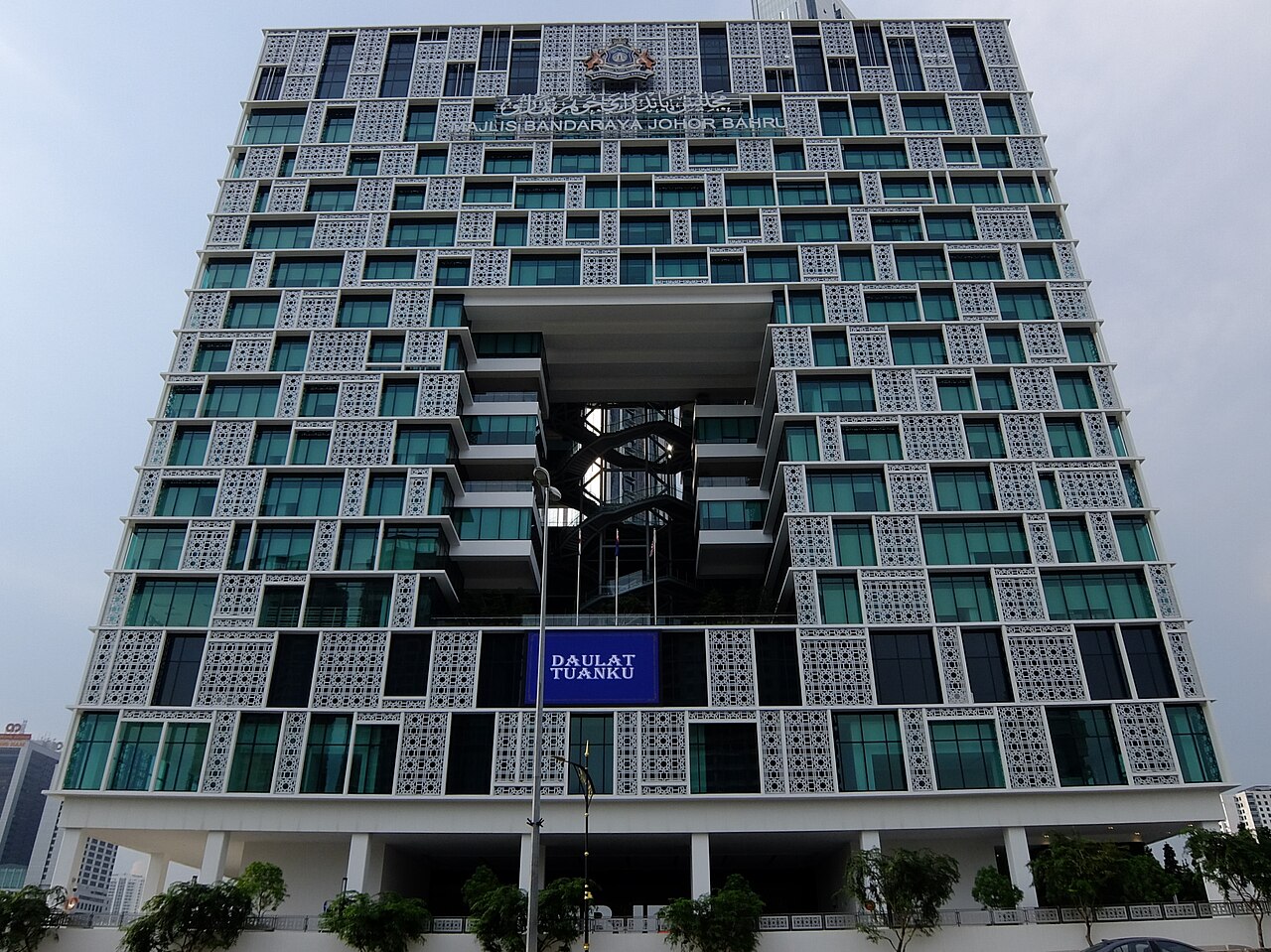
Johor Bahru City Council Tower. Photo: Chongkian / Wikimedia Commons, CC BY-SA 4.0
ISKANDAR PUTERI, 25 November 2026 — The Johor government has proposed three additional business licensing conditions, including giving Malaysians priority for cashier jobs at retail payment counters, as a short-term way to standardise enforcement across the state’s 16 local authorities and protect opportunities for local residents.
State Housing and Local Government Committee chairman Datuk Mohd Jafni Md Shukor told the Johor State Legislative Assembly on Tuesday that the proposals were intended for consideration next year and would still have to be worked out in detail, subject to existing laws and the powers of local councils, Bernama and Malay Mail reported.
The first proposed condition would give priority to Malaysians for cashier posts at payment counters in retail premises. The second would require every foreign worker to hold a valid passport and a valid work permit or pass appropriate to the permitted sector. The third would require business owners to submit a list of their foreign workers, with supporting documents, to the local authority and to update it whenever the information changes.
Mohd Jafni was replying to questions from Selamat Takim (Barisan Nasional–Sungai Balang), Baharudin Mohamed Taib (BN–Permas) and Anuar Abd Manap (BN–Pemanis) about the growing number of foreigners operating businesses in Johor.
Hotspots and licence abuse
On longer-term measures, he said the state would study improvements to local trade, business and industrial licensing by-laws to strengthen oversight and action against licence abuse.
The state government has also proposed that all 16 local authorities identify 290 business-activity hotspots for closer monitoring, comprising 90 areas in three city councils, 140 in seven municipal councils and 60 in six district councils. The Star, reporting the same assembly session, said nearly 300 such hotspots for foreigner-run businesses had been identified.
Mohd Jafni stressed that none of the 16 local authorities had ever approved hawker licences for foreigners to operate at morning markets, night markets or farmers’ markets.
“Business opportunities for local people must be protected. Licences issued to locals are not meant to be rented out, handed over or transferred to foreigners,” he said, adding that strict action, including licence revocation, would be taken against abuse, subject to existing laws.
From 2025 to September 2026, enforcement by the 16 local authorities recorded 1,092 seizures, 211 notices and 511 compounds, with compounds totalling RM324,500, he said.
Foreign workforce figures
Immigration Department statistics showed 2.08 million active foreign workers nationwide as of August 2026, a figure that refers to workers with valid status and does not include the wider non-citizen population, arrests of undocumented migrants or holders of United Nations High Commissioner for Refugees documents.
In Johor, as of 31 October 2026, there were 341,343 foreign workers holding Temporary Employment Visit Passes, and 5,892 arrests of undocumented migrants between January and October 2026. The three largest groups by nationality were from Indonesia, Bangladesh and Myanmar, Mohd Jafni said.
The New Straits Times reported the same sitting as part of a wider effort to tighten licensing and curb so-called “Ali Baba” arrangements, in which a licence is held in a local name while others run the business. Officials have not published a timetable for when the three new conditions, if approved, would come into force, and Mohd Jafni’s wording made clear that “priority” for Malaysian cashiers is a proposed licensing condition, not a rule already in effect.
Retailers and local councils will want to see the final legal wording, including how “priority” would be assessed and what evidence employers would have to keep. Until the state and the 16 authorities settle those details, the announcement is best read as a policy direction for next year, alongside existing enforcement against unlicensed or improperly transferred businesses.
Sources: Bernama, via Malay Mail; The Star; New Straits Times
About The Author






 Bard AI
 Azrul Rizal

 Mohd Nazhrieyan Jailani

 Lee AI
 Anna J