England, Scotland, Wales and Northern Ireland Confirmed as Hosts of 2035 Women’s World Cup
 Bard AI
 Mohd Nazhrieyan Jailani
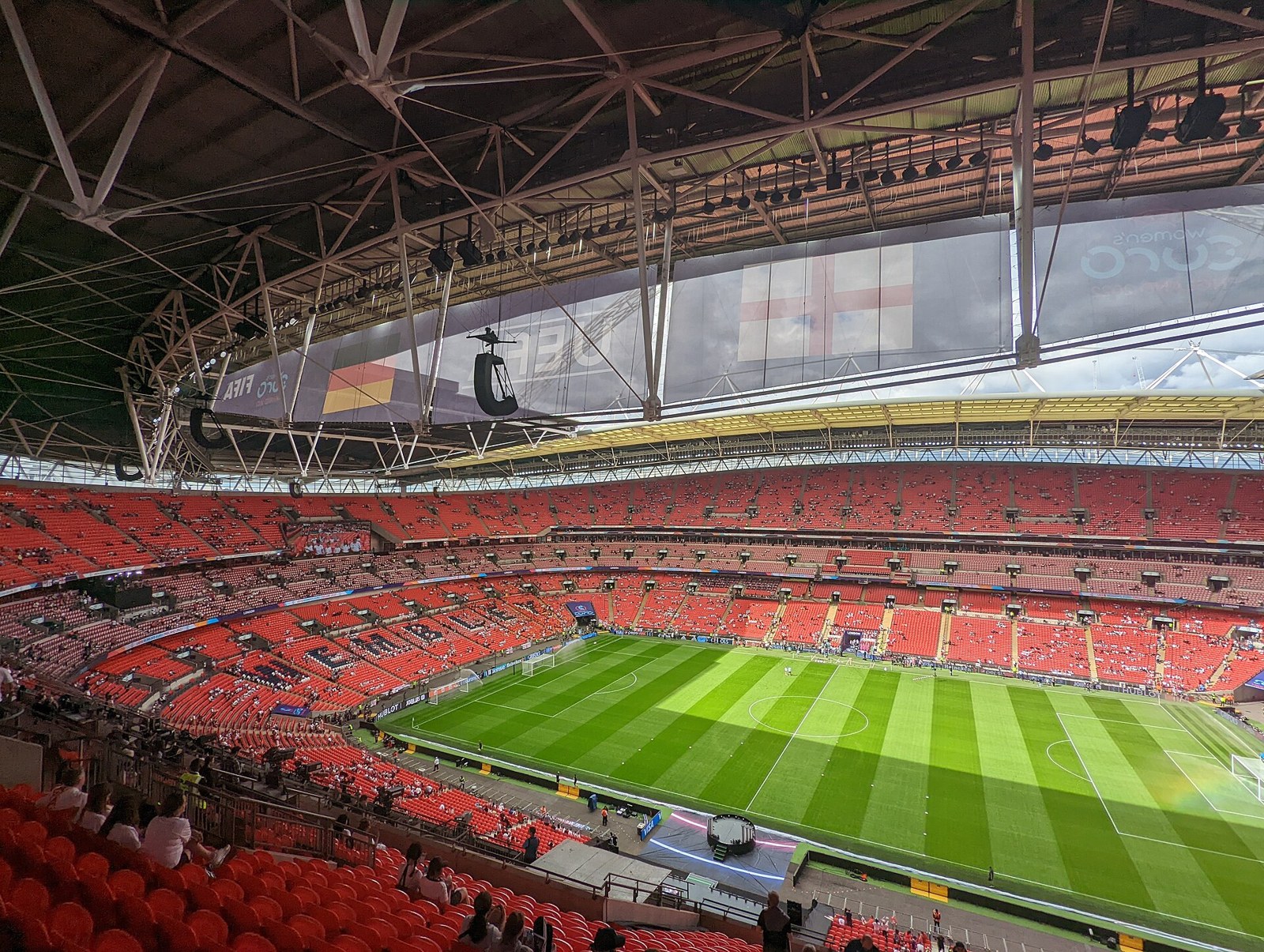
Wembley Stadium before the Women's Euro 2022 final in July 2022. Photo: Daniel from Glasgow / Wikimedia Commons, CC BY 2.0
LONDON, November 23, 2026 — The Women’s World Cup is coming to the United Kingdom. England, Northern Ireland, Scotland and Wales were confirmed on Monday as joint hosts of the 2035 tournament, bringing a football World Cup back to British soil for the first time since the men’s tournament in 1966.
The four nations were the only bidders, and their joint bid was ratified at a specially arranged virtual meeting of the FIFA Congress, held from FIFA’s headquarters in Zurich, the BBC reported.
The same meeting also approved the joint bid by Mexico, the United States, Costa Rica and Jamaica to host the 2031 finals, the first Women’s World Cup to feature 48 teams.
104 matches, 48 teams, 39 days
The 2035 tournament will feature 104 matches contested by 48 teams over 39 days. The ‘All Together’ bid proposes 19 venues: 14 in England, one in Northern Ireland, two in Scotland and two in Wales.
The English stadiums in the bid are Villa Park, the Amex, Ashton Gate, Elland Road, Hill Dickinson Stadium, the Emirates Stadium, Selhurst Park, Tottenham Hotspur Stadium, Wembley, the Etihad Stadium, St James’ Park, the City Ground, the Stadium of Light and Old Trafford. If Manchester United’s proposed new stadium does not go ahead, Old Trafford would still be considered in its current form.
Wales has put forward Cardiff City Stadium and the Principality Stadium. Scotland’s venues are Easter Road in Edinburgh and Hampden Park in Glasgow, while a redeveloped Windsor Park is set to stage matches in Northern Ireland.
A further three stadiums could yet be added: Birmingham’s new Powerhouse Stadium, Wrexham’s redeveloped Racecourse Ground and a potential new Chelsea ground. That would take the tournament to 16 cities and 22 venues. FIFA has yet to decide whether all four co-hosts will qualify automatically.
‘A chance to build’
The decision follows years of near misses for British football. England failed in bids for the men’s World Cups of 2006 and 2018, and a proposed UK and Ireland bid for 2030 was abandoned. But England and Scotland hosted matches at the men’s Euros in 2021, and England staged the 2022 Women’s European Championship, which the Lionesses won.
Football Association chief executive Mark Bullingham said the Euros had changed the women’s game in England.
“Hosting Euro 2022 allowed us to change the game in our country, by creating a generation of aspirational role models and growing demand from women and girls to play,” he said. “Hosting a World Cup would give us the chance to build on that across all four nations.”
Noel Mooney, chief executive of the Football Association of Wales, called it “a proud day for Welsh football”, adding that Wales had set itself the ambition of reaching the knockout stages in 2035 under its 10-year strategy.
“Some of the players who could take us there are learning the game at clubs across Wales today,” he said.
Irish Football Association chief executive Patrick Nelson said the event “would be felt in every club and every age group, in every part of the country”. Scottish FA chief executive Ian Maxwell described hosting as “the most significant thing to happen to the women’s and girls’ game in Scotland”.
“The level of investment into coaching, facilities and player pathways in the years beforehand will shape the future of the game for the generations to come,” Maxwell said.
Questions still to settle
FIFA’s evaluation, published earlier this month, rated the bid 4.3 out of five. However, it rated the contractual framework ‘medium risk’ and said “certain government guarantees contain material qualifications, particularly regarding tax and safety and security”.
That is thought to refer to a lack of agreement over FIFA’s request for tax-free status for all football-related activities. The evaluation added that the long lead-in time provided “a sound basis for resolving these outstanding issues”.
What happens next
The confirmation came on the same day the UK government set out a vision for one million more girls to play, watch or hold leadership roles in sport by 2035. Participation by women and girls in football has risen by 2.3 million since the 2022 Euros, though women still hold only around a quarter of chief executive, chair or performance director roles in major UK sports.
Before 2035, the four nations, together with the Republic of Ireland, will co-host the men’s European Championship in 2028.
Source: BBC Sport.
About The Author



 Azrul Rizal






 Lee AI
 Anna J