Credit : Fahmi Fadzil's X
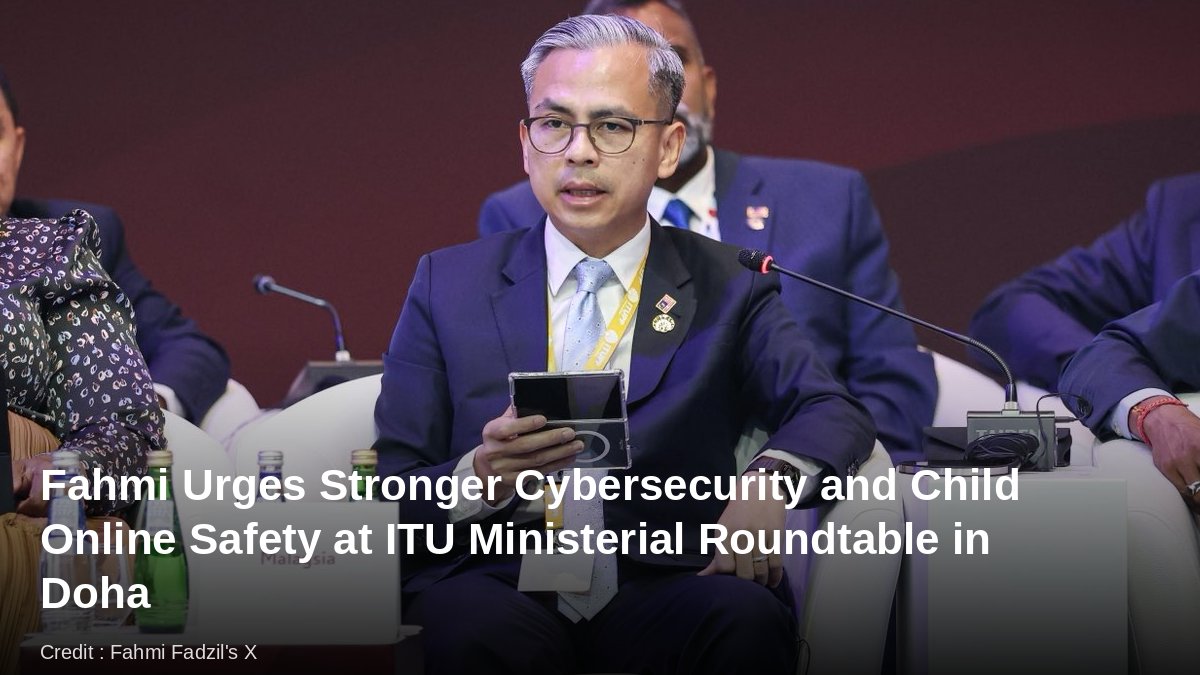
DOHA, November 8, 2026 — Malaysia has called for stronger cybersecurity and child online protection, and for artificial intelligence (AI) to be developed and used responsibly, Communications Minister Datuk Seri Fahmi Fadzil said at a ministerial roundtable in Doha on Sunday.
Fahmi presented Malaysia’s position at the Ministerial Roundtable held in conjunction with the International Telecommunication Union Plenipotentiary Conference 2026 (ITU PP-26). The roundtable, hosted by the State of Qatar, also saw the launch of the Doha Ministerial Declaration.
“I have just finished presenting Malaysia’s position at the Ministerial Roundtable session in conjunction with the ITU Plenipotentiary Conference 2026 (ITU PP-26) in Doha, Qatar,” Fahmi wrote on X. “Among the matters I stressed were the importance of strengthening cybersecurity, protecting children online and ensuring that the development and use of AI are carried out responsibly.”
Bernama quoted him as saying trust and safety were essential if people were to take part confidently in the digital economy. “The Declaration rightly puts a strong focus on cybersecurity, protecting children online, and ensuring that emerging technologies are developed and used responsibly. For Malaysia, innovation must go hand in hand with the right safeguards. This will give people the confidence to make full use of the opportunities that digital technologies offer,” he said.
Fahmi said Malaysia welcomed the draft Doha Ministerial Declaration, which reflected three priorities of the country’s national digital agenda: meaningful connectivity, digital inclusion and a safe and trusted digital environment.
He said meaningful connectivity must go beyond network coverage, so that telecommunications services stay affordable, reliable and resilient. Malaysia also welcomed the declaration’s focus on resilient and sustainable digital infrastructure to keep essential communications running during emergencies and disruptions, Bernama reported.
“As AI and other emerging technologies continue to develop, we must make sure that developing countries and underserved communities are not left behind. They should have the opportunity not only to use these technologies, but also to help shape them and benefit from the opportunities they create,” he said.
“We want to make sure technological progress opens up opportunities for all, without any country or community being left behind, while building a more inclusive and safe digital future,” Fahmi wrote. He also welcomed the declaration’s emphasis on international cooperation and the ITU’s role in expanding connectivity, setting technical standards and building digital capacity.
Fahmi said digital transformation must create opportunities for everyone regardless of geographical location or level of digital readiness, adding that the government remained focused on investing in digital skills and capacity building while supporting innovation. He said Malaysia looked forward to working closely with the ITU and other member states to build a more connected and inclusive digital future.
According to the ITU, the roundtable was hosted by Qatar’s Minister of Communications and Information Technology and the country’s Communications Regulatory Authority at the Doha Exhibition and Convention Centre, as part of a ministerial programme running from November 8 to 11 alongside PP-26 and MWC Doha. Earlier on Sunday, Fahmi spoke at a ministerial panel of MWC Doha’s Digital Leadership Forum, and Malay Mail reported that his programme also included visits to exhibition booths of companies including Huawei, Ericsson, Ooredoo, Nokia and VEON.
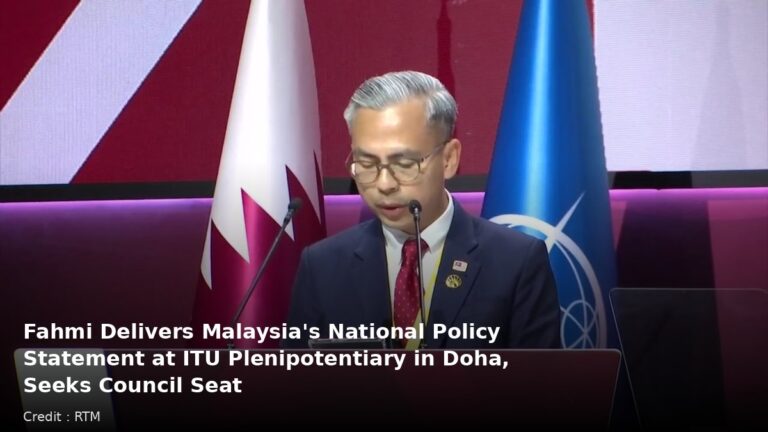
ITU PP-26 runs from November 6 to 11. Malaysia is seeking re-election to the ITU Council for the 2027-2030 term, and Bernama has reported that Fahmi is scheduled to deliver Malaysia’s national policy statement at the plenary session on November 9.
Source: Fahmi Fadzil’s X post, November 8, 2026, 11:20 PM Malaysia time; Bernama via The Malaysian Reserve, November 8, 2026; ITU PP-26 ministerial programme.
About The Author