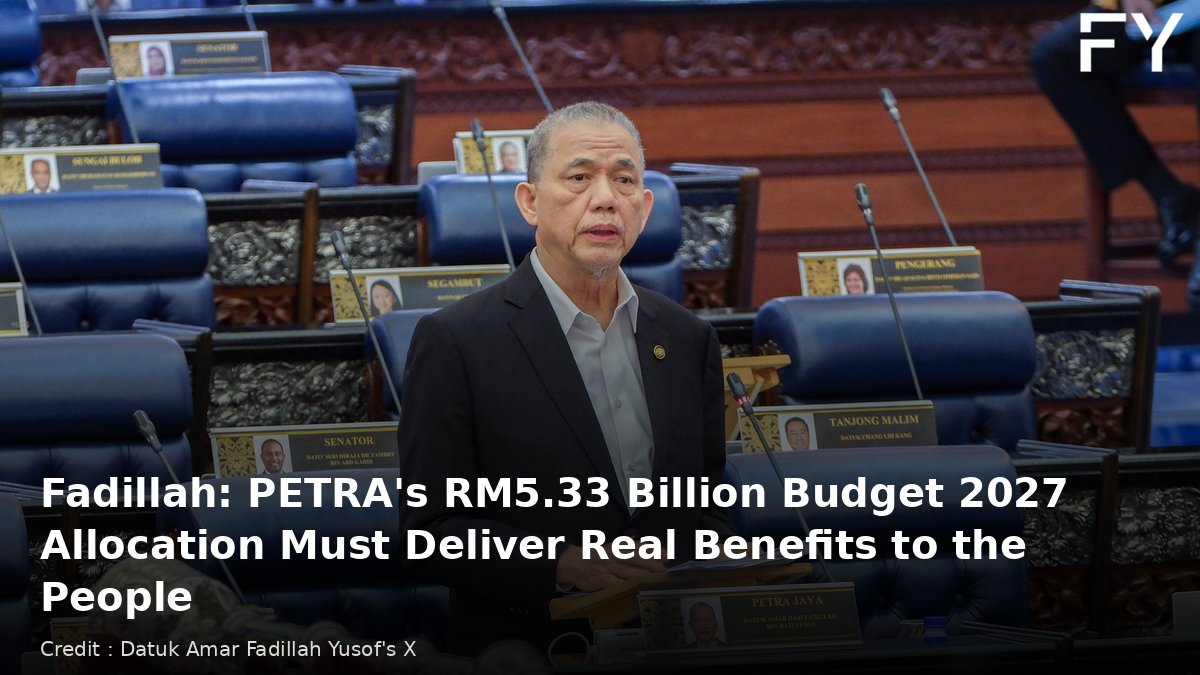
Credit : Datuk Amar Fadillah Yusof's X
KUALA LUMPUR, October 27, 2026 – Deputy Prime Minister Datuk Amar Fadillah Yusof says the true measure of success for the Ministry of Energy Transition and Water Transformation (PETRA) under Budget 2027 will not be the size of its allocation or the number of projects approved, but the benefits that ordinary Malaysians actually feel.
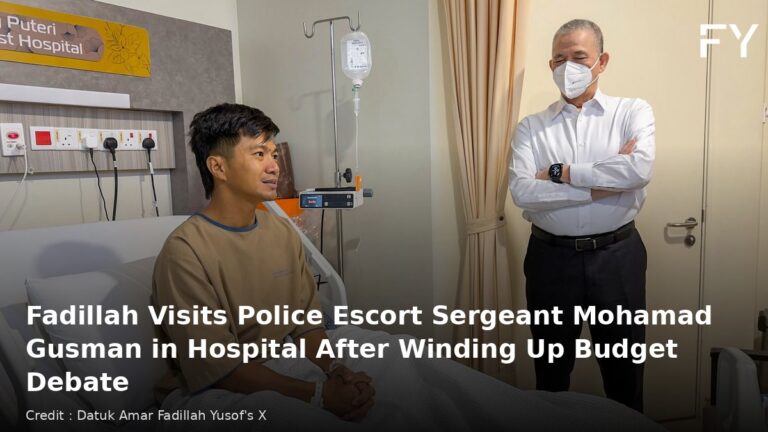
Fadillah, who is also Minister of Energy Transition and Water Transformation, made the point after winding up the policy-stage debate on the Supply Bill 2027 for PETRA in the Dewan Rakyat on Tuesday afternoon, October 27.
“For me, the real measure of success is not merely the amount of the allocation or the number of projects approved. The real measure is the benefit felt by the people,” he wrote in a post on his X account, in remarks translated from Malay.
RM5.33 billion for PETRA
Fadillah said the fifth MADANI Budget, for 2027, allocates RM5.33 billion to PETRA, including RM4.93 billion for development expenditure, an allocation he described as carrying “a great trust” to ensure that the benefits of development truly reach the people.
He thanked members of Parliament for the views, criticism and suggestions raised during the debate, saying every issue brought up reflected the public’s hope for more secure water and electricity supplies, reduced disaster risks and sustainable national development.
Floods, water supply and electricity bills
Among PETRA’s main areas of focus, Fadillah said, is strengthening flood mitigation and coastal protection through 151 flood mitigation projects, along with 50 projects to control coastal erosion and conserve river estuaries.
The ministry will also work to guarantee a clean and continuous water supply by replacing critical pipes, reducing water losses and reinforcing water supply infrastructure nationwide, including in Sabah and Sarawak.
On electricity, he said PETRA would protect consumers through targeted assistance measures, improvements to the Automatic Fuel Adjustment (AFA) mechanism, and investment to strengthen the stability of the National Grid.
Renewable energy and new opportunities
Fadillah said the ministry aims to speed up the transition to sustainable energy, with a target of 35 per cent renewable energy capacity by 2030, wider installation of solar systems and incentives that let people enjoy clean energy.
He added that PETRA wants to open economic opportunities in the clean energy industry for Bumiputera companies, local communities and the younger generation of FELDA settlers.
The ministry will also ensure that the development of data centres and new technologies does not burden other electricity users, while studying the direction of nuclear energy responsibly, with safety and the national interest as the priority. To make sure every allocation produces tangible results, he said, project delivery would be accelerated through close monitoring, coordination between agencies and early intervention.
“Building the nation’s future”
“The people want an uninterrupted water supply, stable electricity, residential areas that are better protected from floods, and clean energy development that is affordable and sustainable,” Fadillah said.
“God willing, PETRA will continue to carry out this trust with full responsibility, to strengthen the nation’s resilience, improve the well-being of the people and provide a better future for generations to come,” he said. “We are not merely building infrastructure. We are building the nation’s future.”
PETRA was formed in the federal Cabinet reshuffle of December 2023, bringing the national energy transition and water portfolios under one ministry. The policy-stage winding-up is the point in the Budget debate at which each minister responds to issues raised by members of Parliament, before the Dewan Rakyat moves on to the committee stage, where each ministry’s allocation is examined in detail.
Source: Datuk Amar Fadillah Yusof on X
About The Author