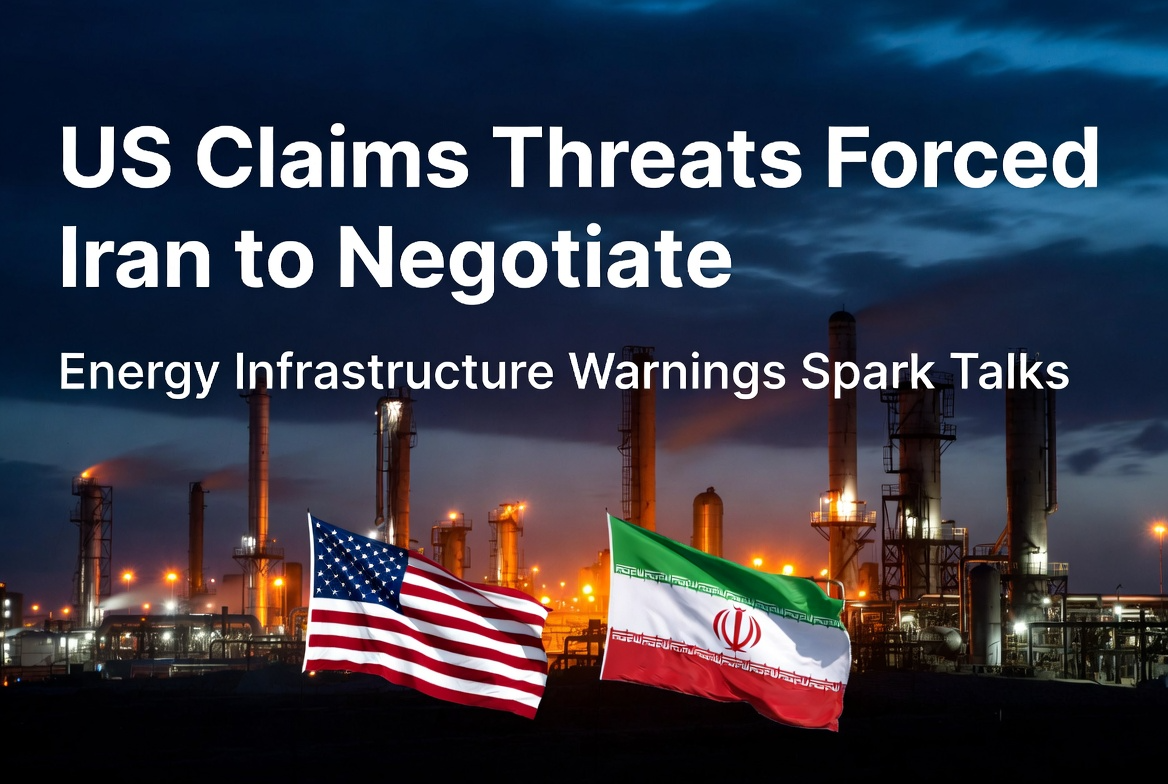
WASHINGTON D.C Aug 2, 2026 — The United States said Sunday that repeated threats to strike Iran’s energy infrastructure prompted Tehran to show willingness to negotiate, according to reports circulating among geopolitical accounts.
The statement comes amid heightened tensions in the ongoing US-Iran conflict, which has centered on the Strait of Hormuz, nuclear issues, and intermittent military exchanges since earlier in 2026. US President Donald Trump has repeatedly warned of strikes on Iranian power plants, bridges, refineries, and other energy-related targets if progress on a broader agreement stalled.
In recent days, reports indicated the US and Israel were preparing intensified bombing campaigns focused on Iranian energy sites, while Iranian officials publicly stated they had prepared retaliatory plans targeting energy infrastructure belonging to the US, Israel, and Gulf states in the event of such attacks.
Trump announced that Iran and other Middle Eastern countries had requested a hold on any planned assault, stating that the “perimeters of a deal” had been agreed upon. The outlined terms reportedly include the immediate and complete reopening of the Strait of Hormuz and an end to Iran’s nuclear threat.
This is not the first time US officials have credited military pressure with advancing diplomacy. Earlier in 2026, Trump similarly attributed Iran’s engagement in talks that led to a June memorandum of understanding (MOU) to prior threats against energy facilities. That interim agreement aimed to pause hostilities, reopen the Strait, and create a framework for further nuclear discussions, though implementation has faced repeated setbacks, mutual accusations of violations, and temporary escalations.
Iran has consistently rejected characterizations of its positions as concessions driven by US threats. Tehran has emphasized its readiness to respond forcefully to any new aggression and has maintained that diplomacy must respect its red lines on sovereignty, the Strait of Hormuz, and sanctions relief.
Global energy markets remain sensitive to developments, as disruptions in the region have previously driven up oil prices and raised concerns about broader supply risks. Both sides continue to signal that further talks are possible while keeping military options on the table.
The situation remains fluid, with no independent confirmation yet of a finalized new agreement beyond the reported parameters.
About The Author