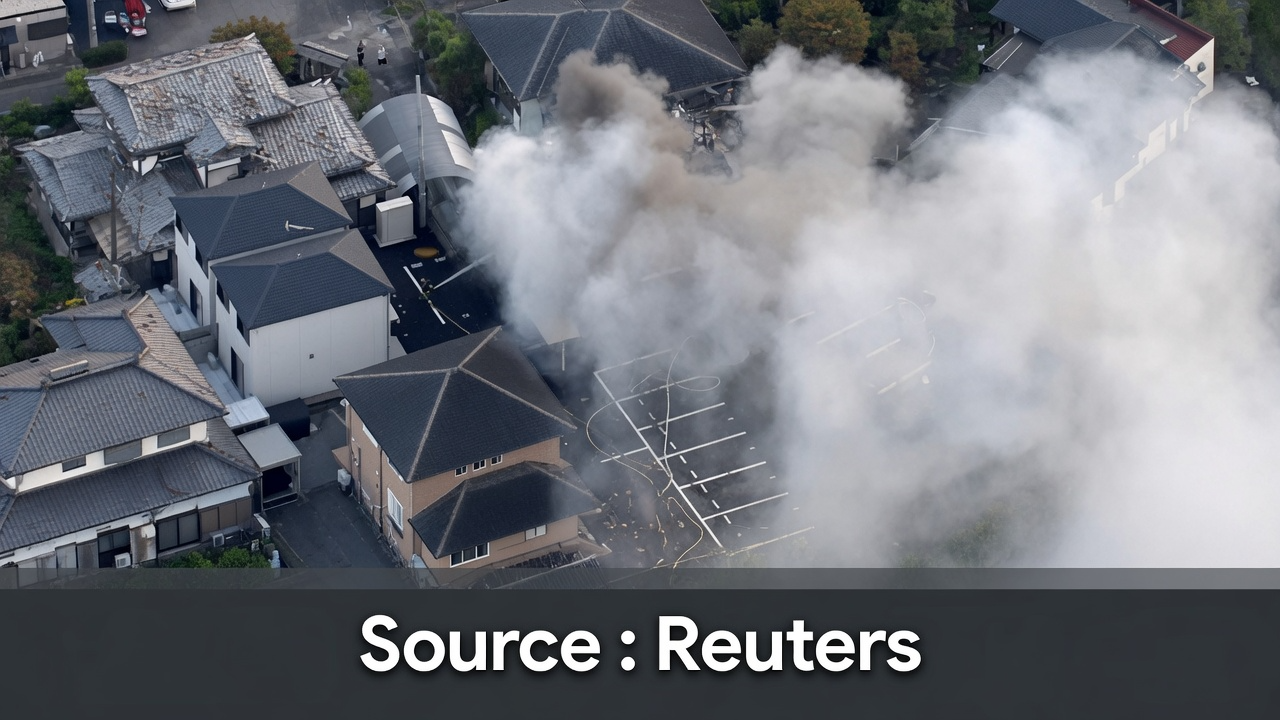
TOKYO July 28, 2026 — A powerful earthquake with a magnitude of 7.1 struck Kumamoto Prefecture on Japan’s southern island of Kyushu on Tuesday afternoon, July 28, 2026, prompting Prime Minister Sanae Takaichi to urge residents to evacuate and remain highly vigilant for strong aftershocks.
The Japan Meteorological Agency (JMA) reported the quake occurred at approximately 4:27 p.m. local time (07:27 GMT), with its epicenter near the city of Uki, about 20 kilometers south of Kumamoto city, at a shallow depth of around 10 kilometers. It registered the maximum intensity of 7 on Japan’s Shindo seismic scale in parts of Uki and Hikawa, the highest level possible, capable of causing severe structural damage. The U.S. Geological Survey measured it at magnitude 6.8.
Takaichi, speaking to reporters in Tokyo, said authorities were still assessing the full scale of casualties and damage. “We have already been informed that people have been injured. Power outages and fires have occurred in some areas, and there has also been damage to roads and bridges and the collapse of buildings,” she stated. “I ask everyone to take action to protect themselves, including evacuating to a safe location.” She later called for overnight rescue efforts and warned residents to stay alert for aftershocks of similar intensity for up to a week.
Authorities instructed more than 150,000 to 300,000 people in Kumamoto and surrounding areas to move to evacuation centers. Hundreds of Self-Defense Force personnel were deployed for search-and-rescue operations as aftershocks continued.
The most severe incident involved Aeon Mall Kumamoto in Kashima Town, where an explosion reportedly followed the quake, causing the second floor to partially collapse. Police and fire officials said 20 to 30 people, mostly employees, remained unaccounted for, with some local media reporting that several were presumed dead. Rescue teams continued working into the evening amid the risk of further aftershocks. At least three deaths were confirmed elsewhere in the prefecture, primarily in Yatsushiro, while hospitals treated hundreds of injured people — reports indicated over 50 at one facility alone and totals exceeding 380 injured across the region.
Other impacts included power outages affecting approximately 48,000 households, ruptured roads and highways, suspended rail services including Shinkansen bullet trains, a closed runway at Kumamoto Airport, and scattered fires. Portions of the historic stone walls at Kumamoto Castle collapsed, and a chimney at a Nippon Paper Industries facility in Yatsushiro fell, leaving additional people missing. Major manufacturers including TSMC, Sony, and Fujifilm temporarily evacuated workers from nearby plants.
A tsunami advisory for the Ariake and Yatsushiro seas was issued shortly after the quake but lifted within about two hours after no significant waves were observed. Japan’s Nuclear Regulation Authority reported no abnormalities at nearby nuclear power plants.
The quake struck the same region devastated by twin earthquakes in 2016 that killed more than 270 people. Officials emphasized the ongoing risk of landslides and further building collapses due to the shallow depth and continuing aftershocks. Emergency response teams remained active Tuesday evening as assessments continued.
About The Author