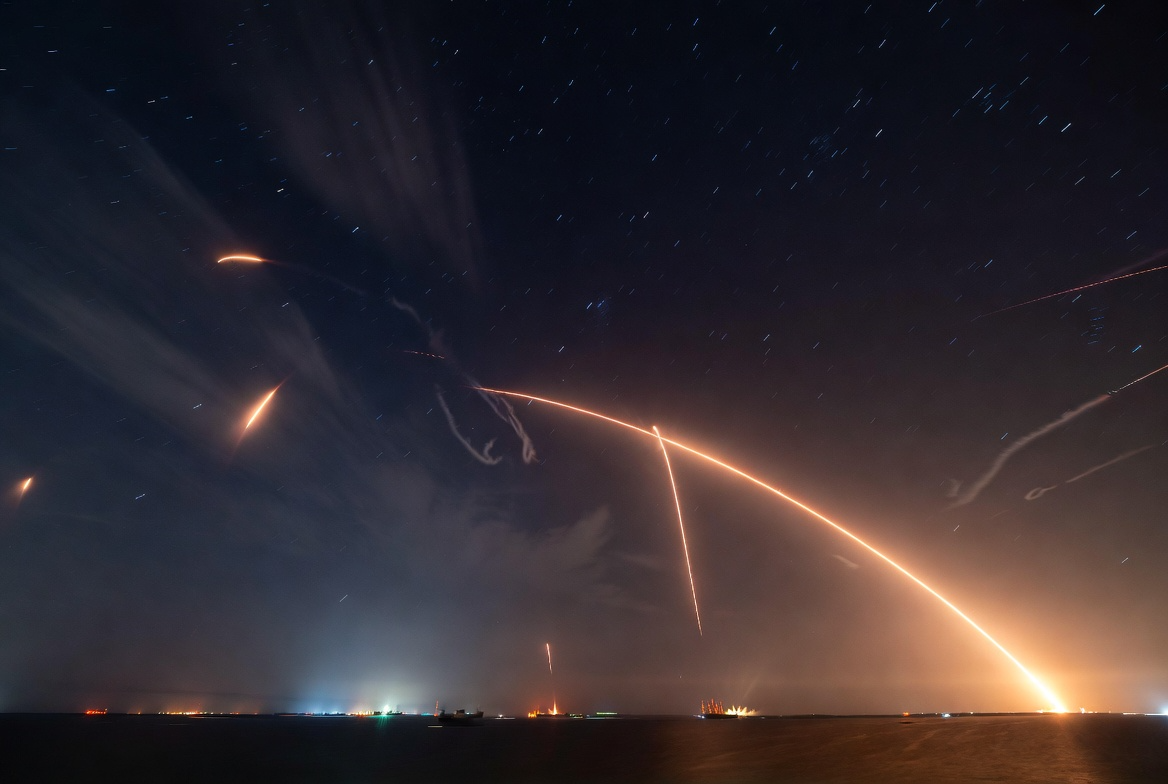
WASHINGTON July 9, 2026 – A senior U.S. defense official said Thursday that dozens of missiles and drones fired by Iran caused no significant damage and resulted in no injuries to American personnel.
The projectiles “were intercepted or failed to cause major damage,” the official told AFP on condition of anonymity. “There were no U.S. injuries.”
The statement comes amid a fresh round of tit-for-tat strikes in the ongoing conflict between the United States and Iran, centered on the strategically vital Strait of Hormuz.
Iran’s Islamic Revolutionary Guard Corps (IRGC) claimed responsibility for launching ballistic missiles and drones targeting U.S. military infrastructure. According to Iranian statements, strikes were directed at:
- The Al-Azraq (Muwaffaq Salti) Air Base in Jordan
- U.S. facilities in Bahrain
- Sites in Kuwait and Qatar
Jordanian forces reported intercepting multiple missiles aimed at the Al-Azraq base, with no casualties on the Jordanian side.
The Iranian attacks followed recent U.S. airstrikes on Iranian targets. U.S. forces conducted strikes on more than 80 locations in Iran earlier this week, according to reports, in response to Iranian actions against commercial shipping in the Strait of Hormuz.
A fragile memorandum of understanding reached in June 2026 aimed at de-escalating the conflict has come under severe strain following renewed incidents involving ships in the Gulf.
This latest exchange follows a familiar pattern in the 2026 Iran conflict:
- Iran launches waves of missiles and drones
- The U.S. and regional partners report high interception rates and minimal damage
- Iran claims successful hits on military targets
U.S. officials have consistently downplayed the effectiveness of Iranian strikes in recent months, emphasizing the strength of layered air defenses across the region.
Iranian state media, meanwhile, has portrayed the attacks as successful retaliation and a demonstration of resolve.
The renewed fighting has raised concerns about further disruption to global energy supplies and potential spillover effects across the Middle East. Oil prices have shown volatility in response to the latest developments.
Both sides have so far avoided direct large-scale ground operations, but the cycle of airstrikes, missile attacks, and naval incidents continues to heighten regional tensions.
U.S. Central Command has not yet issued a detailed public statement on the latest Iranian barrage, but the anonymous defense official’s assessment aligns with previous U.S. reporting on Iranian missile and drone capabilities being largely neutralized by defensive systems.
The situation remains fluid as both Washington and Tehran navigate the fragile balance between escalation and de-escalation in one of the world’s most critical energy corridors.
About The Author