By: Abdullah Bugis
Hamza Abdelkarim’s story is not a tale of a footballer made entirely in Malaysia, nor a simple migrant success story that jumped suddenly from obscurity to Barcelona. It is a quieter story about beginnings: how a city far from Cairo, and far from the traditional centres of world football, gave a gifted Egyptian boy his first organised football environment before the rest of the journey tested him in Cairo, with Egypt, and eventually in Spain.
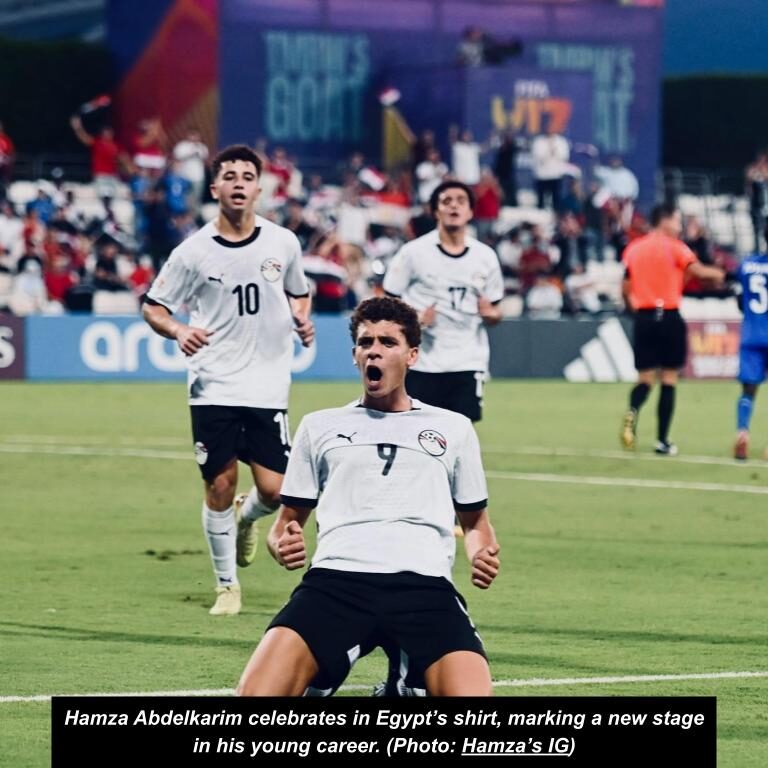
The 18-year-old Egyptian forward, born in 2008, returned to the spotlight after featuring for Egypt at the 2026 FIFA World Cup in the United States, Canada and Mexico, and after FC Barcelona activated the option to sign him permanently from Al Ahly. Barcelona said Abdelkarim would sign for three more seasons, until 30 June 2029, after scoring six goals for the club’s U19A side and featuring in the Copa del Rey.
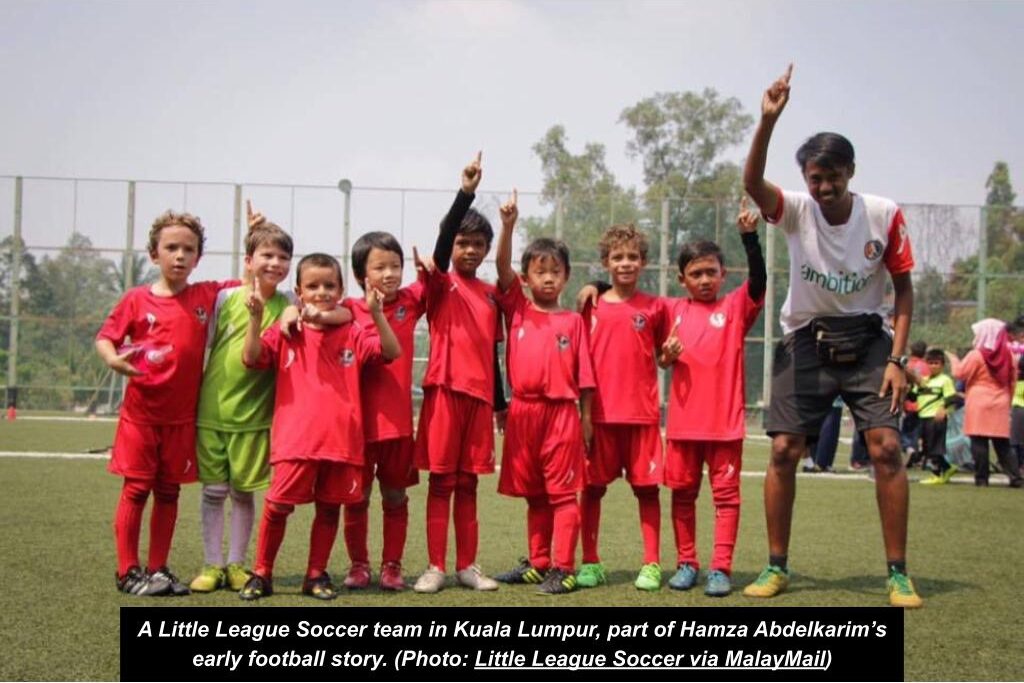
For Malaysia, the point is not to claim that Kuala Lumpur produced the finished player. It is to understand how the story began here. Abdelkarim spent part of his childhood in Malaysia while his father was working in the country. During that period, he entered organised youth football through Little League Soccer and played for FC Kuala Lumpur, the elite youth team connected to that environment. It was not a professional Malaysian league career, and it should not be described as one. But it was a real early football experience: training sessions, matches, coaching discipline and the first sense that football could be more than a childhood pastime.
That Malaysian chapter has been recalled with pride by those who worked with him. Chris Nathan, who coached Abdelkarim in Malaysia from 2016 to 2020 and now serves as the academy director of Little League Soccer, told The Star that the young Egyptian showed early signs of going far. What stood out, he said, was not only Abdelkarim’s technical ability, but also his willingness to learn, competitiveness, commitment in training and maturity against tougher opponents.
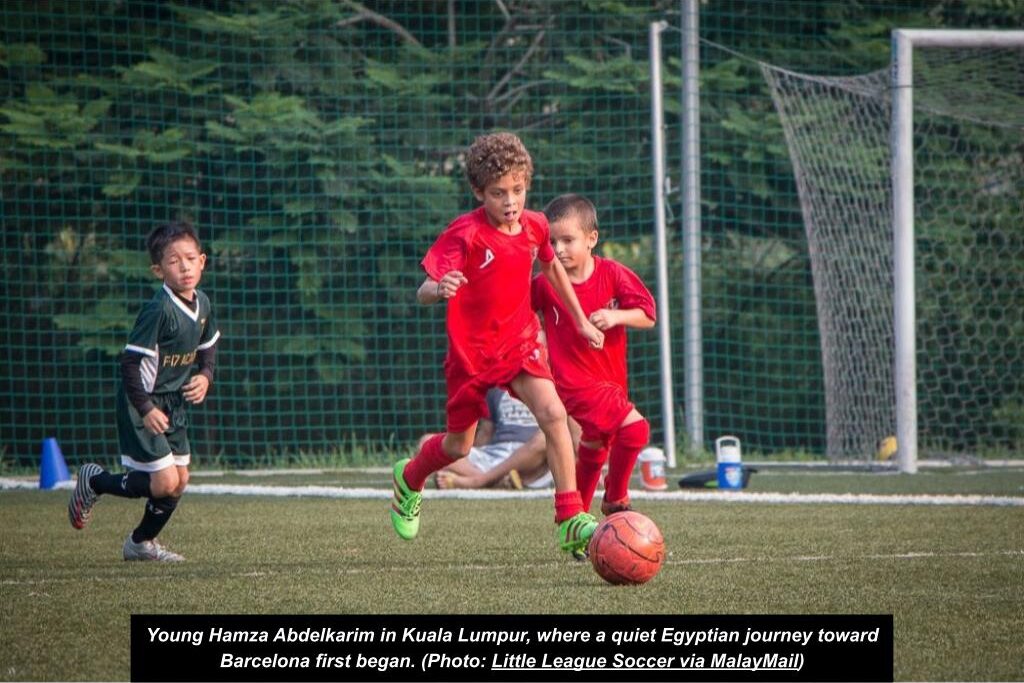
Chris also described Abdelkarim’s rise as an emotional moment for the programme. Watching a player who once trained on Kuala Lumpur pitches go on to represent his country at the World Cup, he said, was both rewarding and moving. For him, Abdelkarim’s journey was proof that discipline, perseverance and years of work can carry a young player far beyond the place where he first started.
Shazwan Wong, the general manager of Little League Soccer, was more cautious in explaining Malaysia’s role. In remarks reported by Malay Mail, he placed FC Kuala Lumpur and Malaysia at the beginning of the story, not at its end. The coaches did not claim to have built Abdelkarim completely into a World Cup player. Their role was one early part of a longer road, while the bigger transformation came after his return to Egypt, where Al Ahly and the Egyptian football structure pushed him into a higher level.
That distinction gives the story its credibility. Malaysia was not the whole road, but it was the first chapter. It was here that Abdelkarim began to train in a team setting, listen to coaches, compete regularly and move from casual childhood play toward a more serious football routine. In youth football, such beginnings may appear small, but they often leave a lasting mark.After returning to Cairo, Abdelkarim entered a much harder football world. He reportedly went through trials at ZED FC before later choosing Al Ahly in 2020. That move changed the scale of his development. Al Ahly is not merely a famous club; it is one of the most demanding football institutions in Africa and the Arab world. Inside such a club, a young player cannot survive on talent alone.
At Al Ahly, promise had to become performance. Abdelkarim had to learn how to compete every day, accept pressure, repeat his level and move from youth football into a more serious football identity. This is where the soft language of potential gives way to the harder language of discipline, selection and consistency.
Then came the World Cup, which gave his journey a wider meaning. Abdelkarim was not only a name on Egypt’s squad list. He featured in Egypt’s opening matches at the tournament. The minutes he played mattered not only because of their number, but because of the stage on which they came: a young player who once trained in Kuala Lumpur was now wearing Egypt’s shirt at football’s highest level.
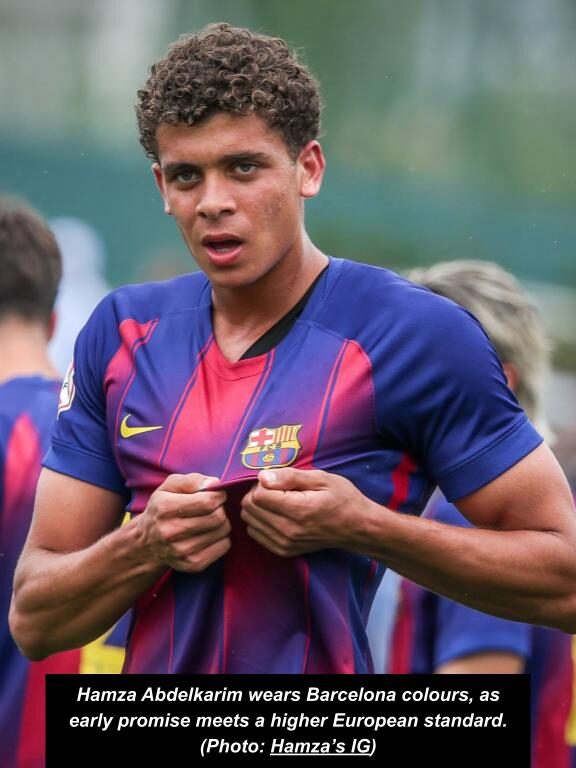
Barcelona’s decision to activate the purchase option from Al Ahly gave the story its European turn. The club does not merely offer visibility; it demands proof. For a young striker still at the start of his senior football life, Barcelona is both an opportunity and a burden. It opens a door, but it also raises the standard.
The journey should therefore be read as a sequence, not a miracle. FC Kuala Lumpur gave Abdelkarim an early organised football experience. Al Ahly gave him the professional hardness needed to grow. Egypt gave him the weight of the national shirt. Barcelona has now given him a European horizon. None of these chapters cancels the others; together, they show how modern football careers are often built across countries, systems and cultures.
There is also a lesson here for Malaysian football. The story should not become exaggerated praise for the local system, because Abdelkarim was not produced by Malaysia alone. But it raises a useful question: how can early youth environments be connected to clearer professional pathways, so that local talents do not stop at the academy stage? The issue is not why Malaysia did not “make” Hamza Abdelkarim. The better question is how small beginnings can be turned into complete roads that do not lose players halfway.
In the end, Abdelkarim’s story connects Kuala Lumpur, Cairo and Barcelona in one unusual line. Kuala Lumpur gave him the first organised touch. Cairo gave him toughness. Egypt gave him the national stage. Barcelona gave him the next horizon. In a time when families, talents, ideas and capital move across borders, football no longer belongs to one place alone. A career can begin on a modest pitch, mature inside a demanding club and reveal its meaning under the lights of the World Cup. Beginnings do not create greatness by themselves, but sometimes they give greatness its opening sentence.
About The Author