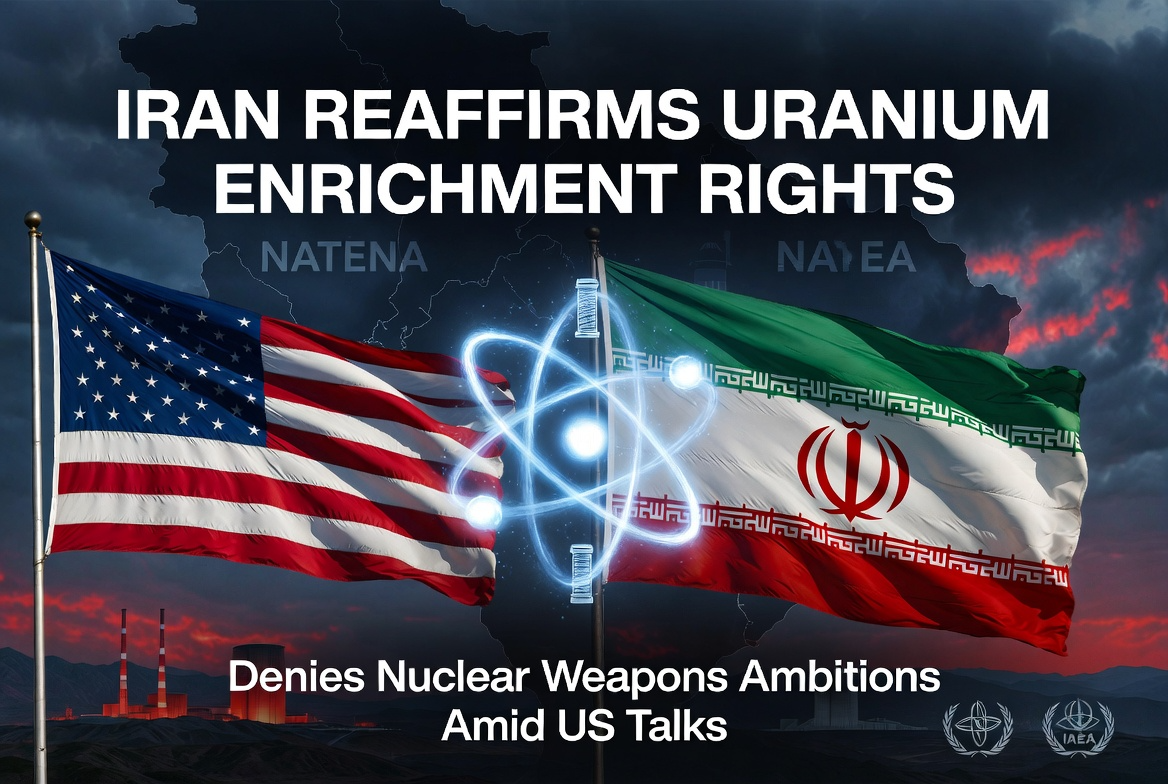
TEHRAN, June 21, 2026 — Iran has firmly restated its commitment to uranium enrichment on its soil, declaring it will not relinquish this right under the Nuclear Non-Proliferation Treaty (NPT) while insisting its program remains exclusively for peaceful purposes.
The statement, issued as high-level US-Iran negotiations continue under a fragile ceasefire, underscores deep divisions over Tehran’s nuclear activities despite a recent memorandum of understanding (MoU) aimed at de-escalating hostilities.
“Iran says it will not give up its uranium enrichment rights and it is not seeking a nuclear weapon,” the BRICS-focused account reported today, reflecting official Iranian messaging.
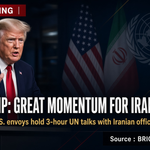
The comments come days after Presidents Donald Trump and Iran’s leadership signed a 14-point MoU on or around June 17, 2026. The agreement, mediated in part by Pakistan and Qatar, extends a ceasefire for 60 days, reopens the Strait of Hormuz to commercial shipping, provides limited sanctions relief, and unlocks some frozen Iranian assets.
Key elements include:
- A pledge from Iran not to pursue nuclear weapons.
- IAEA oversight of enriched uranium stocks.
- Plans for further talks on the nuclear program, sanctions, and regional issues.
However, core disagreements persist. The US has long demanded “zero enrichment” on Iranian territory — or at minimum a lengthy suspension (reportedly 15–20 years) — along with the removal or dilution of Iran’s stockpile of highly enriched uranium (previously estimated at around 440 kg at 60% purity). Iran views any permanent end to domestic enrichment as a violation of its NPT rights for civilian nuclear energy and medical isotopes.
Iranian officials, including President Massoud Pezeshkian, have described the MoU as favorable while signaling no compromise on enrichment. Tehran has offered in past rounds to limit levels, down-blend stockpiles under IAEA monitoring, or cap centrifuge operations, but insists on retaining the capability domestically.
The International Atomic Energy Agency (IAEA) has previously raised concerns over access restrictions and undeclared activities, though Iran maintains compliance and attributes issues to past strikes on its facilities.
President Trump has touted the ceasefire as a major achievement, claiming Iran agreed to surrender enriched material (“nuclear dust”) and face renewed pressure if talks fail. Israeli officials have criticized the deal for not sufficiently curbing Iran’s program or proxy activities.
Analysts warn the 60-day window — now underway — will test whether diplomacy can bridge the gap or if the fragile truce unravels amid mutual accusations of violations, including over Lebanon.
This latest Iranian statement highlights the central tension: sovereignty and rights versus non-proliferation guarantees. With talks ongoing in Switzerland and elsewhere, both sides are positioning ahead of what could determine long-term regional stability.
Further updates are expected as the negotiation clock ticks.
About The Author