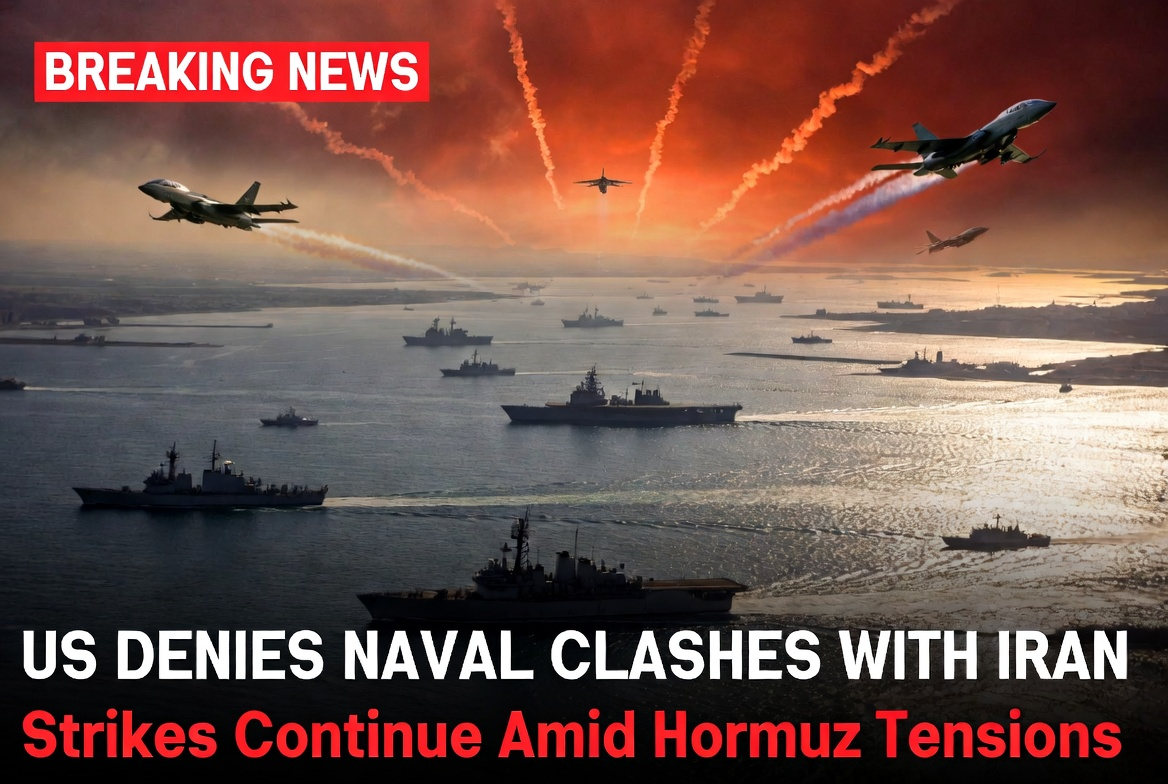
WASHINGTON June 10, 2026 — A U.S. official has rejected Iranian state media reports of naval clashes between American forces and Iran’s Islamic Revolutionary Guard Corps (IRGC) in waters south of Iran, while confirming that U.S. strikes against Iranian targets will persist.
The development comes amid heightened tensions in the Strait of Hormuz and surrounding waters, where the U.S. is enforcing a blockade as part of its military campaign alongside Israel against Iran.
Iranian state media earlier claimed that naval confrontations had occurred, without providing details on scale, casualties, or specific locations. Al Jazeera initially reported these unverified claims.
However, a U.S. official told American media outlets that no such clashes took place. Despite the denial, the official emphasized that American military operations against Iran are ongoing.
This back-and-forth highlights the fragile and contested nature of the maritime domain in the region. The U.S. Central Command (CENTCOM) has been actively involved in operations to maintain freedom of navigation and enforce measures against Iran, including recent actions targeting vessels attempting to violate the blockade.
The U.S. and Israel have been engaged in direct hostilities with Iran since late February 2026, following a series of airstrikes that targeted Iranian military and leadership sites. The campaign has involved repeated exchanges of strikes, with naval tensions focusing on the critical Strait of Hormuz — a chokepoint for global oil shipments.
Recent days have seen U.S. forces conduct strikes on Iranian air defenses, radar sites, and other targets near the strait, while Iran has reported retaliatory actions and warned against further incursions. U.S. officials have described these operations as necessary to counter Iranian threats to regional shipping and U.S. interests.
No immediate independent verification of the latest alleged naval incident was available, and casualty figures from either side remain unconfirmed in this specific report.
The situation remains fluid, with potential implications for global energy markets and broader Middle East stability. Al Jazeera and other outlets continue to monitor developments closely.
About The Author