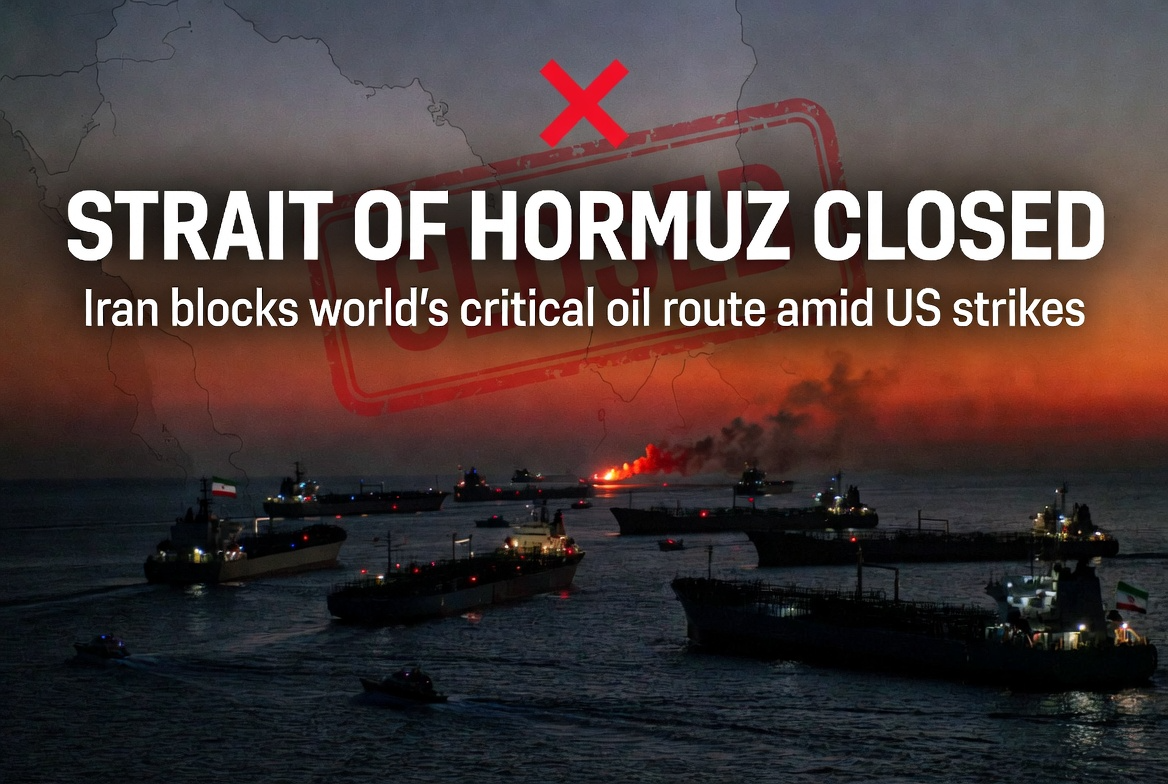
TEHRAN, IRAN – June 10, 2026 — Iran’s Islamic Revolutionary Guard Corps (IRGC) has declared the complete closure of the Strait of Hormuz, the world’s most critical oil chokepoint, citing U.S. military strikes as the trigger.
The announcement, reported by Iranian state media and amplified on platforms like X by accounts such as @BRICSinfo, states that the strait will remain shut until the U.S. lifts its blockade on Iranian ports. Iranian forces have reportedly targeted vessels attempting passage, enforcing the measure.
This escalation occurs amid the broader 2026 Iran war, which began with U.S.-Israeli strikes on Iran in late February. The strait — through which roughly 20% of global oil and significant LNG volumes transit daily — has faced repeated disruptions, partial reopenings, and re-closures throughout the conflict.
Recent triggers include U.S. strikes near the strait following an incident involving a downed American Apache helicopter, which officials attributed to Iranian drone activity. Negotiations for a ceasefire and reopening have repeatedly stalled, with both sides accusing the other of violations.
The move threatens severe disruptions to global energy markets already strained by months of instability. Oil prices have surged in response, with analysts warning of higher fuel costs, shipping delays, and potential shortages affecting Asia, Europe, and beyond. Hundreds of vessels remain stalled or rerouted, exacerbating supply chain pressures.
Alternative routes, such as pipelines in the UAE and Saudi Arabia, are being accelerated, while countries like India explore new LNG pipelines. However, these long-term solutions offer limited immediate relief.
The situation remains fluid, with risks of further naval incidents in the Persian Gulf. International observers urge restraint to prevent a wider energy crisis. Updates will depend on diplomatic breakthroughs or additional military actions.
This developing story is based on reports from BBC, Al Jazeera, Reuters, and real-time social media as of June 10, 2026.
About The Author